Documentos y recursos - Buscar resultados
Buscar resultados

Pioneer Plaques
imagen
Pie de foto: The Pioneer 10 and 11 spacecraft are the first human-made objects to leave the solar system and venture into interstellar space. To inform potentially intelligent species about our existence, they both carry small metal plaques identifying their time, place of origin and information about their builders. They provide the location of our solar system in the Milky Way by depicting the Solar System's position relative to 14 pulsars, with radiating lines that include information about their frequencies. A model of a hydrogen atom undergoing one particular atomic transition is depicted. The wavelength and frequency of this transition are used to express sizes and frequencies of the other items shown in the plaque. A more detailed view of Earth's position in the solar system, with the spacecraft's trajectory moving away from Earth, passing Mars and Jupiter is displayed at the bottom. The plaque also depicts a naked man and woman alongside the spacecraft to provide a sense of scale. The man’s hand is raised as a friendly gesture.
The 6-inch by 9-inch gold-anodized aluminum plate has the design engraved on it. It was attached to the support struts of the spacecraft's antenna to try to to protect it from erosion by any interstellar dust the spacecraft may encounter on its journey. Designed by Carl Sagan and Frank Drake, with artwork by Linda Salzman Sagan, these plaques are meant to communicate the origin of the spacecraft to any extraterrestrial life that might encounter them.
While Pioneer 10 is on a course towards the star Aldebaran in the Taurus constellation, which will take about two million years to reach, Pioneer 11 is heading in a different direction towards the constellation of Aquila. It will take approximately four million years to pass close to some of the constellation’s stars.
Crédito: NASA Ames
Enlace del crédito
Términos del glosario:
Inteligencia extraterrestre
Categorías:
Astronomía y sociedad
, Exoplanetas y astrobiología
, Exploración espacia
Licencia: Dominio público Dominio público íconos
Archivo
( imagen
5.94 MB)

3...2...1... time for water rockets! Actividad educativa de astroEDU (enlaces a la página web de astroEDU) Origen: astroEDU Descripción: Design, build and launch your rocket into space.
Categorías:
Física
, Exploración espacia
Rango de edades:
12-14
, 14-16
, 16-19
Nivel educativo:
Educación secundaria
, Secondary
Áreas de aprendizaje:
Actividad lúdica
, Basado en la observación
, Resolución de problemas
, Aprendizaje basado en proyectos
, Aprendizaje basado en la investigación estructurada
Costos:
Bajo coste
Duración:
3 horas
Tamaño del grupo:
Grupo
Competencias:
Analizar e interpretar datos
, Plantear preguntas
, Comunicar información
, Elaborar explicaciones
, Desarrollar y utilizar modelos
, Planificar y llevar a cabo investigaciones
, Utilizar las matemáticas y el pensamiento computacional
Autores: Jean Pierre Saghbini , Marc Bou Zeid
Licencia: Creative Commons Reconocimiento 4.0 Internacional (CC BY 4.0) Creative Commons Reconocimiento 4.0 Internacional (CC BY 4.0) íconos
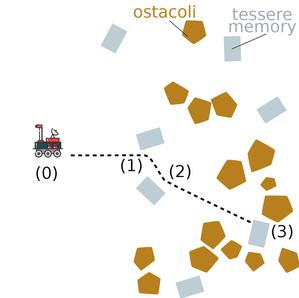
Driving on Mars Actividad educativa de astroEDU (enlaces a la página web de astroEDU) Origen: astroEDU Descripción: An educational interdisciplinary game to drive a rover on Mars
Términos del glosario:
Marte , Rover
Categorías:
Sistema Solar
, Exploración espacia
, Telescopios, instrumentos y observatorios
Etiquetas:
Game
, robot
, robotics
, simulation
, telecommunications
Rango de edades:
14-16
, 16-19
Nivel educativo:
Educación secundaria
, Secondary
Áreas de aprendizaje:
Aprendizaje por descubrimiento guiado
Costos:
Bajo coste
Duración:
2 horas
Tamaño del grupo:
Grupo
Competencias:
Comunicar información
, Desarrollar y utilizar modelos
, Utilizar las matemáticas y el pensamiento computacional
Autores: Davide Ricci, Elena Sissa, Francesca Damiani
Licencia: Creative Commons Reconocimiento 4.0 Internacional (CC BY 4.0) Creative Commons Reconocimiento 4.0 Internacional (CC BY 4.0) íconos
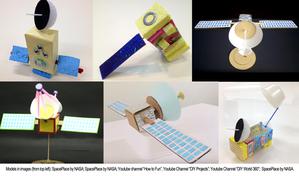
Build Your Own Artificial Satellite Actividad educativa de astroEDU (enlaces a la página web de astroEDU) Origen: astroEDU Descripción: Build a satellite to learn what they are made of and their uses.
Términos del glosario:
Satélite Artificial
Categorías:
Exploración espacia
, Telescopios, instrumentos y observatorios
Etiquetas:
Art
, Creativity
, Hands-on
, Model
Rango de edades:
8-10
Nivel educativo:
Primaria
Áreas de aprendizaje:
Grupos de discusión
, Clase interactiva
, Modelización
Costos:
Bajo coste
Duración:
1 hora y 30 minutos
Tamaño del grupo:
Grupo
Competencias:
Comunicar información
, Desarrollar y utilizar modelos
Autores: Vivienne Kolman
Licencia: Creative Commons Reconocimiento 4.0 Internacional (CC BY 4.0) Creative Commons Reconocimiento 4.0 Internacional (CC BY 4.0) íconos
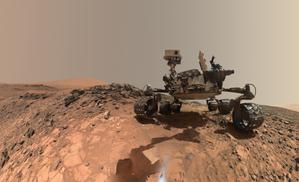
Mars rover Curiosity
imagen
Pie de foto: This self-portrait of NASA's Curiosity Mars rover shows the vehicle at the site from which it reached down to drill into a rock target called "Buckskin" on lower Mount Sharp. The selfie combines several component images taken by Curiosity's Mars Hand Lens Imager (MAHLI) on 5 August 2015, during the 1,065th Martian day, or sol, of the rover's work on Mars.
Crédito: NASA/JPL-Caltech/MSSS
Enlace del crédito
Términos del glosario:
Marte , Rover
Categorías:
Sistema Solar
, Exploración espacia
Licencia: Dominio público Dominio público íconos
Archivo
( imagen
1.60 MB)





