Documents & Ressources - Résultat de la recherche
Résultats de la recherche

Iron Meteorite
image
Légende : This iron meteorite was originally found in Harriman, Tennessee, USA and is now held in the collection of the Smithsonian Natural History Museum, Washington DC, USA. The total mass of the meteorite was about 30kg. Here we see the interior after the meteorite was cut into pieces.
Iron meteorites are largely composed of an iron-nickel. They also often have a crystalline structure which manifests here as a series of crossing shiny straight lines known as a Widmanstätten pattern. This is thought to have formed as the meteoroid (the object that would eventually fall through the Earth's atmosphere as a meteor and land on the ground as a meteorite) cooled very slowly in the vacuum of space in the early solar system. This led to the growth of this crystalline structure.
Crédit : Chuck Sutherland
Lien du crédit
Termes du glossaire:
Météorite ferreuse , Météorites , Étoile filante
Catégories :
Planète Terre
, Système solaire
Licence : Domaine Public Domaine Public Icônes
Fichier
( image
4.51 MB)
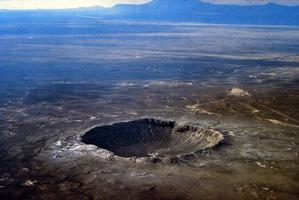
Meteoroids, Meteors and Meteorites Activités pédagogiques de astroEDU (liens vers le site astroEDU) Origin: astroEDU Description : Unveiling the mystery of "shooting stars": meteors, meteorites and meteroids
Termes du glossaire:
Astéroïde , Comète , Cratère , Terre , Météorites , Météoroïde , Étoile filante
Catégories :
Planète Terre
, Système solaire
Mots clés :
Geology
Tranches d'âge :
6-8
, 8-10
, 10-12
, 12-14
Niveau scolaire :
Collège
, Primaire
Domaines d'apprentissage :
Cours interactif
Coûts :
Faible
Durée :
1h 30m
Taille du groupe :
Par groupe
Compétences :
Analyser et interpréter des données
, Poser des questions
, Communiquer des informations
, S'engager dans des arguments fondés sur des preuves
Auteurs : Christian Eistrup, Jorge Rivero González, Ronan Smith
Licence : Creative Commons (CC) Attribution 4.0 International (CC BY 4.0) Creative Commons (CC) Attribution 4.0 International (CC BY 4.0) Icônes






- Ressources
- Moteur de recherche des ressources pédagogiques
- Parcourir les ressources pédagogiques par Sujet
- Parcourir les images
- AstroEdu - Activités en classe
- Grandes Idées - Littéracie en astronomie
- Glossaire
- Rapports de l'OAE
- L'astronomie pour l'Education à travers le monde
- Sélection de ressources externes