Documents & Resources - Search Results
Search results
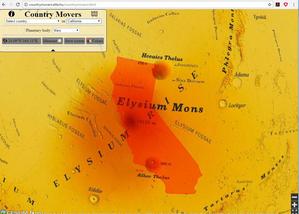
Country Movers – Visualizing Spatial Scales in Planetary and Earth Sciences astroEDU educational activity (links to astroEDU website) Origin: astroEDU Description: Play with maps, moving your country to another planet!
शब्दावली:
Planetary Science
Categories:
Planet Earth
, Solar System
, Space Exploration
Tags:
Distances
, Geography
, Maps
, Software
, Spatial thinking
, size
Age Ranges:
12-14
, 14-16
, 16-19
, 19+
Education Level:
Middle School
, Secondary
, University
Areas of Learning:
Guided-discovery learning
Costs:
Low Cost
Duration:
2 hours
Group Size:
Group
Skills:
Analysing and interpreting data
, Communicating information
, Constructing explanations
, Planning and carrying out investigations
Authors: Henrik Hargitai, Mátyás Gede
License: Creative Commons Attribution 4.0 International (CC BY 4.0) Creative Commons Attribution 4.0 International (CC BY 4.0) icons
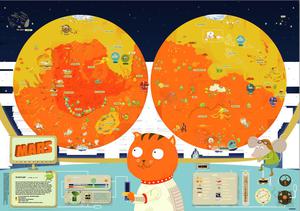
Children's Planetary Maps: Mars astroEDU educational activity (links to astroEDU website) Origin: astroEDU Description: Explore planet Mars, learning how to use planetary maps!
शब्दावली:
Astrobiology , Mars , Planetary Science
Categories:
Exoplanets & Astrobiology
, Solar System
, Space Exploration
Tags:
Maps
, Planetary cartography
Age Ranges:
6-8
, 8-10
, 10-12
, 12-14
Education Level:
Middle School
, Primary
, Secondary
Areas of Learning:
Structured-inquiry learning
Costs:
Free
Duration:
2 hours
Group Size:
Group
Skills:
Analysing and interpreting data
, Asking questions
, Constructing explanations
Authors: Henrik Hargitai, Mátyás Gede
License: Creative Commons Attribution 4.0 International (CC BY 4.0) Creative Commons Attribution 4.0 International (CC BY 4.0) icons
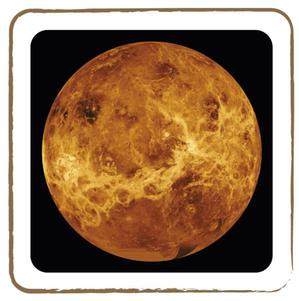
Children's Planetary Maps: Venus astroEDU educational activity (links to astroEDU website) Origin: astroEDU Description: Learn more about our nearest neighbour
शब्दावली:
Astrobiology , Planetary Science , Venus
Tags:
Planetary cartography
, Spatial thinking
Age Ranges:
6-8
, 8-10
, 10-12
, 12-14
Education Level:
Middle School
, Primary
, Secondary
Areas of Learning:
Structured-inquiry learning
Costs:
Low Cost
Duration:
2 hours
Group Size:
Group
Skills:
Analysing and interpreting data
, Asking questions
, Communicating information
, Constructing explanations
, Developing and using models
, Engaging in argument from evidence
, Planning and carrying out investigations
Authors: Henrik Hargitai, Mátyás Gede
License: Creative Commons Attribution 4.0 International (CC BY 4.0) Creative Commons Attribution 4.0 International (CC BY 4.0) icons
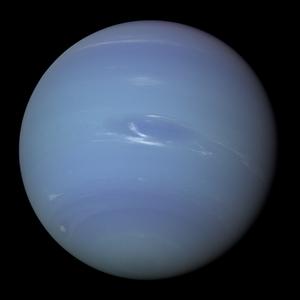
Neptune
image
Caption: Voyager 2 Narrow Angle Camera image of Neptune taken in August 1989. The Great Dark Spot, flanked by cirrus clouds, is at center. A smaller dark storm, Dark Spot Jr., is rotating into view at bottom left. Additionally, a patch of white cirrus clouds to its north, named "Scooter" for its rapid motion relative to other features, is visible.
Credit: NASA / JPL / Voyager-ISS / Justin Cowart
Credit Link
शब्दावली:
Giant Planet , Ice Giant , Neptune , Outer Planets
Categories:
Solar System
License: Public Domain Public Domain icons
फाइल
( image
407.35 kB)
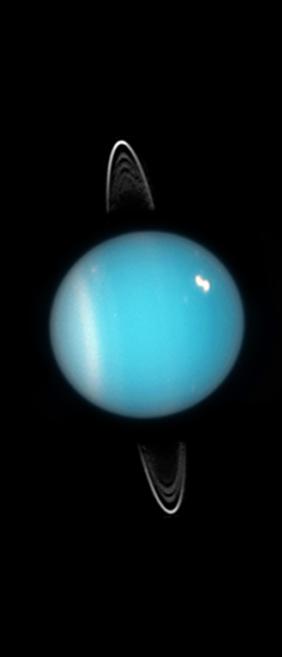
Uranus with rings
image
Caption: The NASA/ESA Hubble Space Telescope’s ACS/HRC camera observed Uranus in August 2005. The surface depicts white clouds and a bright polar region. The rings around Uranus are narrow and contain rocky material from tiny dust particles up to metre-sized boulders.
Credit: NASA, ESA, and M. Showalter (SETI Institute)
Credit Link
शब्दावली:
Giant Planet , Ice Giant , Outer Planets , Ring , Uranus
Categories:
Solar System
License: Public Domain Public Domain icons
फाइल
( image
54.70 kB)





