Documents & Resources - Search Results
Search results

Neptune’s Moon Triton Fosters Rare Icy Union
image
Caption: An image of Neptune's moon Triton taken by NASA's Voyager 2 spacecraft. This image covers the south pole region of Triton. Triton's surface is covered by an icy mix of frozen nitrogen, water and carbon dioxide. Below the surface some of these compounds are thought to be in a liquid state. These liquids can burst out of the surface through geysers. These geysers produce the dark streaks seen in this image.
Credit: NASA/JPL
Credit Link
Termes del glossari:
Moons , Neptune , Triton
Categories:
Solar System
License: Creative Commons Reconeixement 4.0 Internacional (CC BY 4.0) Creative Commons Reconeixement 4.0 Internacional (CC BY 4.0) icons
Arxiu
( image
506.41 kB)
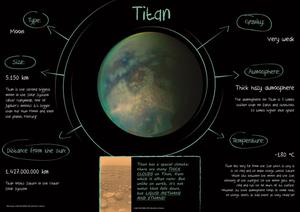
Children's Planetary Maps: Titan astroEDU educational activity (links to astroEDU website) Description: Learn about the only other known body in the Solar System with Seas and Lakes
Termes del glossari:
Astrobiology , Planetary Science , Titan
Tags:
Maps
, Planetary cartography
, Spatial thinking
Age Ranges:
6-8
, 8-10
, 10-12
Education Level:
Middle School
, Primary
, Secondary
Areas of Learning:
Structured-inquiry learning
Costs:
Low Cost
Duration:
2 hours
Group Size:
Group
Skills:
Analysing and interpreting data
, Asking questions
, Communicating information
, Constructing explanations
, Developing and using models
, Engaging in argument from evidence
, Planning and carrying out investigations
Authors: Henrik Hargitai, Mátyás Gede
License: Creative Commons Reconeixement 4.0 Internacional (CC BY 4.0) Creative Commons Reconeixement 4.0 Internacional (CC BY 4.0) icons
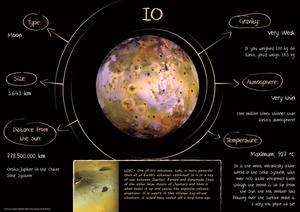
Children's Planetary Maps: Io astroEDU educational activity (links to astroEDU website) Description: Learn about the most geologically active world in our Solar System
Termes del glossari:
Astrobiology , Io , Planetary Science
Tags:
Maps
, Planetary cartography
, Spatial thinking
Age Ranges:
6-8
, 8-10
, 10-12
, 12-14
Education Level:
Middle School
, Primary
, Secondary
Areas of Learning:
Structured-inquiry learning
Costs:
Low Cost
Duration:
2 hours
Group Size:
Group
Skills:
Analysing and interpreting data
, Asking questions
, Communicating information
, Constructing explanations
, Developing and using models
, Engaging in argument from evidence
, Planning and carrying out investigations
Authors: Henrik Hargitai, Mátyás Gede
License: Creative Commons Reconeixement 4.0 Internacional (CC BY 4.0) Creative Commons Reconeixement 4.0 Internacional (CC BY 4.0) icons
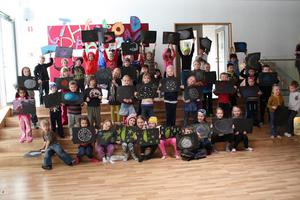
Deadly Moons astroEDU educational activity (links to astroEDU website) Description: Through art and science, children learn about moons of our solar system.
Termes del glossari:
Moons , Solar System , Space
Tags:
Art
, Creativity
, Drawing
, Hands-on
Age Ranges:
6-8
, 8-10
, 10-12
Education Level:
Primary
, Secondary
Areas of Learning:
Fine Art focussed
, Structured-inquiry learning
Costs:
High Cost
Duration:
1 hour
Group Size:
Group
Skills:
Asking questions
, Communicating information
Authors: Deirdre Kelleghan
License: Creative Commons Reconeixement 4.0 Internacional (CC BY 4.0) Creative Commons Reconeixement 4.0 Internacional (CC BY 4.0) icons

Pan
image
Caption: NASA's Cassini spacecraft captured this image of Saturn's moon Pan in March 2017. Pan is a so-called shepherd moon that orbits Saturn within the Encke gap of Saturn's rings. The striking thin brim stems from material Pan collects during its trajectory through the rings. Pan has a mean diameter of alomst 30 km.
Credit: NASA/JPL-Caltech/Space Science Institute
Credit Link
Termes del glossari:
Moons
Categories:
Solar System
License: Public Domain Public Domain icons
Arxiu
( image
469.25 kB)


