Documents & Resources - Search Results
Search results
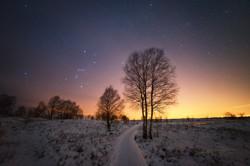
Starry Night over Eifel national park, by Dong Han, China
image
Created for the OAE
Caption: First place in the 2021 IAU OAE Astrophotography Contest, category Light pollution.
Light pollution results from the excess of artificial light produced by human endeavours mainly as a side effect of industrialisation. This kind of pollution is usually most noticeable around well populated areas associated with intense human activities, such as street lighting, lights from the transportation system, buildings and houses. But it can also come from other places, such as ships and oil platforms in the sea. This image taken in a national park in Belgium in 2018 shows the detrimental effect of light pollution on the most precious resource that connects all humans together – the night sky.
Credit: Dong Han/IAU OAE
Glossary Terms:
Light Pollution
Categories:
Naked Eye Astronomy
License: Creative Commons Attribution 4.0 International (CC BY 4.0) Creative Commons Attribution 4.0 International (CC BY 4.0) icons
This file on Zenodo ( image 532.95 kB)

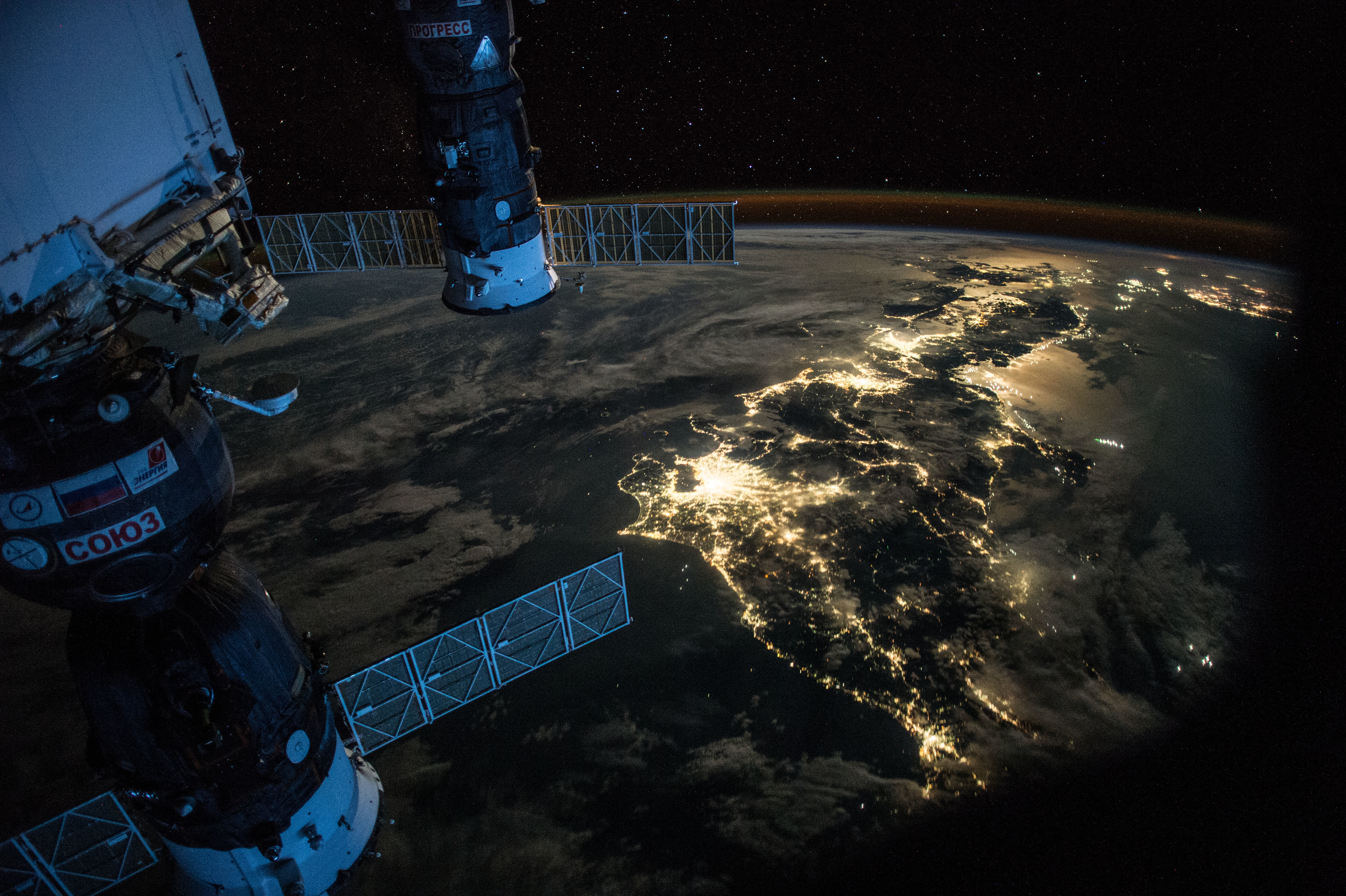
ISS' view of nightly Japan
image
Caption: This nighttime photograph of Earth was taken from the International Space Station (ISS) by astronaut Scott Kelly in 2015 during Expedition 44. It captures the nation of Japan lit up after dark, with bright city lights tracing urban centers, major roadways, and densely populated regions. The view from orbit at night highlights how human activity shows up as patterns of light on Earth’s surface, with well-lit areas contrasting sharply against the surrounding darkness of rural regions and open water.
Photographs like this highlight what “night” looks like from space — not just a lack of sunlight, but also a time when artificial light reveals the rhythms of human life across the globe. From hundreds of kilometers above the planet, the night side of Earth appears as a tapestry of glowing clusters and dark spaces, offering insight into population distribution, infrastructure, and how cities remain active long after sunset. The ISS’s low orbit allows astronauts to capture these detailed views of Earth after dark, helping us appreciate both natural and human elements of nighttime on our planet.
Credit: NASA
Credit Link
Glossary Terms:
Earth , Night
License: Public Domain Public Domain icons
File
( image
24.73 MB)
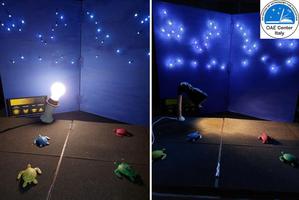
Let there be light… but not too much! astroEDU educational activity (links to astroEDU website) Origin: astroEDU Description: Build a model to learn what light pollution is and what its effects are.
Glossary Terms:
Light , Light Pollution , Night
Categories:
Planet Earth
Tags:
Pollution
, lighting source
, sky observation
Age Ranges:
6-8
, 8-10
, 10-12
Education Level:
Middle School
, Primary
Areas of Learning:
Discussion Groups
, Modelling
, Observation based
, Project-based learning
Costs:
Medium Cost
Duration:
2 hours
Group Size:
Group
Skills:
Asking questions
, Developing and using models
, Engaging in argument from evidence
Authors: Jean Pierre Saghbini, Marc Bou Zeid
License: Creative Commons Attribution 4.0 International (CC BY 4.0) Creative Commons Attribution 4.0 International (CC BY 4.0) icons
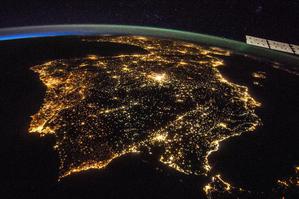
How Many Stars Can You See at Night? astroEDU educational activity (links to astroEDU website) Origin: astroEDU Description: Investigate the effects of light pollution on night sky observation.
Glossary Terms:
Light , Light Pollution
Categories:
Observational Astronomy
, Planet Earth
Tags:
Constellations
, Observation of sky
, Pollution
, Software
, ecology
, stellarium
Age Ranges:
12-14
Education Level:
Middle School
Areas of Learning:
Observation based
, Structured-inquiry learning
Costs:
Low Cost
Duration:
45 mins
Group Size:
Group
Skills:
Analysing and interpreting data
, Communicating information
, Planning and carrying out investigations
Authors: José Gonçalves, Franziska Zaunig
License: Creative Commons Attribution 4.0 International (CC BY 4.0) Creative Commons Attribution 4.0 International (CC BY 4.0) icons
Globe at Night Activity Guide astroEDU educational activity (links to astroEDU website) Origin: astroEDU Description: Learn to observe and record the faintest visible stars to measure the light pollution.
Glossary Terms:
Earth , Light Pollution
Categories:
Observational Astronomy
, Planet Earth
, Solar System
Tags:
Citizen science
, Dark skies
, Hands-on
, ecology
Age Ranges:
4-6
, 6-8
, 8-10
, 10-12
, 12-14
, 14-16
, 16-19
, 19+
Education Level:
Informal
, Middle School
, Other
, Primary
, Secondary
, University
Areas of Learning:
Observation based
, Project-based learning
Costs:
Low Cost
Group Size:
Group
Skills:
Communicating information
, Planning and carrying out investigations
Authors: Amee Hennig
License: Creative Commons Attribution 4.0 International (CC BY 4.0) Creative Commons Attribution 4.0 International (CC BY 4.0) icons