Documents & Resources - Search Results
Search results
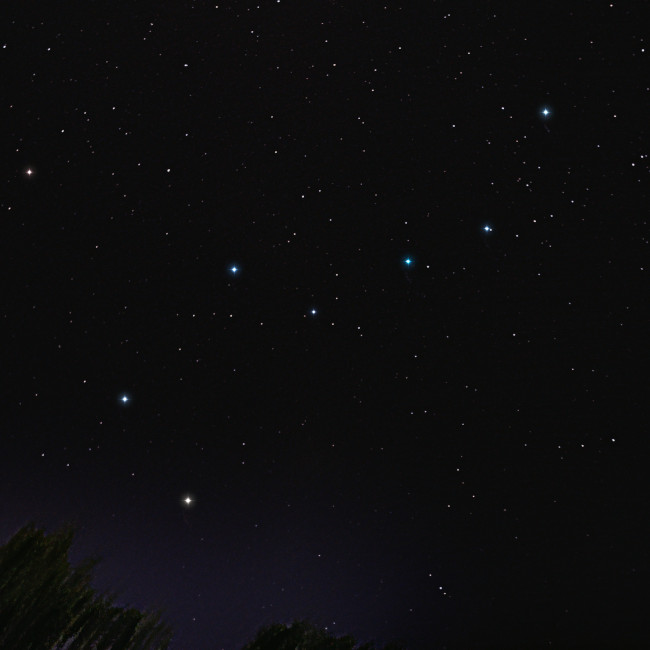
Big Dipper
image
Created for the OAE
Caption: Honourable mention in the 2022 IAU OAE Astrophotography Contest, category Still images of celestial patterns.
This photograph, taken in Udupi, India, in May 2021, shows the seven brightest stars in the constellation Ursa Major. This asterism was seen as a Wagon by the Babylonians, which probably led to the alternative interpretation of the Chariot in the didactic poem of the Greek poet Aratus. The normal Greek interpretation is the constellation of the Great She-Bear, which also includes many fainter stars in a much broader area of the sky.
In ancient Egypt, these seven stars form the figure of the Bull’s Foreleg or the Bull’s Thigh. It is considered a part of the leg of the god Seth, who was considered the evil one of two brothers; the god Osiris (who is sometimes considered the first king of Egypt) was murdered by his brother Seth. Their loving sister put together the scattered pieces of the corpse and reanimated him. In order to prevent Seth from further evil deeds, this leg was attached to a dowel in the sky.
These seven bright stars were considered The Northern Dipper, containing the asterism of the Judges by the nobility in Ancient China. In French and in Dutch, it is called a Saucepan, in German a Chariot and in British English a Plough. The commonly known term “Big Dipper” is American English. They are considered the male figure who is the father of all stars and humans in the North American Navajo saga, where he is said to be the husband of a mother goddess seen in Cassiopeia. Similarly, it is designated the Man’s Cart in Norse mythology with the Woman’s Cart in Ursa Minor. In some other northern cultures, the group is interpreted as an Elk, for instance for the Inuits and Siberians, while the Sami see the Bow and Arrow of Favdna here. In contrast, not all cultures in the southern hemisphere named it because it is always either close to the horizon or invisible. For instance, the Brazilian Tucano people called it the Large Anus of the Snake and in Samoa it forms part of the Heirloom Warclub.
The Hawaiian people also used the asterism for navigation and called it The Seven, while the Macedonian tradition interpreted it as Seven Thieves. In Italian star lore, it is either called The Seven Oxen (Rome) or The Seven Brothers (Sardinia). Similarly, the Mongolian traditions speak of Seven Buddahs while the Indians call it the Seven Sages.
Credit: Arya Anthony/IAU OAE
Glossary Terms:
Big Dipper , Asterism
Categories:
Naked Eye Astronomy
, Stars
License: Creative Commons Attribution 4.0 International (CC BY 4.0) Creative Commons Attribution 4.0 International (CC BY 4.0) icons
This file on Zenodo ( image 12.59 MB)

Big Dipper Over the Mono Lake
video
Created for the OAE
Caption: Honorable mention in the 2023 IAU OAE Astrophotography Contest, category of Time-lapses of rotation of Big Dipper or Southern Cross.
The Big Dipper asterism gracefully moves above the otherworldly tufa formations of Mono Lake, California. The time-lapse captures the Big Dipper’s movement across the northern horizon until its inferior conjunction. At Mono Lake’s latitude (+38°), the stars of the Big Dipper remain circumpolar, except for Alkaid. The North Star sits 38° above the horizon, just outside the field of view in the top right. The lunar illumination bathes the landscape in a soft glow, gradually fading as the Moon sets, cloaking the scene in darkness.
Credit: Fabrizio Melandri/IAU OAE (CC BY 4.0)
Glossary Terms:
Big Dipper , Celestial Pole , Celestial Sphere , Circumpolar Stars , Earth's Rotation , Polaris
Categories:
Naked Eye Astronomy
Tags:
astrophotography
License: Creative Commons Attribution 4.0 International (CC BY 4.0) Creative Commons Attribution 4.0 International (CC BY 4.0) icons
This file on Zenodo ( video 65.30 MB)
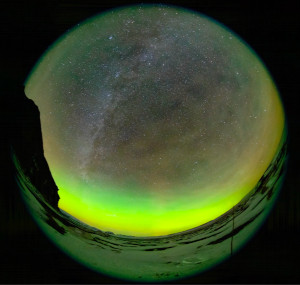
The Big Dipper in the Polar Night
video
Created for the OAE
Caption: Third place winner in the 2023 IAU OAE Astrophotography Contest, category of Time-lapses of rotation of Big Dipper or Southern Cross.
Step into the cosmic theatre of Iceland’s northern skies in this time-lapse where the illustrious Big Dipper commands attention, tracing an almost complete circle around Polaris — an exquisite sight that is not visible from mid-latitudes. This time-lapse, captured through fisheye lenses, reveals the timeless choreography of the Big Dipper, vividly illustrating its celestial waltz. Amidst this spectacle, the Arctic night reveals its grandeur, painting a panoramic canvas that showcases not just the celestial journey of this iconic asterism but also the ethereal dance of the Northern Lights. In this breathtaking tapestry, the Big Dipper takes centre stage against the mesmerising backdrop of the Icelandic nightscape, adorned by the vibrant hues of the Aurora Borealis.
Credit: Stephanie Ziyi Ye/IAU OAE (CC BY 4.0)
Glossary Terms:
Aurora , Big Dipper , Polar Night , Aurora Borealis
Categories:
Naked Eye Astronomy
, Planet Earth
Tags:
astrophotography
License: Creative Commons Attribution 4.0 International (CC BY 4.0) Creative Commons Attribution 4.0 International (CC BY 4.0) icons
This file on Zenodo ( video 164.96 MB)

Big Dipper and Comet Neowise C2020 F3
video
Created for the OAE
Caption: Honorable mention in the 2023 IAU OAE Astrophotography Contest, category of Time-lapses of rotation of Big Dipper or Southern Cross.
This time-lapse documents the trajectory of the iconic Big Dipper across three frames taken in July 2020. Captured from three locations in Italy, Tre Cime di Lavaredo Auronzo di Cadore, Monte Rite, Cibiana di Cadore, and Casera Razzo, Vigo di Cadore, this visual odyssey showcases the captivating journey of the Big Dipper with the addition of trails of stars painting a celestial canvas. It not only traces the path of this renowned asterism but also features the rare appearance of comet Neowise C/2020 F3, an extraordinary event that graced our skies during July 2020.
Credit: Giorgia Hofer/IAU OAE (CC BY 4.0)
Glossary Terms:
Big Dipper , Celestial Pole , Celestial Sphere , Circumpolar Stars , Polaris , Sky , Rotation
Categories:
Naked Eye Astronomy
Tags:
astrophotography
License: Creative Commons Attribution 4.0 International (CC BY 4.0) Creative Commons Attribution 4.0 International (CC BY 4.0) icons
This file on Zenodo ( video 51.23 MB)
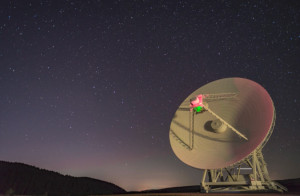
The Big Dipper with the Sardinia Radio Telescope SRT
video
Created for the OAE
Caption: Honorable mention in the 2023 IAU OAE Astrophotography Contest, category of Time-lapses of rotation of Big Dipper or Southern Cross.
This time-lapse captures the movement of the stars alongside the majestic 64-metre Sardinia Radio Telescope (SRT) from the National Institute of Astrophysics (INAF), with special attention to the renowned Big Dipper against the backdrop of the celestial sphere. The camera pans as the famous asterism sinks in the sky while planes fly past and the radio telescope rotates. The harmonious interplay between the stellar pathways and the colossal dish of the radio telescope creates a mesmerising visual ode to the cosmic ballet taken in September 2019.
Credit: Antonio Finazzi/IAU OAE (CC BY 4.0)
Glossary Terms:
Astronomy , Big Dipper , Celestial Pole , Celestial Sphere , Earth's Rotation , Observation , Polaris
Categories:
Naked Eye Astronomy
Tags:
astrophotography
License: Creative Commons Attribution 4.0 International (CC BY 4.0) Creative Commons Attribution 4.0 International (CC BY 4.0) icons
This file on Zenodo ( video 441.31 MB)





