文档与资源 - 搜索结果
搜索结果

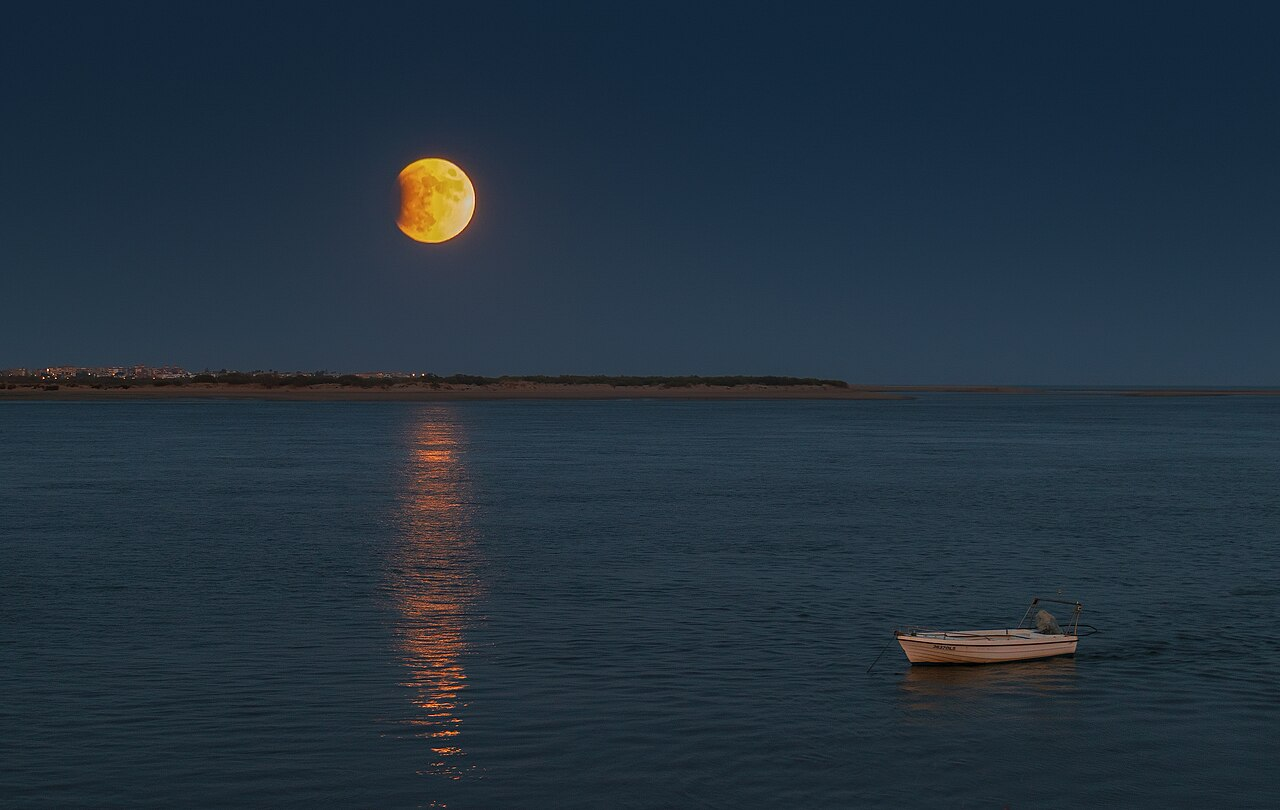
Partial Lunar Eclipse over southern Portugal
图像
图注: The image shows a partial lunar eclipse from the 16th of July 2019, taken in southern Portugal. A lunar eclipse happens at full moon so without the eclipse we would see the full lunar disk. Earth’s curved shadow is clearly visible on the left side of the lunar disk. The remaining surface of the Moon is dipped into a deep orange color due. This is because at a lunar eclipse the Earth is positioned between the Moon and the Sun. While the solid part of the Earth creates the shadow we see on the left side of the Moon, sunlight also shines through Earth’s atmosphere. This scatters blue sunlight allowing most red sunlight through, the same process which turns the evening sun into a beautiful and colorful sunset.
来源: ToryYu1989
来源链接
词汇表:
日蚀 , 月偏食
授权许可: CC0 1.0 通用 (CC0 1.0) 公共领域贡献 CC0 1.0 通用 (CC0 1.0) 公共领域贡献 图标
文件
( 图像
662.30 kB)
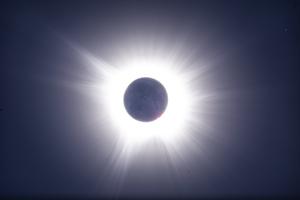
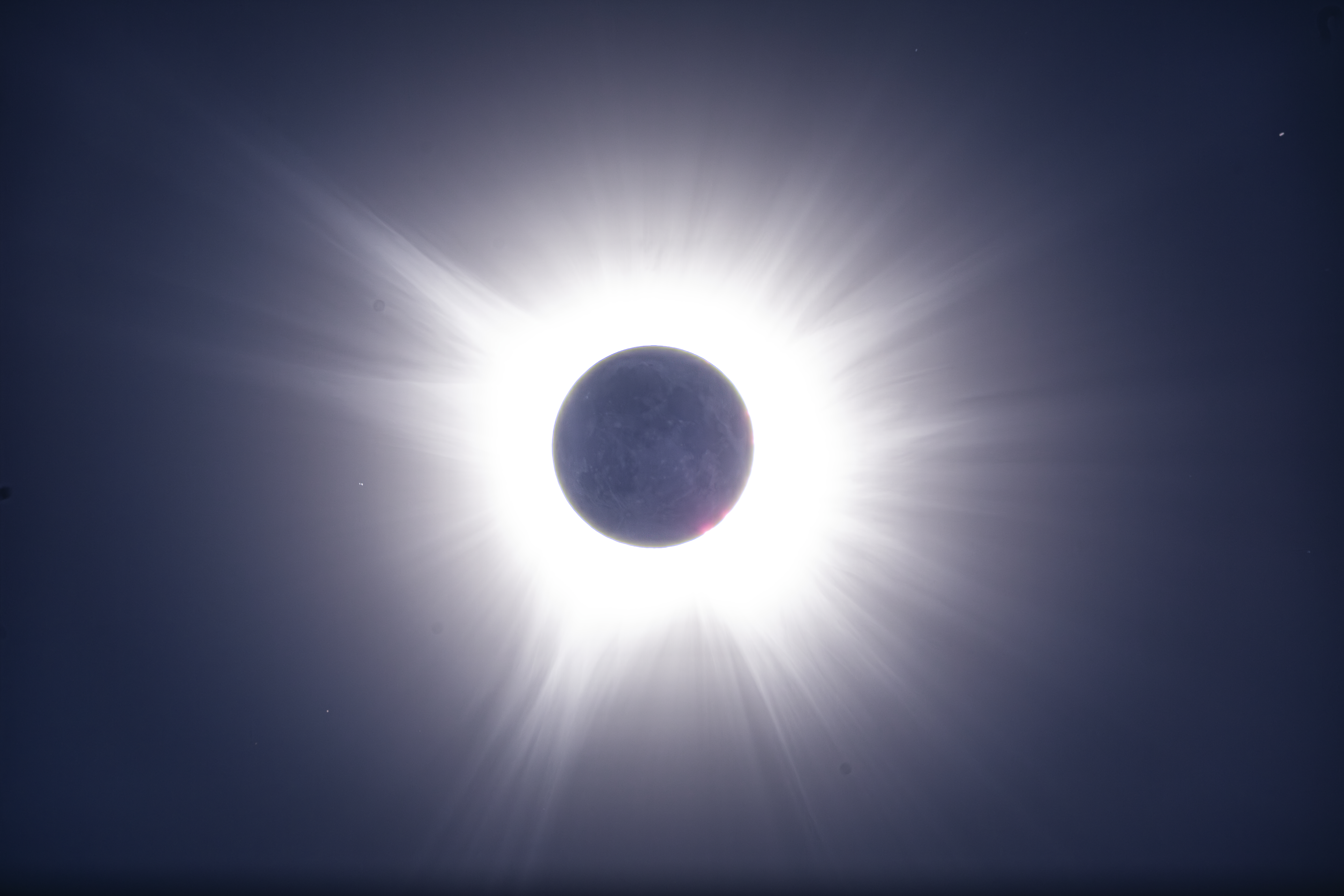
Moon covering the Sun
图像
图注: Moon covering the Sun during the total solar eclipse of April 8th, 2024. The solar corona is also visible at totality. Image taken in Arkansas, USA. This image was processed using a Larson-Sekanina-style technique. Multiple exposures ranging from 1/500 second to 4 seconds were stacked and combined with a rotational gradient filter to reveal fine structural detail across the corona's extreme brightness range. This is done because the inner corona saturates at longer exposures, while the outer corona and the Moon are only visible at those same longer exposures.
来源: Carolin Liefke
授权许可: 知识共享许可协议 署名 4.0 国际 (CC BY 4.0) 知识共享许可协议 署名 4.0 国际 (CC BY 4.0) 图标
文件
( 图像
15.25 MB)

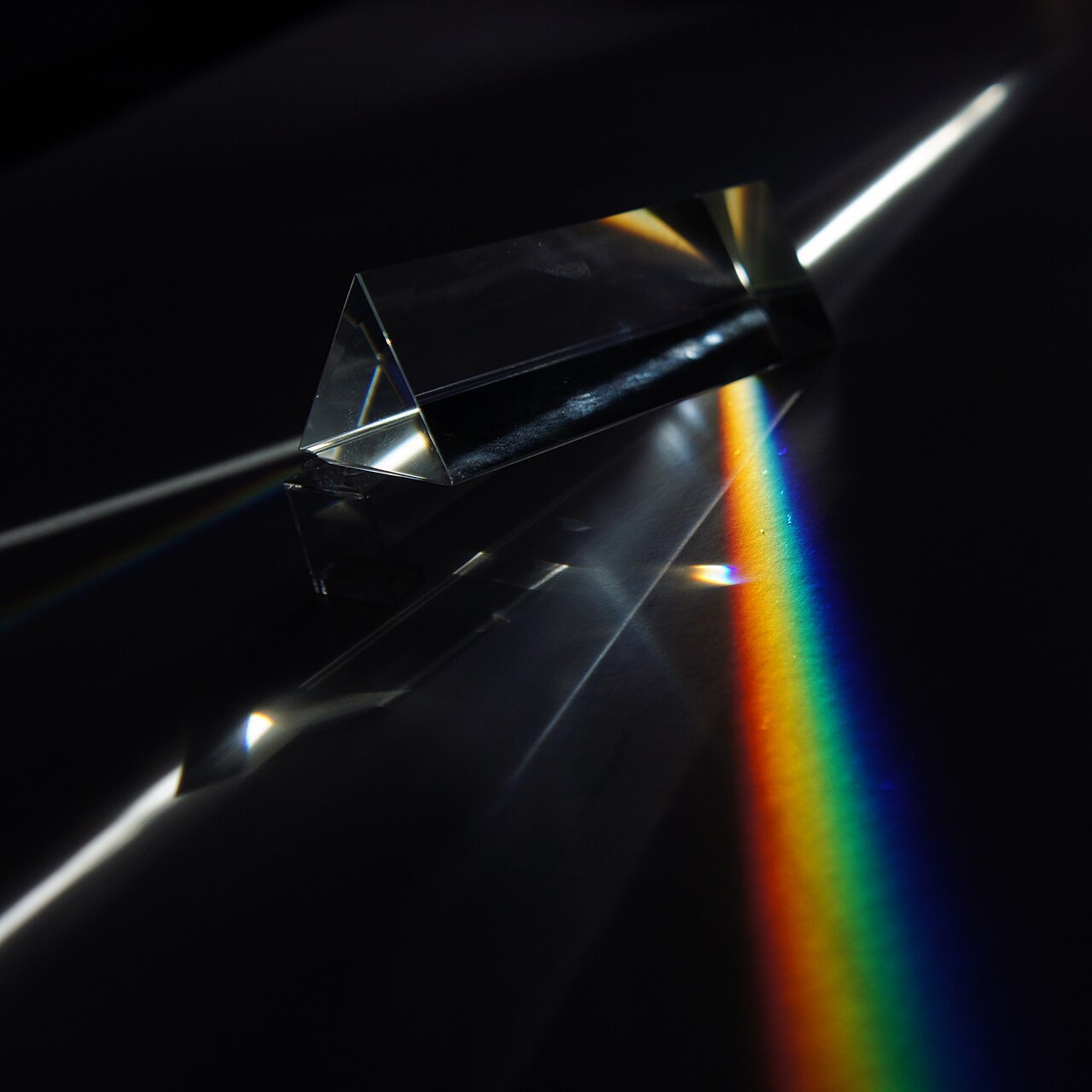
Light Dispersion by a Triangular Prism
图像
图注: This photograph shows a prism splitting a beam of white light into its component colors — a beautiful demonstration of optics, the branch of physics that studies how light behaves and interacts with materials. When white light enters the prism, different wavelengths (colors) bend by different amounts because of a process called refraction. This separation of colors produces a spectrum — similar to a rainbow — revealing that white light is actually made up of many colors combined going from blue, through green and yellow to red.
Understanding optics helps scientists and engineers design lenses, microscopes, telescopes, cameras, and many other tools that shape and control light for practical use. The way the prism disperses light into a spectrum is the same principle that makes rainbows form in the sky when sunlight passes through raindrops.
来源: Kelvinsong
来源链接
词汇表:
光 , 光学 , 可见光谱
授权许可: CC0 1.0 通用 (CC0 1.0) 公共领域贡献 CC0 1.0 通用 (CC0 1.0) 公共领域贡献 图标
文件
( 图像
777.82 kB)

Herschel’s view of new stars and molecular clouds
图像
图注: This image shows the Westerhout 3, 4 and 5 star formation regions. This area has huge amounts of gas and dust. This gas and dust hides the physical processes going on in this region from studies using visible light. This image was taken in infrared light by the Herschel Space Observatory. This infrared light allowed Herschel to see deep into these star forming regions.
In Westerhout 3, 4 and 5, huge, cold clouds of molecular hydrogen have collapsed into dense knots and filaments. Within these new structures the gas is dense and cold enough for it to collapse and form stars. These new stars give off powerful winds of charged particles, like stronger versions of the solar wind our sun gives off. These winds have combined to blow massive bubbles in the surrounding gas and dust. These are visible as the large darker voids in the image.
来源: ESA/Herschel/NASA/JPL-Caltech; acknowledgement: R. Hurt (JPL-Caltech)
来源链接
词汇表:
红外天文学 , 恒星形成 , 星际介质 , 分子云 , 星风
分类:
银河系与星际介质
, 恒星
授权许可: 知识共享许可协议 Attribution 3.0 IGO 知识共享许可协议 Attribution 3.0 IGO 图标
文件
( 图像
4.53 MB)
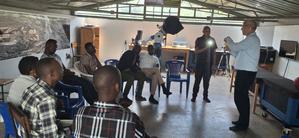
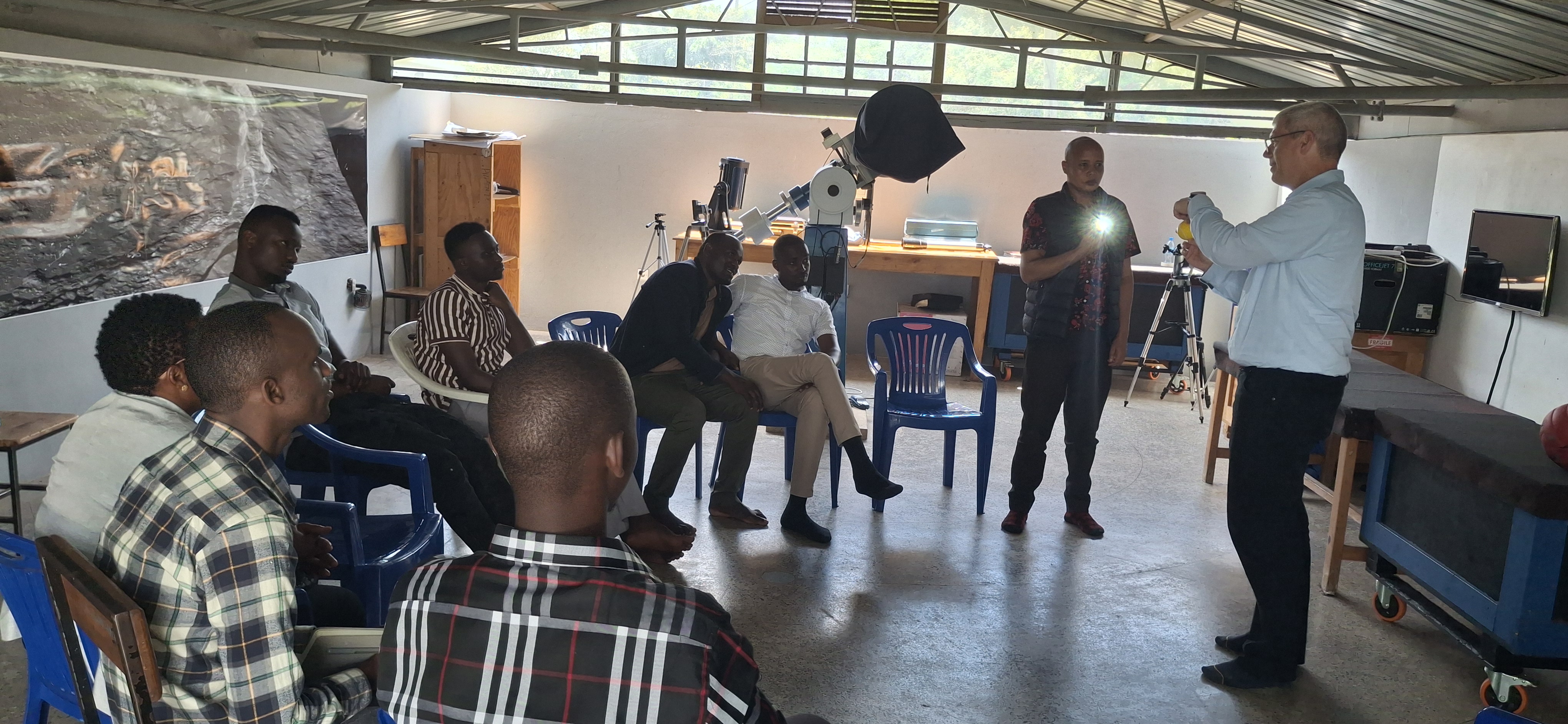
Teacher Training at Mount Meru
图像
图注: Teacher training workshop was held at the Mount Meru Astronomical Observatory (MMAO) to strengthen secondary school teachers’ knowledge and confidence in integrating astronomy into geography and physics lessons. The workshop revealed that many teachers had limited background in astronomy and often skipped astronomy-related topics because of a lack of confidence and teaching resources. The morning session introduced the basic concepts of astronomy, while the afternoon focused on simple, practical classroom activities, including using a football and tennis ball to model the Earth and Moon, a one-metre paper ruler and stickers to demonstrate the scale of the Solar System, and Austrian chocolate snails to represent the Milky Way and the position of our Solar System within it. The Solar System modelling activity generated lively discussions and encouraged teachers to explore creative ways of teaching astronomy. The workshop concluded with a collection of astronomical images, leaving participants with new ideas, practical activities, and greater enthusiasm for bringing astronomy into their classrooms.