Glossar-Begriff: Mondphase
Beschreibung: Als Mondphase bezeichnet man die für uns von der Sonne beleuchtete und sich ändernde sichtbare Form des Mondes. Zwar wird - außer bei Mondfinsternissen - die Hälfte des Mondes immer von der Sonne beschienen. Allerdings bewegt sich der Mond auf einer Umlaufbahn um die Erde, sodass es für uns so aussieht, als würden während seiner Runde um die Erde verschiedene Teile des Mondes beleuchtet. Ein ganzer Mondphasenzyklus beginnt und endet mit derselben Mondphase. Eine Runde des Mondes um die Erde dauert etwa einen Monat, genauer gesagt 29,5 Tage. Wenn wir z. B. vom Neumond ausgehen, nimmt der beleuchtete Teil des Mondes aufgrund dieser Rotation allmählich zu (zunehmende Phase) und wird zu einer Sichel. Der Halbmond entsteht bei einem Winkel von 90 Grad relativ zum Startpunkt bei Neumond. Der beleuchtete Teil des Mondes nimmt weiter zu: Er wird dann konvex oder wulstförmig. Der Vollmond tritt bei 180 Grad relativ zum Startpunkt auf. Danach nimmt die Form des Mondes allmählich ab (abnehmende Phase), was zu einem abnehmenden Mond, der Halbmondphase bei 270 Grad vom Startpunkt, der Mondsichel und schließlich wieder zum Neumond bei 360 Grad führt. Obwohl der Mond bei 90 und 270 Grad wie ein Halbmond ausschaut (für uns sieht das so aus, als ob genau eine Hälfte seiner "Vorderseite" beleuchtet wäre), sind dann jeweils die entgegengesetzten Hälften beleuchtet.
Ähnliche Begriffe:
Dieser Begriff in anderen Sprachen
Begriffs- und Definitionsstatus Die Originaldefinition dieses Begriffes auf Englisch wurden von einem forschenden Astronom und einer Lehrkraft bestätigt Die Übersetzung dieses Begriffs und seiner Definition warten auf Prüfung und Bestätigung
The OAE Multilingual Glossary is a project of the IAU Office of Astronomy for Education (OAE) in collaboration with the IAU Office of Astronomy Outreach (OAO). The terms and definitions were chosen, written and reviewed by a collective effort from the OAE, the OAE Centers and Nodes, the OAE National Astronomy Education Coordinators (NAECs) and other volunteers. You can find a full list of credits here. All glossary terms and their definitions are released under a Creative Commons CC BY-4.0 license and should be credited to "IAU OAE".
Wenn dir ein inhaltlicher oder Übersetzungsfehler in diesem Glossarbegriff oder dieser Definition auffallen, bitte kontaktiere uns.
Auf anderen Sprachen
- Arabisch: الطور القمري
- Englisch: Lunar Phase
- Spanisch: Fase lunar
- Französisch: Phase lunaire
- Italienisch: Fase lunare
- Japanisch: 月の位相 (externer Link)
- Marathi: चंद्राच्या कला
- Brasilianisches Portugiesisch: Fase lunar
- Vereinfachtes Chinesisch: 月相
- Traditionelles Chinesisch: 月相
Ähnliche Medien
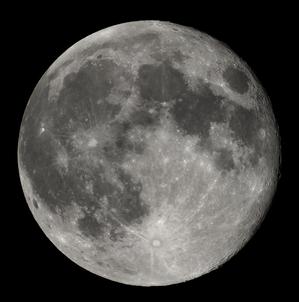
Vollmond
Unterschrift: Das Bild zeigt den fast vollen Mond, beobachtet mit einem kleinen Teleskop und einer DSLR-Kamera.
Bild: Luc Viatour
Quellenlink
License: CC-BY-SA-3.0 Creative Commons Namensnennung - Weitergabe unter gleichen Bedingungen 3.0 Unported Symbole

Vollmond
Unterschrift: Der Vollmond, aufgenommen von der südlichen Hemisphäre (Neuseeland). Während dieser Phase ist die beleuchtete Hälfte des Mondes von der Erde aus vollständig sichtbar.
Bild: Dave Young / dcysurfer
Quellenlink
License: CC-BY-2.0 Creative Commons Namensnennung 2.0 Generic Symbole

Erster Viertelmond
Unterschrift: Der erste Viertelmond, fotografiert von Neuseeland aus. Da die Hälfte der beleuchteten Hälfte des Mondes sichtbar ist, wird diese Phase im Volksmund als Halbmond bezeichnet.
Bild: Dave Young / dcysurfer
Quellenlink
License: CC-BY-2.0 Creative Commons Namensnennung 2.0 Generic Symbole

Erster Viertelmond
Unterschrift: Der erste Viertelmond, fotografiert von der nördlichen Hemisphäre aus (USA). In dieser Phase ist die Hälfte der beleuchteten Hälfte des Mondes sichtbar. Diese Phase ist im Volksmund als Halbmond bekannt.
Bild: Stephen Rahn
Quellenlink
License: CC0 CC0 1.0 Universell (CC0 1.0) Public Domain Dedication Symbole

Letzter Viertelmond
Unterschrift: Dieses Bild zeigt den letzten Viertelmond, fotografiert von der nördlichen Hemisphäre (USA) aus. Während dieser Phase ist die Hälfte der beleuchteten Hälfte des Mondes sichtbar. Diese Phase ist im Volksmund als Halbmond bekannt.
Bild: Stephen Rahn
Quellenlink
License: CC0 CC0 1.0 Universell (CC0 1.0) Public Domain Dedication Symbole
Ähnliche Diagramme
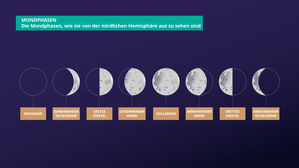
Mondphasen auf der Nordhalbkugel
Unterschrift: Die Mondphasen aus der Perspektive der nördlichen Hemisphäre. Hier ist Norden oben und Osten links. Der Mond umkreist die Erde alle 29,5 Tage. Er rotiert gebunden um die Erde, was bedeutet, dass seine Rotationsperiode mit seiner Umlaufperiode übereinstimmt und er der Erde immer die gleiche Seite zuwendet. Zu jedem beliebigen Zeitpunkt wird die Hälfte des Mondes von der Sonne beleuchtet, während die andere Hälfte im Schatten liegt. Im Verlauf eines Umlauf des Monds um die Erde wird jeder Teil des Mondes während der einen Hälfte des Umlaufs beleuchtet und liegt während der zweiten Hälfte im Schatten.
Befindet sich der Mond zwischen Erde und Sonne, ist seine beleuchtete Hälfte von der Erde abgewandt, und wir sehen nur den Teil der Oberfläche, der im Schatten liegt. Diese Mondphase wird als Neumond bezeichnet. Während sich der Mond auf seiner Bahn weiterbewegt, wird von der Erde aus ein kleiner, aber stetig anwachsender Streifen der beleuchteten Mondhälfte sichtbar. Dieser beleuchtete Streifen erscheint, von der Erde aus gesehen, auf der Westseite der Mondoberfläche. Diese Phase wird als zunehmender Sichelmond bezeichnet. Nach einem Viertel der Mondumlaufbahn um die Erde steht der Mond in einem Winkel von 90° zur Sonne, und die Hälfte der beleuchteten Mondhälfte ist der Erde zugewandt. Diese Phase wird als Erstes Viertel bezeichnet. Im weiteren Verlauf des Umlaufs ist dann mehr als die Hälfte der von der Erde aus sichtbaren Mondoberfläche beleuchtet. Diese Phase wird als zunehmender Mond bezeichnet. Sobald wir die Hälfte der Mondumlaufbahn um die Erde erreicht haben, befindet sich der Mond nun auf der der Sonne gegenüberliegenden Seite der Erde, so dass wir die gesamte beleuchtete Hälfte des Mondes sehen. Da nun die gesamte der Erde zugewandte Seite des Mondes beleuchtet ist, spricht man von „Vollmond“.
Während der verbleibenden Hälfte des Umlaufs beginnt die der Erde zugewandte Mondhälfte wieder in den Schatten zu rücken. Daher beginnt der beleuchtete Teil des Mondes, den wir von der Erde aus sehen, abzunehmen. Der westliche Rand der Mondoberfläche erscheint von der Erde aus betrachtet als erster dunkel, und die Größe des dunklen Bereichs nimmt im Laufe der folgenden Phasen weiter zu. Die Phasen wiederholen sich in umgekehrter Reihenfolge: abnehmender Mond, drittes Viertel, abnehmende Sichel und schließlich wieder Neumond.
Zu beachten ist, dass die Oberflächenmerkmale des Mondes nur zur Veranschaulichung dienen und die tatsächliche Oberfläche des Mondes nicht genau wiedergeben.
Bild: Aneta Margraf/IAU OAE
License: CC-BY-4.0 Creative Commons Namensnennung 4.0 International (CC BY 4.0) Symbole
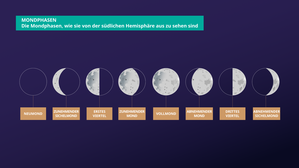
Mondphasen auf der südlichen Hemisphäre
Unterschrift: Die Mondphasen aus der Perspektive der südlichen Hemisphäre. Hier ist Norden oben und Westen links. Der Mond umkreist die Erde alle 29,5 Tage. Er umläuft die Erde in gebundener Rotation, was bedeutet, dass seine Rotationsperiode mit seiner Umlaufperiode übereinstimmt und der Erde immer dieselbe Seite des Mondes zugewandt ist. Zu jedem Zeitpunkt wird eine Hälfte des Mondes von der Sonne beleuchtet, während die andere Hälfte im Schatten liegt. Im Verlauf des Mondumlaufs um die Erde wird jeder Teil des Mondes während der einen Hälfte des Umlaufs beleuchtet und liegt während der anderen Hälfte im Schatten.
Befindet sich der Mond zwischen Erde und Sonne, ist seine beleuchtete Hälfte von der Erde abgewandt, und wir sehen nur die Hälfte, die im Schatten liegt. Diese Mondphase wird als Neumond bezeichnet. Während sich der Mond auf seiner Umlaufbahn weiterbewegt, wird von der Erde aus ein kleiner, aber immer größer werdender Streifen der beleuchteten Mondhälfte sichtbar. Dieser beleuchtete Streifen erscheint, von der Erde aus gesehen, auf der Westseite der Mondoberfläche. Diese Phase wird als zunehmende Mondsichel bezeichnet. Nach einem Viertel der Mondumlaufbahn um die Erde steht der Mond im Winkel von 90° zur Sonne und die Hälfte der beleuchteten Mondhälfte ist der Erde zugewandt. Diese Phase wird als Erstes Viertel bezeichnet. Im weiteren Verlauf des Umlaufs ist nun mehr als die Hälfte der von der Erde aus sichtbaren Mondoberfläche beleuchtet. Diese Phase wird als zunehmender Mond bezeichnet. Sobald wir die Hälfte des Mondumlaufs um die Erde erreicht haben, befindet sich der Mond auf der der Sonne gegenüberliegenden Seite der Erde und wir sehen die gesamte beleuchtete Hälfte des Mondes. Dies ist die Vollmondphase.
Während der verbleibenden Hälfte des Mondumlaufs beginnt die der Erde zugewandte Mondhälfte wieder in den Schatten zu rücken. Daher beginnt der beleuchtete Teil des Mondes, den wir von der Erde aus sehen, abzunehmen. Der westliche Rand der Mondoberfläche erscheint von der Erde aus betrachtet zunächst dunkel und dieser dunkle Bereich nimmt im Laufe der folgenden Phasen weiter zu. Die Phasen wiederholen sich in umgekehrter Reihenfolge: abnehmender Mond, drittes Viertel, abnehmende Sichel und schließlich wieder Neumond.
Zu beachten ist, dass die Oberflächenmerkmale des Mondes nur zur Veranschaulichung dienen und die tatsächliche Oberfläche des Mondes nicht genau wiedergeben.
Bild: Aneta Margraf/IAU OAE
License: CC-BY-4.0 Creative Commons Namensnennung 4.0 International (CC BY 4.0) Symbole
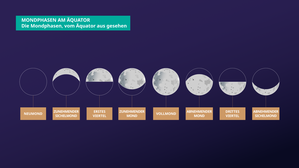
Mondphasen am Äquator
Unterschrift: Darstellung der Mondphasen, wie sie vom Erdäquator aus zu sehen sind. Im Diagramm ist Westen oben, Norden links und Osten unten. Der Mond umkreist die Erde alle 29,5 Tage. Er umläuft die Erde in gebundener Rotation, was bedeutet, dass seine Rotationsperiode mit seiner Umlaufperiode übereinstimmt und er der Erde immer die gleiche Seite zuwendet. Zu jedem beliebigen Zeitpunkt wird die Hälfte des Mondes von der Sonne beleuchtet, während die andere Hälfte im Schatten liegt. Im Verlauf eines Umlaufs des Monds um die Erde wird jeder Teil des Monds während der einen Hälfte des Umlaufs beleuchtet und liegt während der anderen Hälfte im Schatten.
Befindet sich der Mond zwischen Erde und Sonne, ist seine beleuchtete Hälfte von der Erde abgewandt und wir sehen nur diejenige Hälfte, die zu diesem Zeitpunkt im Schatten liegt. Diese Mondphase wird als Neumond bezeichnet. Während sich der Mond dann auf seiner Umlaufbahn weiterbewegt, wird von der Erde aus ein kleiner, aber immer größer werdender Streifen der beleuchteten Mondhälfte sichtbar. Dieser beleuchtete Streifen erscheint, von der Erde aus gesehen, auf der Westseite der Mondoberfläche. Diese Phase wird als zunehmender Sichelmond bezeichnet. Nach einem Viertel des Mondumlaufs um die Erde steht der Mond in einem Winkel von 90° zur Sonne und die Hälfte der beleuchteten Mondhälfte ist der Erde zugewandt. Diese Phase nennt man Erstes Viertel. Im weiteren Verlauf des Umlaufs ist nun mehr als die Hälfte der von der Erde aus sichtbaren Mondoberfläche beleuchtet. Wenn der Mond die Hälfte seines Umlaufs um die Erde absolviert hat, befindet er sich auf der der Sonne gegenüberliegenden Seite der Erde und wir sehen die gesamte beleuchtete Hälfte des Mondes. Dies ist die Vollmond-Phase.
Während der verbleibenden Hälfte der Mondumlaufbahn beginnt die der Erde zugewandte Mondhälfte zunehmend in den Schatten zu rücken. Daher beginnt der beleuchtete Teil des Mondes, den wir von der Erde aus sehen, zu schrumpfen oder abzunehmen. Der westliche Rand der Mondoberfläche erscheint von der Erde aus betrachtet als erster dunkel und dieser dunkle Bereich nimmt im Laufe der folgenden Phasen weiter zu. Die Phasen wiederholen sich in umgekehrter Reihenfolge: abnehmender Mond, drittes Viertel, abnehmende Sichel und schließlich wieder Neumond.
Die Perspektive in dieser Darstellung ist so gewählt, dass Westen oben, Norden links und Osten unten liegen. Wenn man den Mond in westlicher Richtung beobachtet, beispielsweise die zunehmende Sichel kurz nach Sonnenuntergang, wäre die Ansicht des Mondes um 180° gedreht.
Beachten Sie, dass die Oberflächenmerkmale des Mondes nur zur Veranschaulichung dienen und die tatsächliche Oberfläche des Mondes nicht genau wiedergeben.
Bild: Aneta Margraf/IAU OAE
License: CC-BY-4.0 Creative Commons Namensnennung 4.0 International (CC BY 4.0) Symbole
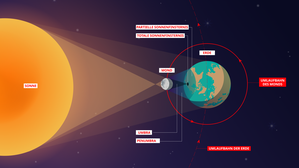
Totale Sonnenfinsternis
Unterschrift: Diese nicht maßstabsgetreue Darstellung zeigt, was während einer totalen Sonnenfinsternis geschieht. Der Mond umkreist die Erde, doch seine Umlaufbahn ist gegenüber der Umlaufbahn der Erde um die Sonne leicht geneigt. Während der Neumondphase befindet sich der Mond zwischen Erde und Sonne, doch aufgrund der geneigten Umlaufbahn des Mondes um die Erde liegt der Mond zu diesem Zeitpunkt normalerweise oberhalb oder unterhalb der Sonne. Zweimal im Jahr jedoch richtet sich die Umlaufbahn des Mondes so aus, dass der Mond in einer direkten Linie zwischen Erde und Sonne liegen kann. Zu diesen Zeitpunkten kann es zu einer Sonnenfinsternis kommen. Der Mond ist etwa 400-mal kleiner als die Sonne, befindet sich jedoch gleichzeitig auch 400-mal näher an der Erde als die Sonne. Daher haben Sonne und Mond von der Erde aus betrachtet ungefähr den gleichen Winkeldurchmesser. Daher ist es möglich, dass der Mond die Sonne von der Erde aus gesehen vollständig verdeckt. Dies wird als totale Sonnenfinsternis bezeichnet.
Hier sehen wir eine schematische Darstellung einer solchen Sonnenfinsternis. Der Mond wirft einen Schatten auf die Erde, der als Umbra bezeichnet wird. Dabei handelt es sich um einen annähernd kreisförmigen Schatten mit einem Durchmesser von einigen hundert Kilometern. Von jedem Ort innerhalb der Umbra aus gesehen verdeckt der Mond die Sonne vollständig, so dass dort eine totale Sonnenfinsternis zu beobachten ist. Außerhalb der Umbra gibt es Gebiete, in denen der Mond lediglich einen Teil der Sonne verdeckt. Dieser Halbschatten wird als Penumbra bezeichnet. Von Ort innerhalb der Penumbra aus ist eine partielle Sonnenfinsternis zu beobachten.
Eine Sonnenfinsternis ist ein dynamisches Ereignis, bei dem sich der Mond auf seiner Umlaufbahn weiterbewegt und die Erde gleichzeitig rotiert. Daher bewegen sich die Umbra und die Penumbra über die Erdoberfläche. Der Pfad, den die Umbra über die Erde zieht, wird als Totalitätszone bezeichnet. Betrachten wir eine bestimmte Region, die im Totalitätsstreifen liegt. Abgesehen von seltenen Fällen, in denen eine Sonnenfinsternis bei Sonnenaufgang beginnt, wird an einem Ort innerhalb der Totalitätszone zunächst zu sehen sein, wie der Mond einen Teil der Sonne verdeckt und sich allmählich über sie hinwegbewegt, bis die Sonne vollständig verdeckt ist. Von außerhalb der Erde betrachtet würde dies so aussehen, als würde sich zunächst die Halbschattenzone über diesen bestimmten Ort hinwegbewegen, gefolgt von der Kernschattenzone. Sobald sich der Mond so weiterbewegt hat, dass er die Sonne nicht mehr vollständig verdeckt, endet die Totalität und die Kernschattenzone entfernt sich von diesem bestimmten Ort. Der Mond bewegt sich so lange vor der Sonne entlangbewegen bis (sofern die Sonne nicht vor dem Ende der Sonnenfinsternis untergeht) die Sonne vollständig freigelegt ist. Von außerhalb der Erde betrachtet würde dies so aussehen, als würde sich der Kernschatten von unserem Ort entfernen, der Rand des Halbschattens sich nähern und schließlich über den Ort hinwegziehen.
Außerhalb der Totalitätszone gibt es ein viel größeres Gebiet, das in der Halbschattenzone liegt, aber vom Kernschatten nicht erfasst wird. In solchen Gebieten gibt es bei dieser Sonnenfinsternis keine totale, sondern nur eine partielle Sonnenfinsternis.
Bild: Aneta Margraf/IAU OAE
License: CC-BY-4.0 Creative Commons Namensnennung 4.0 International (CC BY 4.0) Symbole