Astronomy Education in Secondary Schools Supported by Big Data
PosterEducation Focus Session: Teaching with Authentic Data
7th Shaw-IAU Workshop
Tuesday Nov. 18, 2025
UTC: 5:30 p.m. - 7 p.m. America/New_York: 12:30 p.m.- 2 p.m.
, Wednesday Nov. 19, 2025
UTC: 8 a.m. - 9:30 a.m. America/New_York: 3 a.m.- 4:30 a.m.
, UTC: 4:30 p.m. - 6 p.m. America/New_York: 11:30 a.m.- 1 p.m.
, Friday Nov. 21, 2025
UTC: 8 a.m. - 9:30 a.m. America/New_York: 3 a.m.- 4:30 a.m.
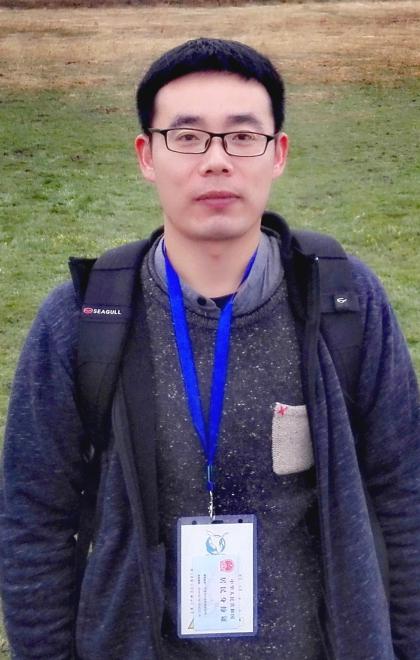
Xinrong Shen
Share on:


In popularization courses, software like Stellarium and Sun Spotter are key tools. They help students explore seasonal starry skies, simulate observations, and view astronomical photos, including those of the Sun's magnetic field and eruptions.
Academic courses emphasize data mining and analysis. Students study data applications through case studies and create popular science materials, like star charts and videos, using big data. They also use celestial software to check ancient astronomical records' accuracy.
Research courses involve projects using astronomical data. Students conduct correlation studies on solar activity, meteorology, and ionospheric changes, investigate lunar craters, and research light pollution and dark sky protection with GaN-MN network and SQM data.
Biography:
Xinrong Shen is a member of the Informatization Working Committee of the Chinese Astronomical Society, a member of DarkSky Beijing, and a geography teacher at the Jiangsu Tianyi High School. He is an outstanding astronomy teacher in China and a gold medal coach of the Astronomy Olympiad. He has trained a group of students to be selected for the Chinese national team and has sent a group of outstanding students to top universities in China and abroad, such as Peking University, Nanjing University, Princeton University, and Cornell University.