Education Focus Session: Teaching With Authentic Data
Parallel Session
7th Shaw-IAU Workshop on Astronomy for Education
Session timeblocks
Tuesday Nov. 18, 2025
Part A:
UTC: 5:30 p.m. -
7 p.m.
America/New_York:
12:30 p.m.-
2 p.m.
Wednesday Nov. 19, 2025
Part A - repeated:
UTC: 8 a.m. -
9:30 a.m.
America/New_York:
3 a.m.-
4:30 a.m.
Part B:
UTC: 4:30 p.m. -
6 p.m.
America/New_York:
11:30 a.m.-
1 p.m.
Friday Nov. 21, 2025
Part B - repeated:
UTC: 8 a.m. -
9:30 a.m.
America/New_York:
3 a.m.-
4:30 a.m.
Chair
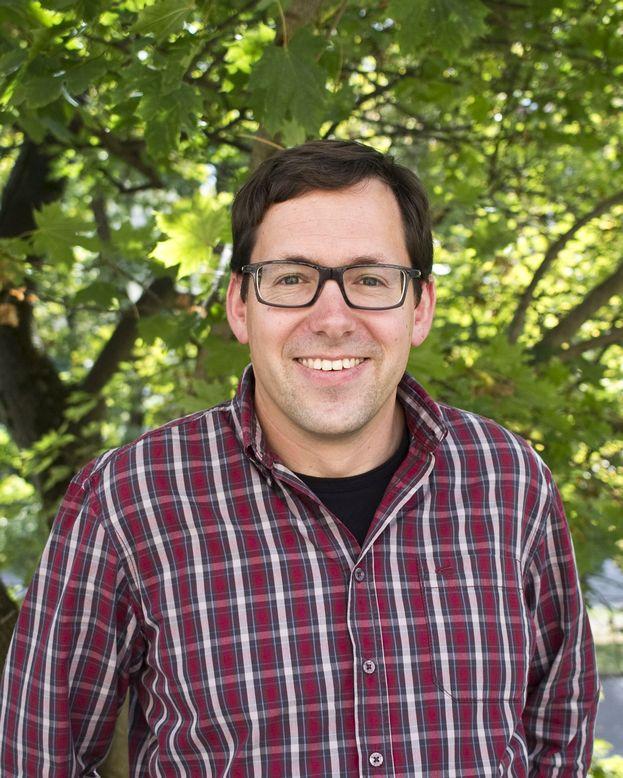
Simon Kraus
Share on:


This session will highlight methods for integrating real astronomical data into teaching, showcasing projects and resources that allow students to engage in inquiry-based learning with authentic datasets.
Schedule
-
Using Radio Astronomy Data in the Classroom
Tuesday Nov. 18, 2025
UTC: 5:30 p.m. - 5:55 p.m. America/New_York: 12:30 p.m.- 12:55 p.m.Wednesday Nov. 19, 2025
UTC: 8 a.m. - 8:25 a.m. America/New_York: 3 a.m.- 3:25 a.m.Radio astronomy reveals unique information about the universe. Modern facilities produce vast amounts of data, much of it freely available. New facilities under construction such as SKAO will produce even larger datasets. Students may find interacting with and understanding radio astronomy data conceptually more challenging than optical data. There are programs using radio astronomy data with students. Programs specifically targeting high school students include PULSE@Parkes and the Pulsar Search Collaboratory. Citizen science projects such as the Zooniverse’s Radio Galaxy Zoo can also be used in formal education settings. We examine some of these, identify potential problems but also what has worked and what we have learnt in developing radio astronomy education programs.

Robert Hollow (CSIRO)
For more information about this talk click here
-
From Galaxy Evolution to the Classroom: Engaging Students with Real Radio Astronomy Data
Tuesday Nov. 18, 2025
UTC: 5:55 p.m. - 6:10 p.m. America/New_York: 12:55 p.m.- 1:10 p.m.Wednesday Nov. 19, 2025
UTC: 8:25 a.m. - 8:40 a.m. America/New_York: 3:25 a.m.- 3:40 a.m.We present two interlinked initiatives bridging cutting-edge astrophysics with research-based education: Radio Galaxy Zoo EMU (RGZ-EMU) and Radio Astronomy for Development, Intercultural Innovation, and Outreach (RADIIO). RGZ-EMU uses citizen science and AI to identify and classify radio galaxies in the EMU survey (radio telescope ASKAP), generating high-quality training data for open science catalogs in order to study galaxy evolution. RADIIO brings this experience to classrooms in Greece, Pakistan, and China, where students build low-cost radio telescopes, analyse real data, and connect across cultures. Funded by the OAD-IAU, the project promotes STEM learning through authentic data, citizen science, and intercultural collaboration, empowering students to take part in real research.
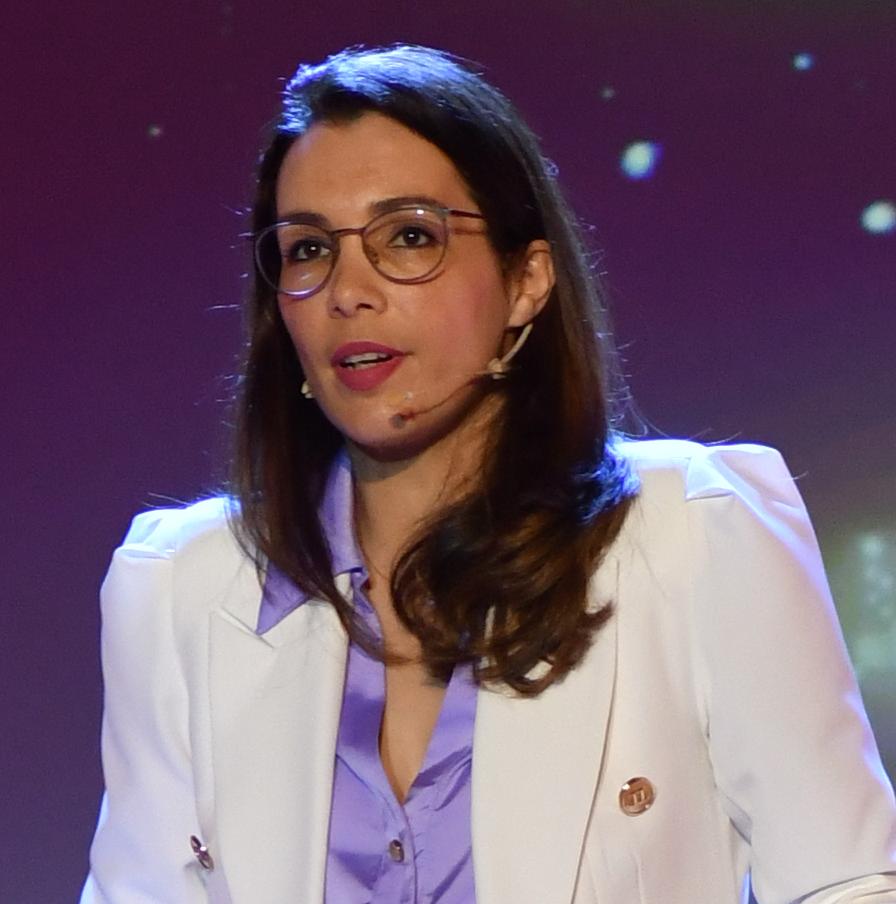
Eleni Vardoulaki (National Observatory Athens)
For more information about this talk click here
-
Introducing FAST's pulsar discovery with data sonification in a dome theater
Tuesday Nov. 18, 2025
UTC: 6:10 p.m. - 6:20 p.m. America/New_York: 1:10 p.m.- 1:20 p.m.Wednesday Nov. 19, 2025
UTC: 8:40 a.m. - 8:50 a.m. America/New_York: 3:40 a.m.- 3:50 a.m.As of November 2024, the five-hundred-meter Aperture Spherical radio Telescope (FAST) has discovered over 1000 pulsars. Using data sonification, we convert the pulsar scientific data collected by FAST into audible sounds, which were then extended into musical compositions using SUNO AI. These sounds, combined with visuals generated by Digistar, were used to create an immersive fulldome short film and astronomy courses for the China Science and Technology Museum's dome theater. The unique immersive audio-visual experience enhances public understanding of cutting-edge scientific discoveries. This talk will cover the sonification process of FAST's pulsar data, the design of the dome film scripts and astronomy courses, their implementation in the dome theater, and audience feedback.

Song Nan (China Science and Technology Museum)
For more information about this talk click here
-
Cosmic Explorers: Empowering Girls through Astronomy
Tuesday Nov. 18, 2025
UTC: 6:20 p.m. - 6:35 p.m. America/New_York: 1:20 p.m.- 1:35 p.m.Wednesday Nov. 19, 2025
UTC: 8:50 a.m. - 9:05 a.m. America/New_York: 3:50 a.m.- 4:05 a.m.We use data from the ESO NTT telescope in multiple filters to create RGB images and teach young girls from public secondary schools, where opportunities in STEM are limited and few pursue science careers. Through coding and image processing activities, we help students gain confidence with technology and show them that coding can be creative and fun. Our goal is to inspire girls to explore astronomy and consider futures in STEM by reducing fear and building skills.

Daysi Quinatoa Bringing astronomy education to Ecuadorian public schools with classroom visits. (Observatorio Astronómico de QUito)
For more information about this talk click here
-
Discussion Panel: Teaching with Authentic Data
Chair:
Simon Kraus
Panel: Robert Hollow
(CSIRO, Space and Astronomy), Eleni Vardoulaki
(IAASARS/National University of Athens), Song Nan
(China Science and Technology Museum), Daysi Quinatoa Bringing astronomy education to Ecuadorian public schools with classroom visits.
(Observatorio Astronómico de Quito) -
Using SDSS spectra for classroom teaching
Wednesday Nov. 19, 2025
UTC: 4:30 p.m. - 4:50 p.m. America/New_York: 11:30 a.m.- 11:50 a.m.Friday Nov. 21, 2025
UTC: 8 a.m. - 8:20 a.m. America/New_York: 3 a.m.- 3:20 a.m.The large collection of spectra offered by SDSS offers a very good opportunity to teach spectral classifications of stars. It was used for the twin purpose of estimating the temperature and identifying the spectral feature. The first step was to identify the different lines. A hard copy of the spectrum would suffice. For the second part namely the estimation of temperature, they would choose two wavelengths (free of spectral lines) and estimate using Planck’s equation for a black body, the ratio of fluxes, for a given temperature. This provided a very good exposure for further research.
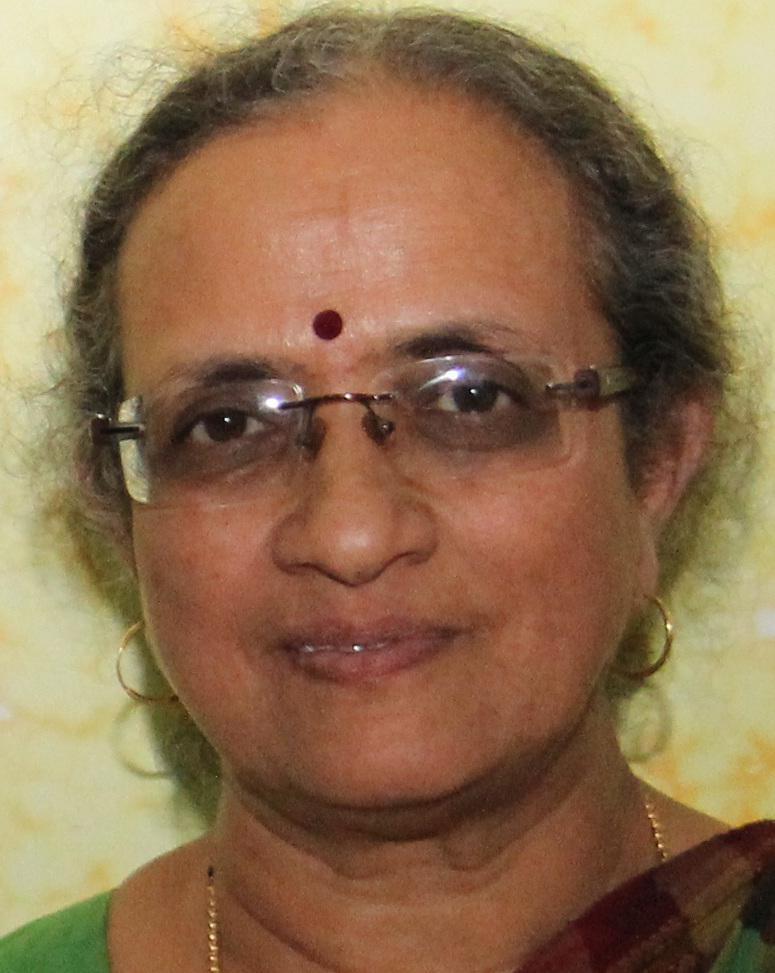
Shylaja B S (Visiting Scientist, Jawaharlal Nehru Planetarium, High Grounds, Bengaluru 560001, India)
For more information about this talk click here
-
Exploring Supergiant Stars with Students: Using Real Astronomical Data in Youth Astronomy Education
Wednesday Nov. 19, 2025
UTC: 4:50 p.m. - 5:05 p.m. America/New_York: 11:50 a.m.- 12:05 p.m.Friday Nov. 21, 2025
UTC: 8:20 a.m. - 8:35 a.m. America/New_York: 3:20 a.m.- 3:35 a.m.This presentation describes an educational approach using real astronomical data focused on massive stars. Students explore stellar evolution through simplified datasets like light curves and spectra. Public databases (Gaia, SIMBAD) enhance scientific thinking and data literacy. Emphasis is on adapting authentic data for informal education, especially where instruments are limited. Connecting advanced topics like supergiant star life cycles to real data boosts student engagement and curiosity in astronomy.

Aynura Hasanova (Shamakhy Astrophysical Observatory named after N.Tusi, Ministry of Science and Education)
For more information about this talk click here
-
Exoplanets in the classroom by using hands-on activities
Wednesday Nov. 19, 2025
UTC: 5:05 p.m. - 5:15 p.m. America/New_York: 12:05 p.m.- 12:15 p.m.Friday Nov. 21, 2025
UTC: 8:35 a.m. - 8:45 a.m. America/New_York: 3:35 a.m.- 3:45 a.m.I will present activities that teachers can use in the classroom to introduce students to the field of exoplanets in an interactive way. The activities integrate the use of real data, and can be an effective method to inspire students and engage them with modern astronomical research. One of the main activities that will be introduced can be found on the astroEDU platform. The activities can be performed in the context of the ExoClock project, where people from all over the world observe exoplanet transits to support ESA's Ariel space mission (www.exoclock.space), or they can be used also as independent exercises if the teacher has limited time.

Kokori Anastasia (UCL, University College London)
For more information about this talk click here
-
The observation diary as a source of authentic data
Wednesday Nov. 19, 2025
UTC: 5:15 p.m. - 5:25 p.m. America/New_York: 12:15 p.m.- 12:25 p.m.Friday Nov. 21, 2025
UTC: 8:45 a.m. - 8:55 a.m. America/New_York: 3:45 a.m.- 3:55 a.m.The observation diary is a source of authentic data available to almost all students. As part of a course on scientific inquiry, students were instructed to observe and track the night sky over a period of four weeks. Students then used their own data from the observation diary to come up with their own view of movements in the sky and analyse the plausibility of ancient theories of the universe. We find that students could connect these observations of the sky with the modern heliocentric model, and at the same time could also recognise that in the absence of modern observations and data, the ancient view of the sky made sense. The diary task was also quite positively received, and helped to reconnect urban students with the night sky.
Yang Jiahui Abel (National University of Singapore)
For more information about this talk click here
-
Our place in the Universe: Comparing the Solar System to other planetary systems
Wednesday Nov. 19, 2025
UTC: 5:25 p.m. - 5:35 p.m. America/New_York: 12:25 p.m.- 12:35 p.m.Friday Nov. 21, 2025
UTC: 8:55 a.m. - 9:05 a.m. America/New_York: 3:55 a.m.- 4:05 a.m.This article presents a teaching sequence, that uses real exoplanet data to explore how planets form, through comparative analysis. Based on an active and situated learning approach, it focuses on observed exoplanet populations and system architectures, such as the "peas in a pod" pattern found in our galaxy. Students are encouraged to compare these systems with our own Solar System and investigate their formation processes. By simulating scientific practices, the sequence seeks to foster higher-order thinking skills, using basic physics and school-level mathematics in an astronomical context to enhance learning.

Marcela Best (Universidad de Santiago de Chile (USACH))
For more information about this talk click here
-
Discussion Panel: Teaching with Authentic Data
Wednesday Nov. 19, 2025UTC: 5:35 p.m. - 6 p.m. America/New_York: 12:35 p.m.- 1 p.m.
Friday Nov. 21, 2025
UTC: 9:05 a.m. - 9:30 a.m. America/New_York: 4:05 a.m.- 4:30 a.m.Chair:
Simon Kraus
Panel: Shylaja B S
(Jawaharlal Nehru Planetarium, Bengaluru, India), Kokori Anastasia
(UCL, University College London), Aynura Hasanova
(Shamakhy Astrophysical Observatory named after N.Tusi, Ministry of Science and Education), Yang Jiahui Abel
(National University of Singapore), Marcela Best
(Universidad de Santiago de Chile (USACH))
Posters
-
Astronomy Education in Secondary Schools Supported by Big Data
Xinrong Shen
In popularization courses, software like Stellarium and Sun Spotter are key tools. They help students explore seasonal starry skies, simulate observations, and view astronomical photos, including those of the Sun's magnetic field and eruptions. Academic courses emphasize data mining and analysis. Students study data applications through case studies and create popular science materials, like star charts and videos, using big data. They also use celestial software to check ancient astronomical records' accuracy. Research courses involve projects using astronomical data. Students conduct correlation studies on solar activity, meteorology, and ionospheric changes, investigate lunar craters, and research light pollution and dark sky protection with GaN-MN network and SQM data.
-
Enhancing Astronomy Education in India: Teaching Galaxies with Authentic Data
Shreesham Pandey (Department of Physics, Kirori Mal College, University of Delhi, Delhi 110007, India)
Astronomy education in India, despite its historical roots, is underrepresented in primary and secondary curricula. This poster presents research on integrating authentic astronomical data, such as from the Sloan Digital Sky Survey, to teach galaxy concepts, enhancing student engagement and analytical skills. A 2024 survey shows 85.9% of students are enthusiastic about astronomy, yet only 26% have telescope access. Initiatives like SPACE India’s workshops and OAE Center India’s teacher training align with the National Education Policy 2020, improving outcomes. The proposed framework leverages data-driven inquiry and cultural contextualization to address knowledge gaps.
-
FROM THE FLOOD TO THE ESSENCE: FILTERING AND TRANSFORMING AUTHENTIC DATA INTO RELEVANT INFORMATION
José Antonio D'Santiago García (Universidad Nacional Experimental Rafael María Baralt)
Astronomy education faces data overabundance, with only a fraction being useful. To tackle this challenge, the RARE rubric—based on relevance, authenticity, robustness, and ethics—filters information and ensures quality. Applying RARE, irrelevant data is discarded, formats are normalized, and educational kits are structured for classroom use. This method transforms raw files into effective teaching tools, strengthening critical analysis and reducing information overload in astronomy education.
-
Multi Messengers
Jeremy Thomas (University of Portsmouth - Institute of Cosmology and Gravitation)
Research and outreach groups at University of Portsmouth’s Institute of Cosmology and Gravitation have worked with the Institute for Research in Schools to give 15-18 year old students an opportunity to carry out research linked to the field of multi messenger observation. Students will access imagery and lightcurve data from the GOTO telescopes, then learn to identify transient targets of interest. The developmental stages of the project will be presented, including mapping required knowledge to prior learning, data analysis training exercises and pilot resources for students and teachers. Methods for sharing unseen datasets and facilitating student research outcomes will be discussed ahead of the project launch date of September 2026.
-
Observational astronomy school for upper secondary school students
Pasi Nurmi (University of Turku)
The observational astronomy school called NOT Science School aims at promoting natural sciences among upper secondary school students (16-18 yrs) both by offering them a chance to work at a large professional telescope, analyse the data and learn about astronomy in general. During the school we use the 2.56 meter Nordic Optical Telescope that is situated at the La Palma Island. The NOT Science School has been organised successfully 15 times since 2007. The number of participants has varied between 30 and 80. During the last years the school has been organised both as a remote observing course and in-situ visits. The course has always been a great success, and the school has now become national having participants from all over South-Finland.
-
Teaching Sun, Moon and star spectra through authentic datasets
Danijela Takač (OŠ Pantovčak)
Practical activities for middle/high school students using authentic data to explore astrophysical phenomena. Students analyze real spectral data to identify star types and compositions, understanding spectroscopy's role in revealing stellar properties. They observe sunspots through solar images to study solar cycles, calculate the Wolf number, and determine solar rotation velocity, deepening knowledge of solar activity like flares. Additionally, students calculate the Moon’s phase angle from actual images to understand lunar phases. These activities, using authentic datasets from SDSS, NASA, IRIS, and SOHO, connect theory with real astrophysical data for experiential learning.