Termo do glossário: Cratera
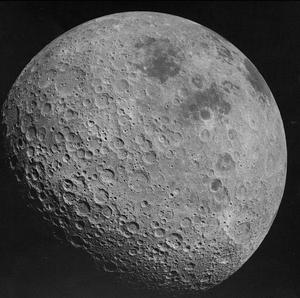
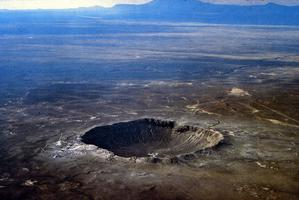
Descrição: Uma cratera é uma depressão circular na superfície de um planeta sólido, lua ou outro objeto pequeno no espaço. Algumas crateras são vulcânicas, especialmente na Terra e em Vênus, mas a maioria é de impacto, causada pelo impacto de uma grande rocha espacial ou núcleo de cometa. Há dezenas de crateras de impacto na superfície da Terra e milhares na Lua. Os mares, as características grandes, escuras e circulares da Lua, são crateras de impacto gigantes, formadas há bilhões de anos e depois preenchidas com lava, que se solidificou desde então.
Termos relacionados:
Ver este termo em outros idiomas
Status do termo e da definição: A definição original deste termo em inglês foi aprovada por um astrônomo(a) pesquisador(a) e um(a) professor(a) A tradução deste termo e de sua definição ainda aguarda aprovação
O Glossário Multilíngue da OAE é um projeto do Escritório da IAU de Astronomia para a Educação (OAE) em colaboração com o Escritório da IAU para Divulgação da Astronomia (OAO). Os termos e definições foram selecionados, escritos e revisados por meio de um esforço coletivo da OAE, dos Centros e Nós da OAE, dos Coordenadores Nacionais de Educação em Astronomia (NAECs) da OAE e de outros voluntários. Você pode encontrar uma lista completa dos créditos aqui. Todos os termos do glossário e suas definições são disponibilizados sob uma licença Creative Commons CC BY-4.0 e devem ser creditados à "IAU OAE".
Se você notar algum erro factual ou de tradução neste termo do glossário ou em sua definição, por favor entre em contato.
Mídia relacionada
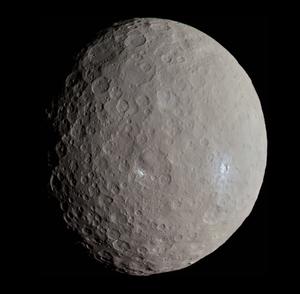
Ceres
Legenda: Imagem em cores reais do asteroide Ceres adquirida pela sonda espacial Dawn em maio de 2015, a uma distância de 13641 km. A proeminente e brilhante cratera à direita é Haulani. O ponto brilhante menor à sua esquerda está exposto no piso da cratera de Oxo. A ejeção desses impactos parece ter exposto material brilhante, provavelmente gelo de água.
Crédito: NASA / JPL-Caltech / UCLA / MPS / DLR / IDA / Justin Cowart
License: CC-BY-2.0 Creative Commons Attribution 2.0 Generic ícones
Atividades relacionadas
Impact Craters
astroEDU educational activity (links to astroEDU website) Description: A literal Earth-Shattering experiment
License: CC-BY-4.0 Creative Commons Attribution 4.0 International (CC BY 4.0) ícones
Tags:
History
, Impact
, Experiment
Faixas etárias:
10-12
, 12-14
, 14-16
Nível de ensino:
Ensino fundamental
, Básico
, Médio
Áreas de aprendizagem:
Aprendizagem por descoberta guiada
, Modelagem
, Experimento científico tradicional
Custos:
Baixo custo
Duração:
1 hour
Tamanho do grupo:
Grupo
Habilidades:
Analisar e interpretar dados
, Fazer perguntas
, Construir explicações
, Engajar-se em argumentação com base em evidências
, Usar matemática e pensamento computacional
Meteoroids, Meteors and Meteorites
astroEDU educational activity (links to astroEDU website) Description: Unveiling the mystery of "shooting stars": meteors, meteorites and meteroids
License: CC-BY-4.0 Creative Commons Attribution 4.0 International (CC BY 4.0) ícones
Tags:
Geology
Faixas etárias:
6-8
, 8-10
, 10-12
, 12-14
Nível de ensino:
Ensino fundamental
, Básico
Áreas de aprendizagem:
Aula interativa
Custos:
Baixo custo
Duração:
1 hour 30 mins
Tamanho do grupo:
Grupo
Habilidades:
Analisar e interpretar dados
, Fazer perguntas
, Comunicar informações
, Engajar-se em argumentação com base em evidências
Age that crater!
astroEDU educational activity (links to astroEDU website) Description: Learn how to age craters with this Predict, Explain, Observe, Explain Activity!
License: CC-BY-4.0 Creative Commons Attribution 4.0 International (CC BY 4.0) ícones
Tags:
Craters
, Game
, Maps
, Geology
Faixas etárias:
4-6
, 6-8
, 8-10
Nível de ensino:
Ensino fundamental
, Básico
Áreas de aprendizagem:
Baseado em observação
, Aprendizagem por investigação estruturada
Custos:
Baixo custo
Duração:
1 hour
Tamanho do grupo:
Grupo
Habilidades:
Fazer perguntas
, Comunicar informações
, Construir explicações
, Desenvolver e usar modelos
, Engajar-se em argumentação com base em evidências