Glossar-Begriff: Jahreszeiten
Beschreibung: Die Erdachse steht nicht senkrecht zur Erdumlaufbahn um die Sonne, sondern ist in einem Winkel von 23,4 Grad zu ihr geneigt. Infolgedessen verändert sich die scheinbare Position der Sonne am Himmel zu einer bestimmten Tageszeit im Laufe des Jahres. Wenn die Sonne - im Durchschnitt - höher am Himmel steht, erreicht mehr Sonnenlicht einen bestimmten Bereich der Erdoberfläche. Das führt im Laufe des Jahres zu wärmeren und kälteren Zeitabschnitten, die in Regionen, die weiter vom Äquator entfernt sind, stärker ausgeprägt sind und als Jahreszeiten bezeichnet werden. Die Jahreszeiten der nördlichen Hemisphäre sind den südlichen Jahreszeiten entgegengesetzt: Der Sommer auf der Nordhalbkugel, d.h. die drei Monate um den 21. Juni, in denen die Nordhalbkugel der Sonne am stärksten zugewandt ist, entspricht dem Winter auf der Südhalbkugel, bei dem die Südhalbkugel von der Sonne abgewandt ist. Das Gleiche gilt für den Sommer auf der südlichen Hemisphäre und den Winter auf der nördlichen Hemisphäre, also die drei Monate um den 21. Dezember. In vielen Teilen der Erde in Äquatornähe gibt es Jahreszeiten, die sich von den Sommer- und Wintermustern in den gemäßigten und arktischen Breitengraden unterscheiden. Es kann von kulturellen Gepflogenheiten und dem Zeitalter abhängen, wie die Dauer, der Beginn und das Ende der einzelnen Jahreszeiten festgelegt sind.
Ähnliche Begriffe:
Dieser Begriff in anderen Sprachen
Begriffs- und Definitionsstatus Die Originaldefinition dieses Begriffes auf Englisch wurden von einem forschenden Astronom und einer Lehrkraft bestätigt Die Übersetzung dieses Begriffs und seiner Definition warten auf Prüfung und Bestätigung
The OAE Multilingual Glossary is a project of the IAU Office of Astronomy for Education (OAE) in collaboration with the IAU Office of Astronomy Outreach (OAO). The terms and definitions were chosen, written and reviewed by a collective effort from the OAE, the OAE Centers and Nodes, the OAE National Astronomy Education Coordinators (NAECs) and other volunteers. You can find a full list of credits here. All glossary terms and their definitions are released under a Creative Commons CC BY-4.0 license and should be credited to "IAU OAE".
Wenn dir ein inhaltlicher oder Übersetzungsfehler in diesem Glossarbegriff oder dieser Definition auffallen, bitte kontaktiere uns.
Auf anderen Sprachen
- Arabisch: الفصول
- Englisch: Seasons
- Spanisch: Estaciones
- Persisch: فصلها
- Französisch: Saisons
- Italienisch: Le stagioni
- Japanisch: 季節の変化 (externer Link)
- Brasilianisches Portugiesisch: Estações do ano
- Vereinfachtes Chinesisch: 季节
- Traditionelles Chinesisch: 季節
Ähnliche Diagramme

Solstices and Equinoxes
Unterschrift: This diagram demonstrates the relative positions of the Earth and Sun at the two solstices and two equinoxes. The Earth’s rotation axis is tilted by 23.4° from the axis of its orbit. This means that for half the Earth’s annual orbit around the Sun, the Southern Hemisphere is tilted towards the Sun and the Northern Hemisphere is tilted away from the Sun. During this time the Sun appears to lie below the celestial equator. Due to this at any particular point in the Southern Hemisphere the Sun will appear to be higher above the horizon at a particular time of day and the days will be longer. Conversely during this time, the Sun appears lower in the sky at any particular point in the day in the Northern Hemisphere and the days are shorter.
This effect is most pronounced in late December when the Sun appears at its most southerly point in the sky, corresponding to the longest day of the year in the Southern Hemisphere. This normally occurs on the 21st or 22nd of December (UTC), depending on when the most recent leap year was, but can very occasionally occur on the 20th or 23rd of December. This event is known as the December solstice. As the Sun’s rays hit the Southern Hemisphere at a more perpendicular angle during this time, the Southern Hemisphere is typically warmer in this time of year than at other times of year. This is often referred to as summer in temperate and antarctic regions of the Southern Hemisphere and thus the December solstice is known as the summer solstice. South of the Antarctic Circle at this time the Sun never sets and a Polar Day can last several months. Conversely in the Northern Hemisphere, the Sun’s rays hit the Earth at a more grazing angle than at other times of year so it is colder and this solstice is known as the winter solstice. North of the Arctic Circle the Sun never rises during this time and the Polar Night can last several months.
As the year progresses the Earth moves in its orbit and the tilt of the Earth’s axis moves so it appears more side-on to the Sun. From the perspective of an observer on Earth this means that the Sun moves north in the sky, eventually reaching the celestial equator in late March, This usually occurs on the 20th of March (UTC) but can sometimes occur on the 19th or 21st of March. During this time all places on Earth will experience night and day that is approximately 12 hours long. The Sun’s rays now hit the Southern hemisphere at a more shallow angle than they did in December and hit the Northern Hemisphere at a more perpendicular angle. This means that the Northen Hemisphere will have warmed since December and the Southern Hemisphere cooled. This leads to the March equinox being referred to as the autumn equinox in the Southern Hemisphere and the spring or vernal equinox in the Northern Hemisphere.
As the year progresses further the Sun moves further north on the sky, the Northern Hemisphere days lengthen and the Southern Hemisphere days shorten. By June the Earth’s orbit has progressed to the point where the Northern Hemisphere points towards the Sun and the Southern Hemisphere away from the Sun. At one point between the 20th and 22nd of June (UTC) the Sun reaches its most northerly point in the sky, this is known as June solstice. It is now summer in northern temperate and artic regions so this is known as the summer solstice in the Northern Hemisphere and the winter solstice in the Southern Hemisphere. This is the longest day of the year in the Northern Hemisphere and the shortest day of the year in the Southern Hemisphere. During this time regions north of the Arctic Circle experience a long Polar Day and regions south of the Antarctic Circle experience polar night.
The year progresses further and the Earth moves in its orbit so that the tilt of the Earth’s axis again appears side-on for the Sun. The Sun moves south in the sky and again crosses the celestial equator between the 21st and 24th of September (UTC). At this time all places on the Earth experience equal lengths of day and night. This is known as the September equinox, also called the spring or vernal equinox in the Southern Hemisphere and the autumn equinox in the Northern Hemisphere.
Note the sizes of the Earth, Sun and the Earth’s orbit around the Sun are not to scale in this diagram.
Bild: Maria Cristina Fortuna/IAU OAE
License: CC-BY-4.0 Creative Commons Namensnennung 4.0 International (CC BY 4.0) Symbole
Ähnliche Aktivitäten
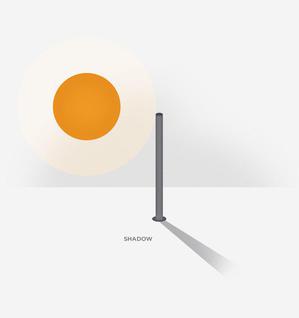
Sun’s Shadow
astroEDU educational activity (links to astroEDU website) Description: Why is the Sun's shadow so important?
License: CC-BY-4.0 Creative Commons Namensnennung 4.0 International (CC BY 4.0) Symbole
Schlagworte
Hands-on
, Shadows
Altersgruppen:
6-8
, 8-10
, 10-12
, 12-14
, 14-16
Bildungsniveau:
Informal
, Middle School
, Primary
, Secundaria
Lernbereiche:
Observation based
, Structured-inquiry learning
Kosten:
Medium Cost
Dauer:
1 day
Gruppengröße:
Group
Fähigkeiten:
Asking questions
, Communicating information
, Constructing explanations
, Engaging in argument from evidence
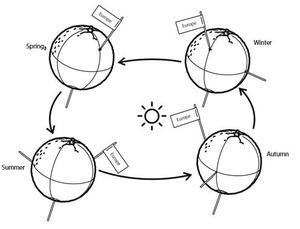
Seasons Around the World
astroEDU educational activity (links to astroEDU website) Description: Demonstrate the seasons on Earth using a model.
License: CC-BY-4.0 Creative Commons Namensnennung 4.0 International (CC BY 4.0) Symbole
Schlagworte
Hands-on
, Model
Altersgruppen:
6-8
, 8-10
, 10-12
Bildungsniveau:
Middle School
, Primary
Lernbereiche:
Modelling
, Structured-inquiry learning
Kosten:
Medium Cost
Dauer:
45 mins
Gruppengröße:
Group
Fähigkeiten:
Analysing and interpreting data
, Asking questions
, Constructing explanations
, Developing and using models
, Planning and carrying out investigations
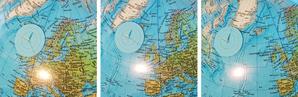
Navigate like a Viking – Use the Sun, not your phone!
astroEDU educational activity (links to astroEDU website) Description: Learn how the Vikings used the sky to navigate at sea with a hands-on activity!
License: CC-BY-4.0 Creative Commons Namensnennung 4.0 International (CC BY 4.0) Symbole
Schlagworte
History
, Geography
, Maps
, Coordinates
, Celestial navigation
Altersgruppen:
12-14
, 14-16
Bildungsniveau:
Middle School
Lernbereiche:
Discussion Groups
, Modelling
, Structured-inquiry learning
Kosten:
Medium Cost
Dauer:
1 hour 30 mins
Gruppengröße:
Group
Fähigkeiten:
Analysing and interpreting data
, Asking questions
, Communicating information
, Developing and using models
, Planning and carrying out investigations
, Using mathematics and computational thinking
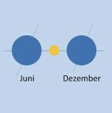
Die Jahreszeiten – auf der Erde erleben, am Himmel beobachten
astroEDU educational activity (links to astroEDU website) Description: Der Wechsel der Jahreszeiten ist ein Phänomen, das jeder intensiv erlebt, das sich relativ leicht erklären lässt und im Geographieunterricht mittlerer Schuljahre behandelt wird. Trotzdem wissen viele Menschen nicht, warum es im Sommer wärmer ist als im Winter. Dass es an der elliptischen Erdbahn und der damit verbundenen Veränderung des Abstandes Sonne-Erde läge, ist ein besonders populärer Irrtum. Deshalb regt das vorliegende Projekt an, die Entstehung der Jahreszeiten in späteren Schuljahren in geeigneten Fächern wieder aufzugreifen, zu reaktivieren, unter anderen Gesichtspunkten zu betrachten und zu erweitern. Die Erweiterung besteht in diesem Projekt vor allem in der Tatsache, dass der Wechsel der Jahreszeiten nicht nur auf der Erde zu spüren, sondern auch am Himmel zu beobachten ist. Damit das einstündige Projekt im Geographie-, Astronomie- oder Physikunterricht mit wenig Vorbereitungszeit realisiert werden kann, steht ein Arbeitsblatt zur Verfügung, natürlich mit Lösungen.
Altersgruppen: 14-16 , 16-19 Bildungsniveau: Secundaria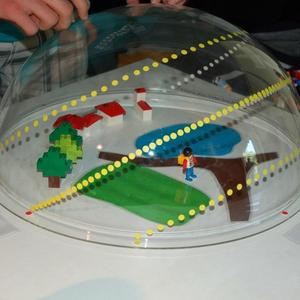
Der scheinbaren Sonnenbahn auf der Spur: Vom Sonnenstand zur Sonnenbahn
astroEDU educational activity (links to astroEDU website) Description: Den Merkspruch „Im Osten geht die Sonne auf, im Süden steigt sie hoch hinauf, im Westen wird sie untergeh‘n, im Norden ist sie nie zu sehn.“ lernen die meisten Schülerinnen und Schüler bereits in der Grundschule kennen. Doch ist er auch für alle Orte und Zeitpunkte auf der Erde wahr? Um dies zu überprüfen, verfolgen wir die Sonne auf ihrer Bahn über unseren Taghimmel ab dem Zeitpunkt ihres Aufgangs bis hin zu ihrem Untergang und bauen mit Hilfe einer einfachen Beobachtungsmethode ein Modell dieser „scheinbaren“ Sonnenbahn. Mit dessen Hilfe lassen sich sowohl die Anfangsfragen wie auch weitere Fragen beantworten, z. B. wie lang die Sonne tagsüber zu sehen ist oder warum es am Äquator keine so lange Dämmerung gibt wie bei uns in Deutschland. Das Modell kann qualitativ sowohl für die Unterstufe als auch quantitativ für die Mittelstufe bzw. auch für die Kursstufe eingesetzt werden.
Altersgruppen: 10-12 , 12-14 , 14-16 , 16-19 Bildungsniveau: Middle School , Secundaria