This page describes an image हर्ट्जस्प्रङ-रसेल चित्र
Download File ( image 67.81 kB)
Download PDF File (PDF file 144.25 kB)
Diagram caption:
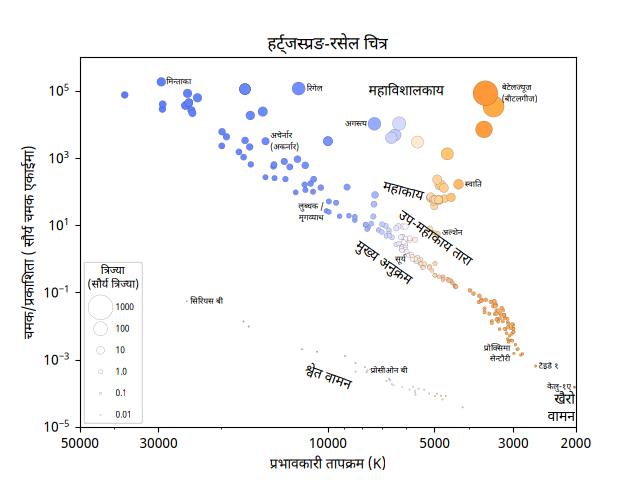
यो चित्रले विभिन्न ताराहरूको तापमान र चमक देखाउँछ। प्रत्येक बिन्दुको आकारले ताराको त्रिज्या प्रतिनिधित्व गर्छ भने यसको रंग मानव आँखाले देख्ने रंग हो। ताराहरूको रङ धमिलो नीलोबाट धमिलो रातो-सुन्तलासम्म हुन्छन्। कुनै पनि ताराको रातो, हरियो वा नीलो जस्तो शुद्ध रंग हुँदैन किनभने ताराहरूको वर्णक्रममा धेरै फरक रंगहरूको प्रकाश समावेश हुन्छ। तर, सबैभन्दा रातो ताराहरूलाई सामान्यतया रातो र सबैभन्दा नीलो ताराहरूलाई नीलो भनिन्छ।
यो चित्र बनाउन प्रयोग गरिएको ताराहरूको नमूना विभिन्न प्रकारका ताराहरूको विस्तृत दायरा देखाउन छानिएको हुनाले प्रत्येक प्रकारको ताराको सापेक्षिक संख्याले प्रत्येक प्रकार कत्तिको सामान्य रूपमा पाइन्छ भन्ने प्रतिनिधित्व गर्दैन।
माथि बायाँबाट तल दायाँसम्म आफ्नो केन्द्रमा हाइड्रोजन जलाउने ताराहरूको एउटा लामो रेखा छ। यसलाई मुख्य अनुक्रम भनिन्छ। यस रेखामा, मिन्टाका, अचेर्नार, सिरियस ए (लुब्धक), सूर्य र प्रोक्सिमा सेन्टौरी जस्ता ताराहरू देखिन्छन्। मुख्य अनुक्रमको तल्लो दायाँ छेउमा प्रोक्सिमा सेन्टौरीको वरिपरिका वस्तुहरूलाई रातो वामन भनेर चिनिन्छ।
रातो वामनहरूको तल्लो दायाँतिर टेइडे १ र केलु-१ ए छन्। यी दुई वस्तुहरू खैरो वामन हुन्, जुन वस्तुहरू द्रव्यमानमा यति कम छन् कि तिनीहरूको केन्द्र दिर्घकालसम्म हाइड्रोजन संलयन गर्न पर्याप्त तातो हुँदैन। तिनीहरूले हाइड्रोजन जलाउँदैनन्, त्यसैले खैरो वामनहरूलाई मुख्य अनुक्रम ताराहरू मानिँदैन। खैरो वामन नाम तिनीहरूको रंगसँग सम्बन्धित छैन।
मुख्य अनुक्रमभन्दा माथि, हामीले उप-महाकाय, महाकाय र महाविशालकाय पाउँछौं। यी ती ताराहरू हुन् जसले आफ्नो केन्द्रमा हाइड्रोजन जलाउन समाप्त गरिसकेका छन् र ठूला वस्तुहरूमा विकसित भएका छन्। ताराको चमक यसको तापमान र आकारमा निर्भर गर्दछ त्यसैले विशालकाय ताराहरू साना त्रिज्या भएका तर उही तापमान भएका ताराहरूभन्दा बढी चम्किला हुन्छन्। समयसँगै यी वस्तुहरू आफ्नो जीवनको अन्त्यतिर जान्छन् र या त ग्रह नीहारिका चरणबाट गुज्रिन्छन् वा सुपरनोभा बन्छन्।
ग्रह नीहारिका चरणसँग आफ्नो जीवन समाप्त गर्ने ताराहरू श्वेत वामन भनिने ताराकीय अवशेष बन्छन्। यस्ता वस्तुहरू उही तापमान भएका ताराहरूभन्दा धेरै साना, कम चम्किला हुन्छन् र मुख्य अनुक्रमभन्दा धेरै तल पाइन्छन्। सुपरनोभाको रूपमा आफ्नो जीवन समाप्त गर्ने ताराहरू या त कृष्ण विवर वा न्युट्रोन ताराहरू बन्छन्। यी यस चित्रमा देखाइएका छैनन्।
Diagram credit: श्रेय: IAU OAE/निल डिकन.
Diagram translation status: Not yet approved by a reviewer
Diagram translators: Manisha Dwa
Diagram license: Creative Commons Attribution 4.0 International (CC BY 4.0) Creative Commons Attribution 4.0 International (CC BY 4.0) icons
Related glossary terms:
Brown Dwarf
, Color
, Effective Temperature
, Giant Star
, Hertzsprung–Russell (HR) Diagram
, Luminosity
, Luminosity Class
, Main Sequence
, Stellar Evolution
, Supergiant Star
, White Dwarf
, उपदानव तारा
Categories:
Stars
Want to make your own version of this diagram? Then have a look at the code that
produced this diagram on Github
You can also make your own version or translation of this diagram by adding adding text to a version of
this diagram with no text. Just download one of the following files:
Download Text-Free File ( image 33.43 kB)
Download Text-Free PDF File (PDF file 53.04 kB)
In Other Languages
अंग्रेजी: Hertzsprung-Russell diagramफ्रान्सेली: Diagramme de Hertzsprung-Russell
प्राचिन चिनि: 赫羅圖
सरल चिनि: 赫罗图
स्पेनिस: Diagrama Hertzsprung-Russell
ईटालियन: Diagramma di Hertzsprung-Russell
The diagram captions presented on the OAE website were written, translated and reviewed by a collective effort from the OAE, the OAE Centers and Nodes, the OAE National Astronomy Education Coordinators (NAECs) and other volunteers. You can find a full list of credits for our translation project here. All media file captions are released under a Creative Commons CC BY-4.0 license and should be credited to "IAU OAE". The media files themselves may have different licenses (see above) and should be credited as listed above under "credit".
If you notice a error in this diagram or its caption then please get in touch.