Termo do glossário: Navegação
Descrição: A navegação é o processo de descobrir onde você está na Terra ou no espaço, a direção de viagem pretendida e como chegar aonde deseja. Historicamente, o Sol e as estrelas desempenharam um papel importante na navegação. De uma maneira mais simples, em uma noite clara no hemisfério norte, é possível usar a Estrela Polar para determinar onde fica o norte e escolher a direção de viagem de acordo. No hemisfério sul, o Cruzeiro do Sul aponta para o sul. Antes do desenvolvimento de equipamentos de navegação modernos, a "navegação celestial" era essencial para a navegação. Os navegadores determinavam o ângulo do Sol acima do horizonte ao meio-dia para deduzir sua latitude e a comparação da hora do meio-dia local (posição mais alta do Sol no céu) com um relógio que mostrasse a hora média de Greenwich para determinar sua longitude. A navegação moderna se baseia principalmente em sinais de GPS e sistemas de satélite semelhantes.
Termos relacionados:
Ver este termo em outros idiomas
Status do termo e da definição: A definição original deste termo em inglês foi aprovada por um astrônomo(a) pesquisador(a) e um(a) professor(a) A tradução deste termo e de sua definição ainda aguarda aprovação
O Glossário Multilíngue da OAE é um projeto do Escritório da IAU de Astronomia para a Educação(OAE) em colaboração com o Escritório da IAU para Divulgação da Astronomia (OAO). Os termos e definições foram selecionados, escritos e revisados por meio de um esforço coletivo da OAE, dos Centros e Nós da OAE, dos Coordenadores Nacionais de Educação em Astronomia (NAECs) da OAE e de outros voluntários. Você pode encontrar uma lista completa dos créditos aqui. Todos os termos do glossário e suas definições são disponibilizados sob uma licença Creative Commons CC BY-4.0 e devem ser creditados à "IAU OAE".
Se você notar algum erro factual ou de tradução neste termo do glossário ou em sua definição, por favor entre em contato.
Em outros idiomas
- Árabe: الملاحة
- Alemão: Navigation
- Inglês: Navigation
- Espanhol: Navegación
- Francês: Navigation
- Italiano: Navigazione
- Nepalês: नेभिगेसन / दिशानिर्देशन
- Chinês Simplificado: 导航
- Chinês Tradicional: 導航
Mídia relacionada
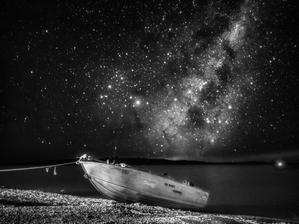
Sailing the Celestial Seas
Legenda: Honorable mention in the 2023 IAU OAE Astrophotography Contest, category of Still images taken exclusively with smartphones/mobile devices.
In this black and white snapshot taken in April 2022 with a smartphone, a solitary boat rests on the shores of Lake Eucumbene, Australia, framed by the brilliant display of stars comprising the Milky Way. The prominent glow of the galactic centre stands out against the night sky, its intricate patterns of stars and nebulae casting a striking contrast. Each shimmering dot represents a distant sun, possibly orbited by uncharted planets, underscoring the vastness and complexity of our sprawling home galaxy.
Crédito: Lucy Yunxi Hu/IAU OAE (CC BY 4.0)
License: CC-BY-4.0 Creative Commons Attribution 4.0 International (CC BY 4.0) ícones
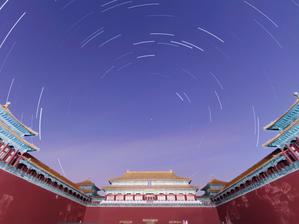
Star Trails of the Forbidden City
Legenda: Honorable mention in the 2023 IAU OAE Astrophotography Contest, category of Still images taken exclusively with smartphones/mobile devices.
Beneath the celestial ballet of star trails that weave their way across the night sky, the Beijing Forbidden City stands as a testament to ancient celestial connections in this image captured in March 2022. Designed with a cosmic alignment in mind, the palace echoes the orientation of the North Star, also known as Polaris, a celestial anchor that has long guided navigators and symbolised steadiness in the sky. It was believed that the Emperor embodied the earthly representation of this pole star, bridging the realms between heaven and earth. In this harmonious one-hour exposure captured with a smartphone, the streaks of stars trace their nightly journey across the firmament, converging toward the North Star, reflecting the precision of both architectural design and celestial paths.
Crédito: Stephanie Ziyi Ye/IAU OAE (CC BY 4.0)
License: CC-BY-4.0 Creative Commons Attribution 4.0 International (CC BY 4.0) ícones
Atividades relacionadas
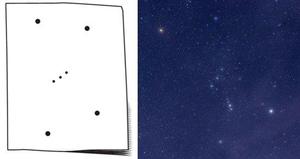
What is a Constellation?
astroEDU educational activity (links to astroEDU website) Description: Investigate three dimensional objects and perspective using constellations
License: CC-BY-4.0 Creative Commons Attribution 4.0 International (CC BY 4.0) ícones
Tags:
Hands-on
Faixas etárias:
6-8
, 8-10
Nível de ensino:
Básico
Áreas de aprendizagem:
Modelagem
, Aprendizagem por investigação estruturada
Custos:
Custo médio
Duração:
1 hour 30 mins
Tamanho do grupo:
Grupo
Habilidades:
Analisar e interpretar dados
, Fazer perguntas
, Construir explicações
, Desenvolver e usar modelos
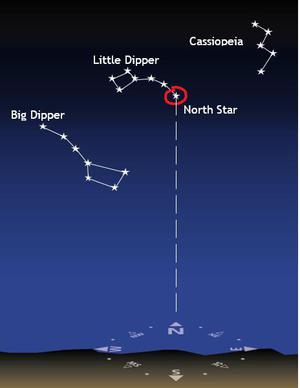
How To Travel on Earth Without Getting Lost
astroEDU educational activity (links to astroEDU website) Description: Use a globe to describe your position on Earth.
License: CC-BY-4.0 Creative Commons Attribution 4.0 International (CC BY 4.0) ícones
Tags:
Geography
, Maps
, GPS
, Celestial navigation
Faixas etárias:
8-10
, 10-12
, 12-14
Nível de ensino:
Ensino fundamental
, Básico
Áreas de aprendizagem:
Aprendizagem por investigação estruturada
Custos:
Baixo custo
Duração:
1 hour
Tamanho do grupo:
Grupo
Habilidades:
Analisar e interpretar dados
, Desenvolver e usar modelos
, Usar matemática e pensamento computacional
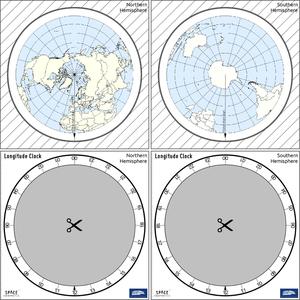
The Quest for Longitude
astroEDU educational activity (links to astroEDU website) Description: How to navigate at sea like an explorer?
License: CC-BY-4.0 Creative Commons Attribution 4.0 International (CC BY 4.0) ícones
Tags:
Clocks
, Geography
, Coordinates
, Celestial navigation
, James Cook
, Exploration
Faixas etárias:
14-16
, 16-19
Nível de ensino:
Ensino fundamental
, Médio
Áreas de aprendizagem:
Grupos de discussão
, Modelagem
, Aprendizagem por investigação estruturada
Custos:
Baixo custo
Duração:
2 hours
Tamanho do grupo:
Grupo
Habilidades:
Analisar e interpretar dados
, Fazer perguntas
, Comunicar informações
, Desenvolver e usar modelos
, Planejar e realizar pesquisas
, Usar matemática e pensamento computacional
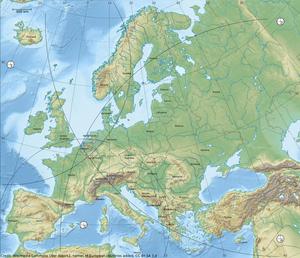
Where on Earth am I?
astroEDU educational activity (links to astroEDU website) Description: How do satellite-based positioning and GPS navigation work?
License: CC-BY-4.0 Creative Commons Attribution 4.0 International (CC BY 4.0) ícones
Tags:
Clocks
, Geography
, Maps
, GPS
, Countries
, Speed of light
, Galileo
Faixas etárias:
14-16
Nível de ensino:
Ensino fundamental
Áreas de aprendizagem:
Aprendizagem por descoberta guiada
, Resolução de problemas
Custos:
Baixo custo
Duração:
1 hour 30 mins
Tamanho do grupo:
Grupo
Habilidades:
Analisar e interpretar dados
, Fazer perguntas
, Comunicar informações
, Construir explicações
, Desenvolver e usar modelos
, Usar matemática e pensamento computacional
Navigate like a Viking – Use the Sun, not your phone!
astroEDU educational activity (links to astroEDU website) Description: Learn how the Vikings used the sky to navigate at sea with a hands-on activity!
License: CC-BY-4.0 Creative Commons Attribution 4.0 International (CC BY 4.0) ícones
Tags:
History
, Geography
, Maps
, Coordinates
, Celestial navigation
Faixas etárias:
12-14
, 14-16
Nível de ensino:
Ensino fundamental
Áreas de aprendizagem:
Grupos de discussão
, Modelagem
, Aprendizagem por investigação estruturada
Custos:
Custo médio
Duração:
1 hour 30 mins
Tamanho do grupo:
Grupo
Habilidades:
Analisar e interpretar dados
, Fazer perguntas
, Comunicar informações
, Desenvolver e usar modelos
, Planejar e realizar pesquisas
, Usar matemática e pensamento computacional