Glossary term: Space
Description: Space has two definitions within astronomy: space (or "outer space") is all that exists beyond Earth; more technically, it is the dimensions of length, width, and depth within which all things exist (as opposed to time, which is sometimes considered as a fourth dimension).
Related Terms:
See this term in other languages
Term and definition status: This term and its definition have been approved by a research astronomer and a teacher
The OAE Multilingual Glossary is a project of the IAU Office of Astronomy for Education (OAE) in collaboration with the IAU Office of Astronomy Outreach (OAO). The terms and definitions were chosen, written and reviewed by a collective effort from the OAE, the OAE Centers and Nodes, the OAE National Astronomy Education Coordinators (NAECs) and other volunteers. You can find a full list of credits here. All glossary terms and their definitions are released under a Creative Commons CC BY-4.0 license and should be credited to "IAU OAE".
If you notice a factual error in this glossary definition then please get in touch.
Related Media

The Horsehead Nebula
Caption: This image shows the Horsehead Nebula, located at a distance of about 1,300 light-years from Earth in the Orion constellation, one of the most iconic examples of a dark nebula. A dark nebula is a dense cloud of interstellar dust and cold gas that absorbs and scatters visible light, preventing background stars and glowing gas from reaching our eyes. This false-color image combines data captured through multiple narrowband filters, each isolating light from different elements in the nebula. The dark, horse-shaped silhouette appears sharply outlined against the luminous nebula behind it, where energetic radiation from nearby young stars causes the gas to glow. The uneven distribution of visible stars in this image is not random: regions rich in dust in the lower part of this image appear almost empty, while clearer areas reveal many background stars. The dust acts like a cosmic curtain, hiding stars that lie behind it while allowing stars in front of the cloud to remain visible. Studying such regions helps astronomers understand how nebulae serve as environments where new stars can form.
Credit: T.A.Rector (NOIRLab/NSF/AURA) and Hubble Heritage Team (STScI/AURA/NASA)
credit link
License: CC-BY-4.0 Creative Commons Attribution 4.0 International (CC BY 4.0) icons
Related Activities
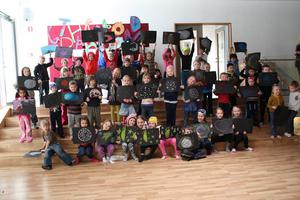
Deadly Moons
astroEDU educational activity (links to astroEDU website) Description: Through art and science, children learn about moons of our solar system.
License: CC-BY-4.0 Creative Commons Attribution 4.0 International (CC BY 4.0) icons
Tags:
Art
, Creativity
, Hands-on
, Drawing
Age Ranges:
6-8
, 8-10
, 10-12
Education Level:
Primary
, Secondary
Areas of Learning:
Fine Art focussed
, Structured-inquiry learning
Costs:
High Cost
Duration:
1 hour
Group Size:
Group
Skills:
Asking questions
, Communicating information
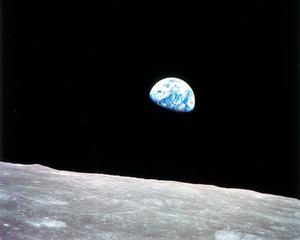
Blue Marble in Empty Space
astroEDU educational activity (links to astroEDU website) Description: Students are taken on a virtual journey to outer space to experience that we live on a tiny planet that floats in a vast and empty space.
License: CC-BY-4.0 Creative Commons Attribution 4.0 International (CC BY 4.0) icons
Tags:
Life
, Hands-on
, Model
, Scales
, Distances
, ISS
Age Ranges:
6-8
, 8-10
Education Level:
Primary
, Secondary
Areas of Learning:
Interactive Lecture
, Modelling
Costs:
Low Cost
Duration:
30 mins
Group Size:
Group
Skills:
Asking questions
, Communicating information
, Developing and using models