Glossary term: 온도
Description: 시간이 지나면서 안정된 상태, 즉 열평형에 도달한 물리적 시스템에서는, 그 시스템이 움직이거나 변할 수 있는 여러 가지 방식(이를 자유도라고 합니다) 각각이 평균적으로 같은 양의 에너지를 갖게 됩니다. 온도는 바로 그 평균 에너지의 크기를 나타내는 척도입니다. 온도는 자연과학의 거의 모든 분야뿐 아니라 우리의 일상생활에서도 매우 중요한 개념입니다. 우리가 흔히 사용하는 온도 단위에는 섭씨(°C), 화씨(°F), 그리고 켈빈(K) 세 가지가 있습니다. 이 중 켈빈은 주로 과학 연구에서 사용됩니다. 이론적으로 도달할 수 있는 가장 낮은 온도는 절대영도(0K = -273.15°C)입니다. 이 온도에서는 더 이상 어떤 물체에서도 열 에너지를 뽑아낼 수 없습니다. 반대로, 별의 중심부에서는 온도가 수천만 K에 이르고, 성간 공간의 차가운 분자 구름에서는 온도가 10K 정도까지 내려갑니다.
Related Terms:
See this term in other languages
Term and definition status: The original definition of this term in English have been approved by a research astronomer and a teacher The translation of this term and its definition is still awaiting approval
The OAE Multilingual Glossary is a project of the IAU Office of Astronomy for Education (OAE) in collaboration with the IAU Office of Astronomy Outreach (OAO). The terms and definitions were chosen, written and reviewed by a collective effort from the OAE, the OAE Centers and Nodes, the OAE National Astronomy Education Coordinators (NAECs) and other volunteers. You can find a full list of credits here. All glossary terms and their definitions are released under a Creative Commons CC BY-4.0 license and should be credited to "IAU OAE".
If you notice a factual or translation error in this glossary term or definition then please get in touch.
In Other Languages
- 아랍어: درجة الحرارة
- 독일어: Temperatur
- 영어: Temperature
- 스페인어: Temperatura
- 프랑스어: Température
- 이탈리아어: Temperatura
- 브라질 포르투갈어: Temperaturas
- 중국어 간체: 温度
- 중국어 번체: 溫度
Related Activities
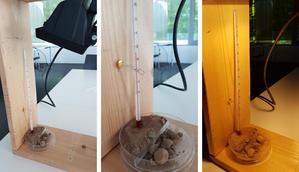
Oceans As A Heat Reservoir
astroEDU educational activity (links to astroEDU website) Description: Why do oceans play an important role in mitigating global warming?
License: CC-BY-4.0 Creative Commons 저작자표시 4.0 국제 (CC BY 4.0) icons
Tags:
Life
, Climate change
, Oceans
, heat
Age Ranges:
12-14
, 14-16
, 16-19
Education Level:
Middle School
Areas of Learning:
Modelling
, Structured-inquiry learning
, Traditional Science Experiment
Costs:
Medium Cost
Duration:
1 hour 30 mins
Group Size:
Group
Skills:
Analysing and interpreting data
, Constructing explanations
, Developing and using models
, Engaging in argument from evidence
, Planning and carrying out investigations