Glossary term: 지구
Description: 지구는 태양에서 세 번째 행성이며, 태양계에서 다섯 번째로 큰 행성입니다. 지구는 반지름 약 6400킬로미터(km)의 암석으로 이루어진 지구형 행성이며, 질량은 약 6 × 1024킬로그램(6조의 1조 kg)입니다.
지구와 태양 사이의 평균 거리는 약 1억 5천만 킬로미터로, 이것이 바로 1천문단위(AU)로 정의됩니다. 지구가 태양 주위를 한 바퀴 공전하는 데는 약 365.26일이 걸립니다. 지구에는 달이라는 하나의 자연 위성이 있습니다.
지구에는 인간을 포함한 수백만 종의 생명체가 살고 있으며, 현재까지 생명체가 존재하는 것으로 알려진 유일한 행성입니다. 지구는 약 45억 4천만 년 전에 형성된 것으로 추정됩니다. 또한 지구의 대기와 자기권은 유해한 태양 방사선으로부터 생명체를 보호하며, 지표에 풍부한 물이 존재해 푸른 행성으로 보입니다.
Related Terms:
See this term in other languages
Term and definition status: The original definition of this term in English have been approved by a research astronomer and a teacher The translation of this term and its definition is still awaiting approval
The OAE Multilingual Glossary is a project of the IAU Office of Astronomy for Education (OAE) in collaboration with the IAU Office of Astronomy Outreach (OAO). The terms and definitions were chosen, written and reviewed by a collective effort from the OAE, the OAE Centers and Nodes, the OAE National Astronomy Education Coordinators (NAECs) and other volunteers. You can find a full list of credits here. All glossary terms and their definitions are released under a Creative Commons CC BY-4.0 license and should be credited to "IAU OAE".
If you notice a factual or translation error in this glossary term or definition then please get in touch.
Related Media
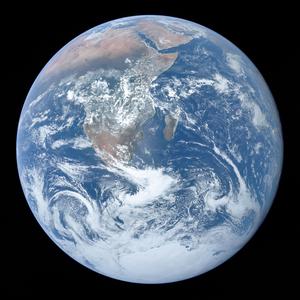
Earth as observed from Apollo 17
Caption: Full disk view of the Earth taken on 7 December 1972, by the crew of the Apollo 17 spacecraft en route to the Moon at a distance of about 29,000 kilometres (18,000 mi). It shows Africa, Antarctica, and the Arabian Peninsula.
Credit: NASA/Apollo 17 crew/Project Apollo Archive
License: PD Public Domain icons

ISS' view of nightly Japan
Caption: This nighttime photograph of Earth was taken from the International Space Station (ISS) by astronaut Scott Kelly in 2015 during Expedition 44. It captures the nation of Japan lit up after dark, with bright city lights tracing urban centers, major roadways, and densely populated regions. The view from orbit at night highlights how human activity shows up as patterns of light on Earth’s surface, with well-lit areas contrasting sharply against the surrounding darkness of rural regions and open water.
Photographs like this highlight what “night” looks like from space — not just a lack of sunlight, but also a time when artificial light reveals the rhythms of human life across the globe. From hundreds of kilometers above the planet, the night side of Earth appears as a tapestry of glowing clusters and dark spaces, offering insight into population distribution, infrastructure, and how cities remain active long after sunset. The ISS’s low orbit allows astronauts to capture these detailed views of Earth after dark, helping us appreciate both natural and human elements of nighttime on our planet.
Credit: NASA
credit link
License: PD Public Domain icons
Related Activities
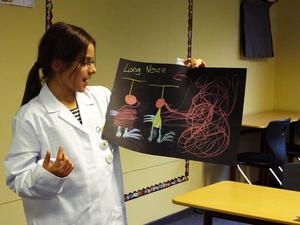
Design Your Alien
astroEDU educational activity (links to astroEDU website) Description: Design an alien life form suited for an extra-terrestrial world.
License: CC-BY-4.0 Creative Commons 저작자표시 4.0 국제 (CC BY 4.0) icons
Tags:
Life
, Environment
, Extra-terrestrial
, Art
, Creativity
, Hands-on
, Alien
Age Ranges:
8-10
, 10-12
Education Level:
Primary
, Secondary
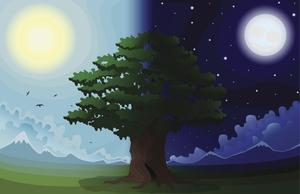
Why Do We Have Day and Night?
astroEDU educational activity (links to astroEDU website) Description: Explore day and night of Earth.
License: CC-BY-4.0 Creative Commons 저작자표시 4.0 국제 (CC BY 4.0) icons
Tags:
Tilt
Age Ranges:
6-8
, 8-10
, 10-12
Education Level:
Primary
, Secondary
Areas of Learning:
Modelling
, Simulation focussed
, Structured-inquiry learning
Costs:
Low Cost
Duration:
1 hour 30 mins
Group Size:
Group
Skills:
Asking questions
, Communicating information
Globe at Night Activity Guide
astroEDU educational activity (links to astroEDU website) Description: Learn to observe and record the faintest visible stars to measure the light pollution.
License: CC-BY-4.0 Creative Commons 저작자표시 4.0 국제 (CC BY 4.0) icons
Tags:
Hands-on
, Dark skies
, ecology
, Citizen science
Age Ranges:
4-6
, 6-8
, 8-10
, 10-12
, 12-14
, 14-16
, 16-19
, 19+
Education Level:
Informal
, Middle School
, Other
, Primary
, Secondary
, University
Areas of Learning:
Observation based
, Project-based learning
Costs:
Low Cost
Group Size:
Group
Skills:
Communicating information
, Planning and carrying out investigations
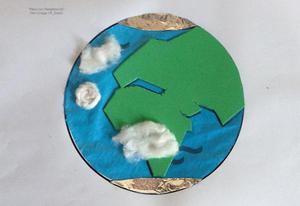
Meet Our Home: Planet Earth
astroEDU educational activity (links to astroEDU website) Description: Explore a tactile version of our home, the Earth, with household materials.
License: CC-BY-4.0 Creative Commons 저작자표시 4.0 국제 (CC BY 4.0) icons
Tags:
Hands-on
, Model
, Visually Impaired
, Tactile
Age Ranges:
6-8
, 8-10
, 10-12
Education Level:
Middle School
, Primary
, Secondary
Areas of Learning:
Interactive Lecture
, Modelling
Costs:
Low Cost
Duration:
1 hour 30 mins
Group Size:
Group
Skills:
Analysing and interpreting data
, Asking questions
, Communicating information
, Developing and using models
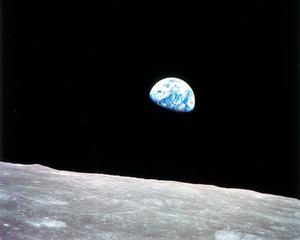
Blue Marble in Empty Space
astroEDU educational activity (links to astroEDU website) Description: Students are taken on a virtual journey to outer space to experience that we live on a tiny planet that floats in a vast and empty space.
License: CC-BY-4.0 Creative Commons 저작자표시 4.0 국제 (CC BY 4.0) icons
Tags:
Life
, Hands-on
, Model
, Scales
, Distances
, ISS
Age Ranges:
6-8
, 8-10
Education Level:
Primary
, Secondary
Areas of Learning:
Interactive Lecture
, Modelling
Costs:
Low Cost
Duration:
30 mins
Group Size:
Group
Skills:
Asking questions
, Communicating information
, Developing and using models