This page describes an image Lunar Phase Southern Hemisphere
Baixar arquivo ( imagem 1.26 MB)
Baixar arquivo PDF (PDF file 452.81 kB)
Also available in black and white
Baixar arquivo ( imagem 602.73 kB)
Baixar arquivo PDF (PDF file 414.32 kB)
Legenda do diagrama:
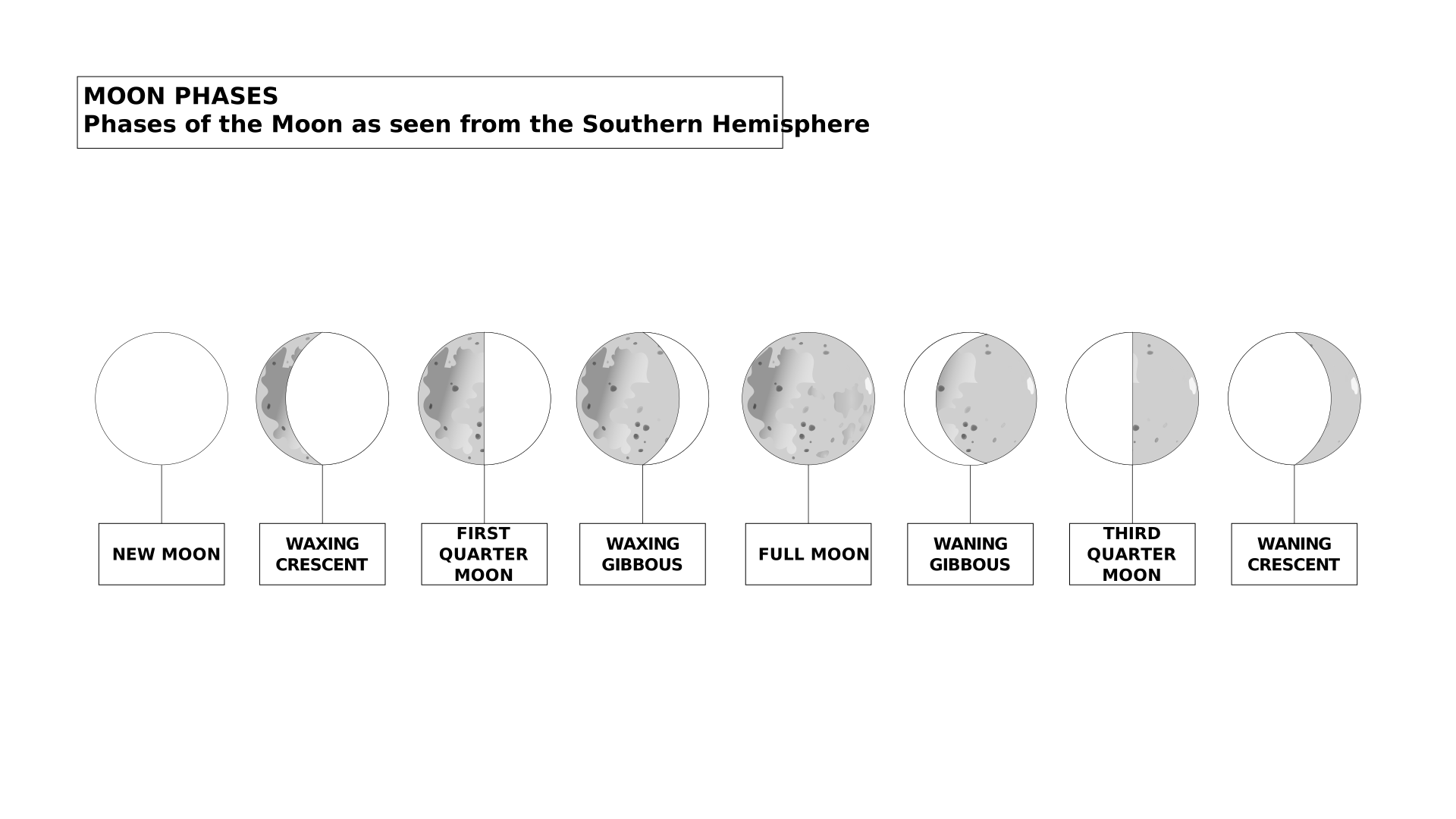
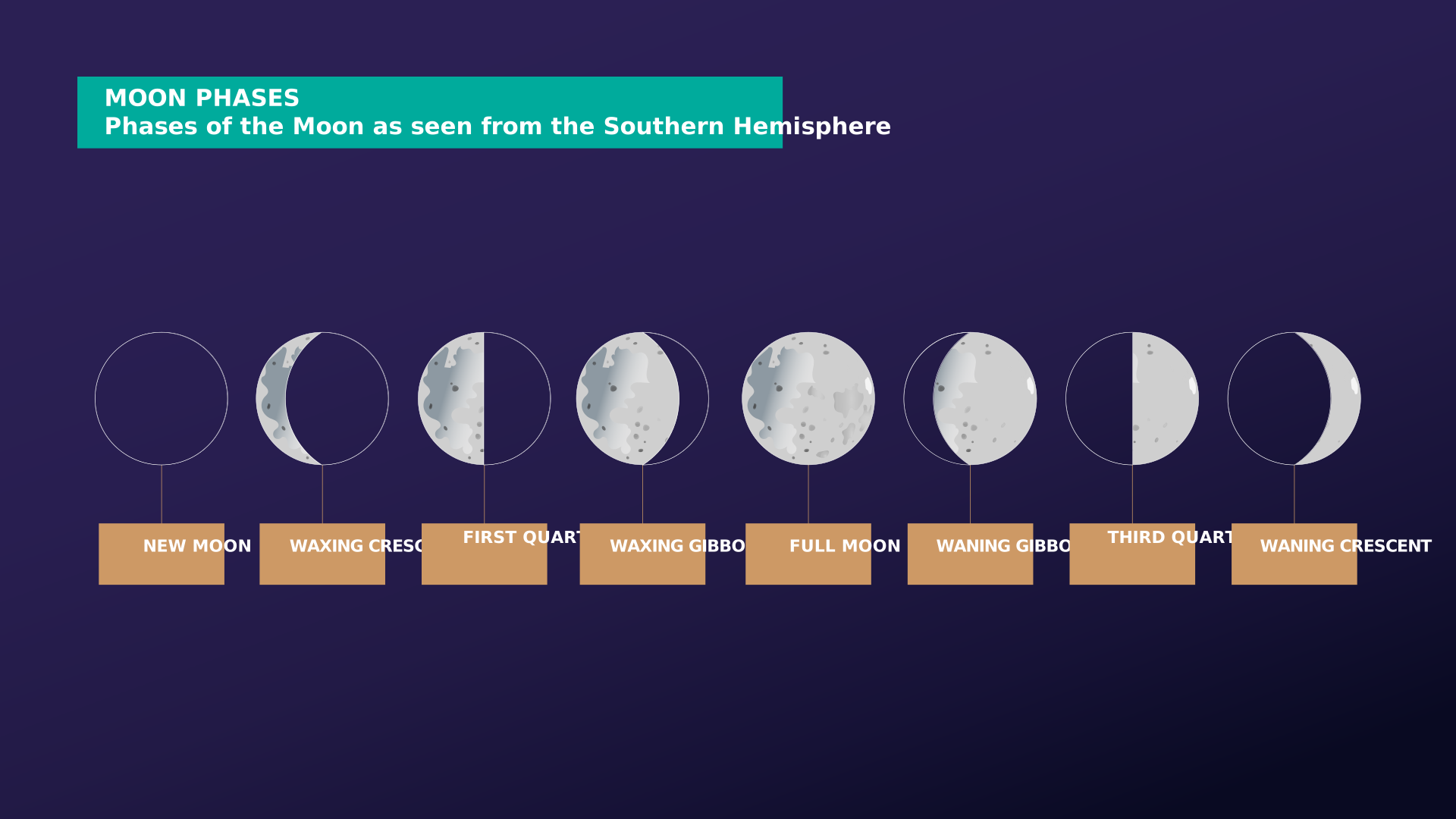
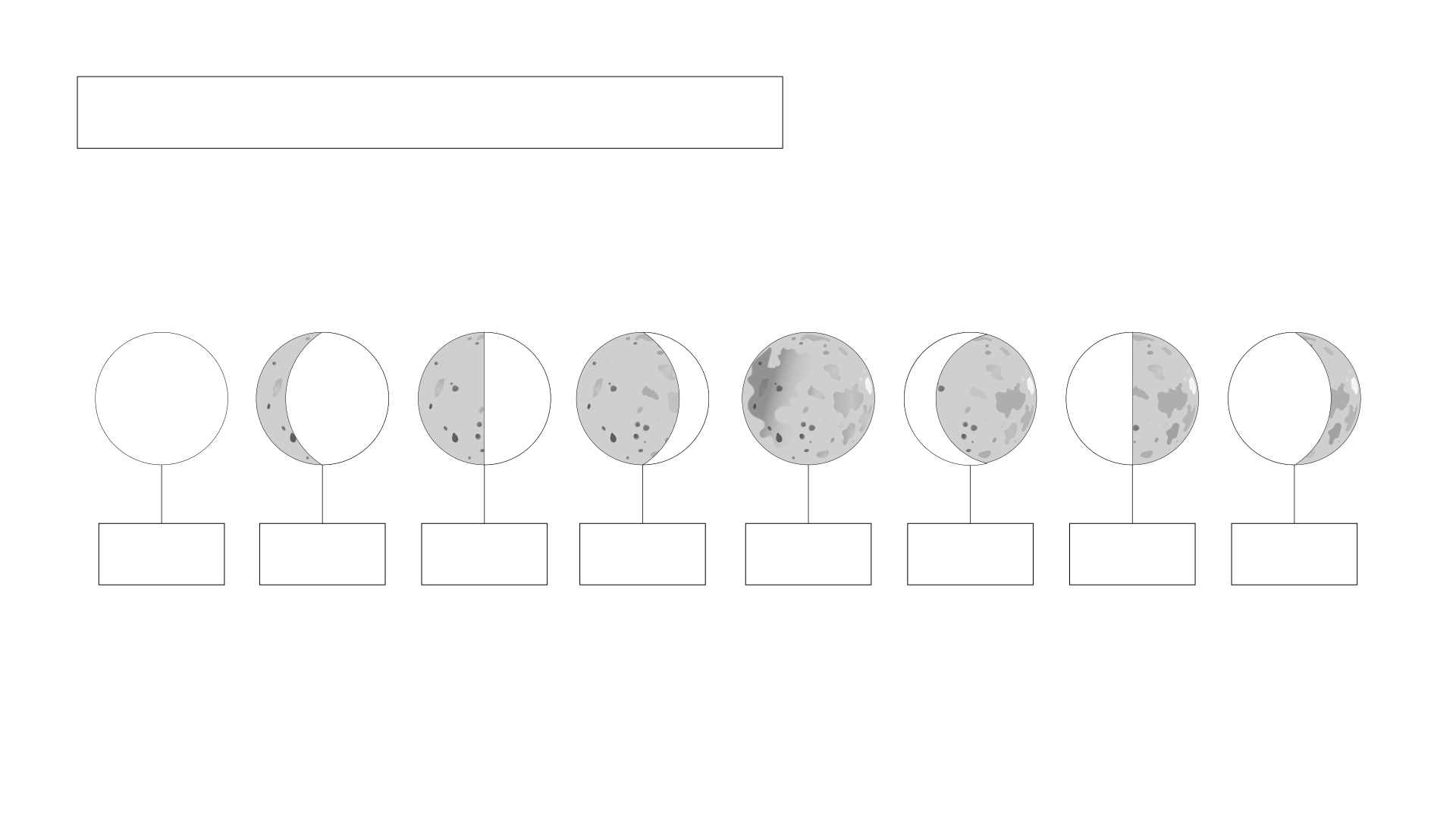
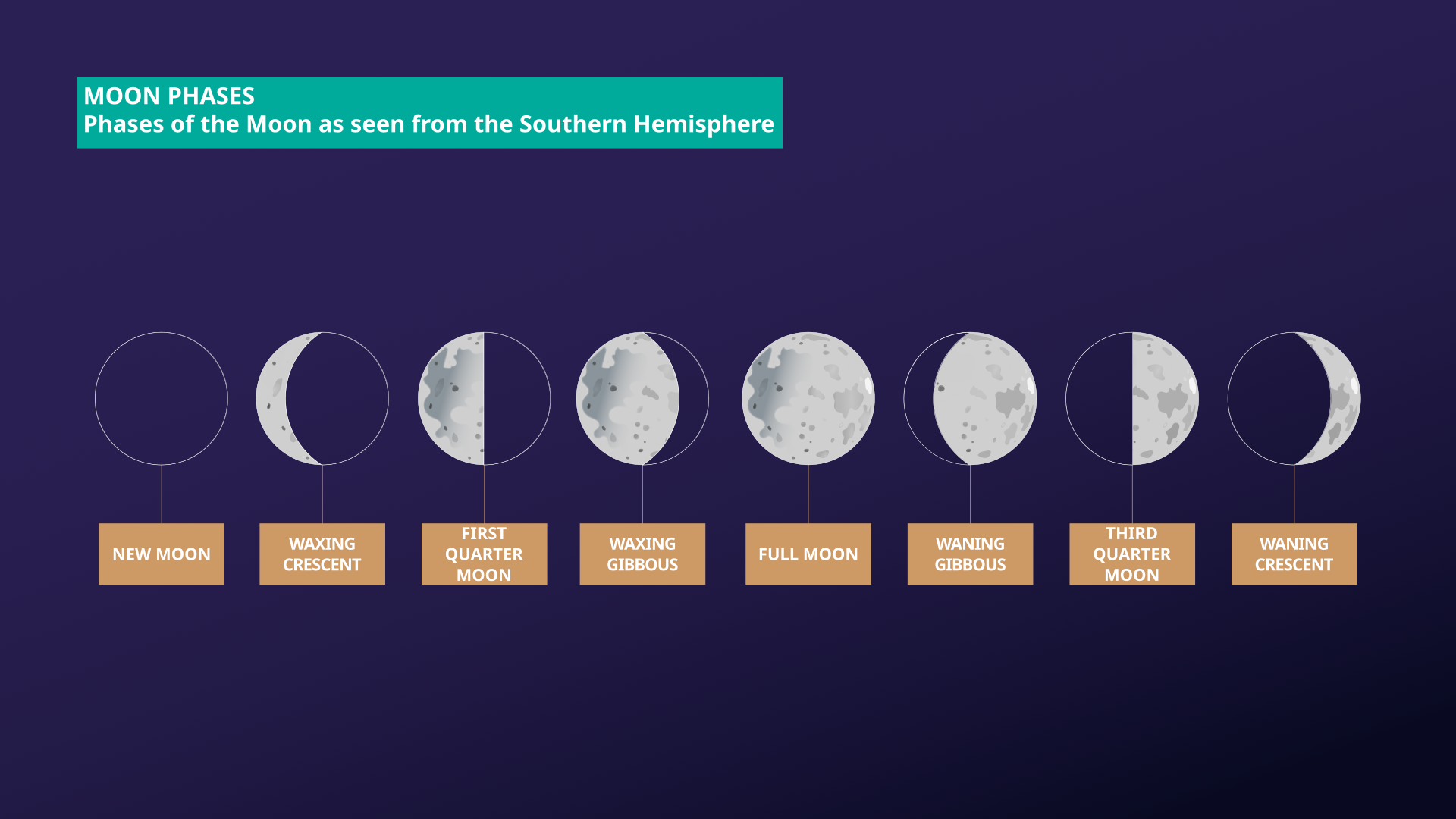
The phases of the Moon when viewed from the Southern Hemisphere. Here north is up and west is left The Moon orbits the Earth every 29.5 days. It is tidally locked to the Earth meaning its rotation period is the same as its orbital period and the same side of the Moon always faces the Earth. At any particular time, half of the Moon is illuminated by the Sun and half is in shadow. Over the course of the Moon’s orbit around the Earth every part of the Moon is illuminated for half of the orbit and is in shadow for the other half of the orbit.
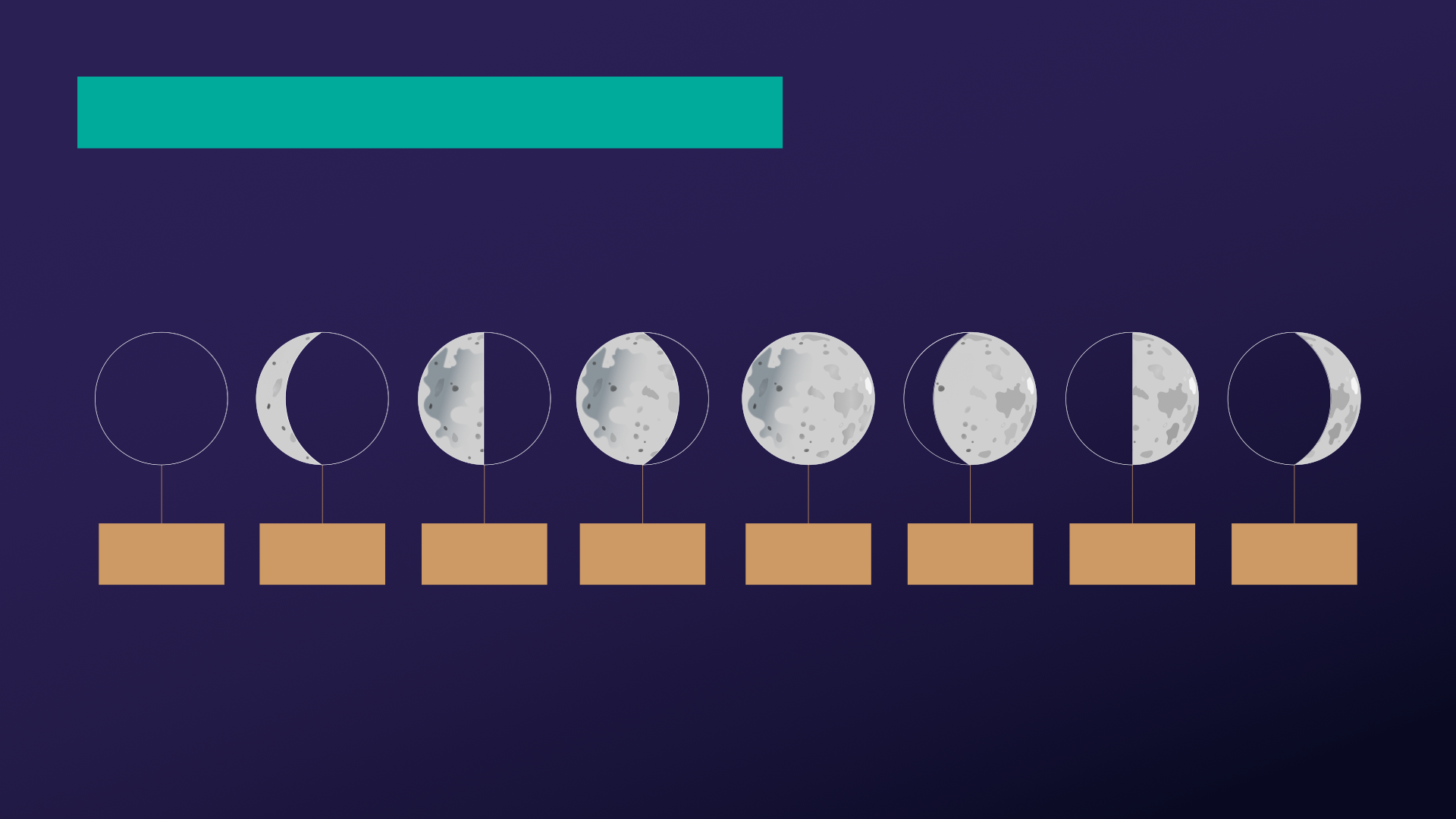
When the Moon sits between the Earth and the Sun its illuminated half faces away from the Earth and we only see the half that is in shadow. This phase of the Moon is known as new moon. As the Moon moves in its orbit, a small but growing sliver of the illuminated half of the Moon begins to be seen from the Earth. This illuminated sliver appears on the western side of the Moon’s face when viewed from Earth. This phase is known as waxing crescent moon. By a quarter of the way through the Moon’s orbit around the Earth the Moon appears 90° away from the Sun and half of the Moon’s illuminated half points toward the Earth. This phase is known as first quarter moon. As the orbit continues more than half of the Moon seen from Earth is now illuminated with a dark crescent. This phase is known as waxing gibbous moon. Once we reach the halfway point in the Moon’s orbit round the Earth the Moon is now on the opposite side of the Earth from the Sun and we see all of the Moon’s illuminated half. As the whole of the side of the Moon that faces the Earth is now illuminated this is referred to as full moon.
For the remaining half of the Moon’s orbit the half of the moon that faces the Earth begins to move into shadow. Hence the illuminated portion of the Moon that we see from Earth begins to shrink or wane. The western edge of the face of the Moon when viewed from Earth begins to appear dark and this grows through subsequent phases. The phases are repeated in reverse order: waning gibbous, third quarter, waning crescent and finally back to new moon.
Note the surface features of the Moon are illustrative and do not accurately represent the Moon’s true surface.
Crédito do diagrama: Aneta Margraf/IAU OAE.
Status da tradução dos diagramas: Ainda não aprovado por um revisor
Licença do diagrama: Creative Commons Atribuição 4.0 Internacional (CC BY 4.0) Creative Commons Atribuição 4.0 Internacional (CC BY 4.0) ícones
Termos relacionados do glossário:
Crescente
, Crescente Gibosa
, Fase lunar
, Lua Cheia
, Lua Nova
, Lua crescente
, Lua de Quarto
, Lua gibosa
, Lua minguante
, Lua minguante
Categorias
Astronomia a Olho Nu
Quer criar sua própria tradução ou versão deste diagrama? Então
baixe a versão SVG
deste diagrama em inglês (609.64 kB). Você pode editá-la usando
programas como o Inkscape (gratuito) ou o Adobe Illustrator
(proprietário). Apenas lembre-se de creditar adequadamente o autor do original.
Also available in black and white ( imagem 609.64 kB).
Você também pode criar sua própria versão ou tradução deste diagrama adicionando texto a uma versão
deste diagrama sem texto. Basta baixar um dos arquivos abaixo:
Baixar arquivo sem texto ( imagem 1.20 MB)
Baixar arquivo PDF sem texto (arquivo PDF 447.17 kB)
Also available in black and white:
Baixar arquivo sem texto ( imagem 105.66 kB)
Baixar arquivo PDF sem texto (arquivo PDF 408.71 kB)
Em outros idiomas
Inglês: Lunar Phase Southern HemisphereItaliano: Fasi lunari nell'emisfero australe
Alemão: Mondphasen auf der südlichen Hemisphäre
As legendas dos diagramas apresentadas no site da OAE foram escritas, traduzidas e revisadas por meio de um esforço coletivo da OAE, dos Centros e Nós da OAE, dos Coordenadores Nacionais de Educação em Astronomia (NAECs) da OAE e de outros voluntários. Você pode encontrar a lista completa de créditos do nosso projeto de tradução aqui. Todas as legendas de arquivos de mídia são publicadas sob uma licença Creative Commons CC BY-4.0 e devem ser creditadas à "IAU OAE". Os próprios arquivos de mídia podem ter licenças diferentes (veja acima) e devem ser creditados conforme indicado acima em "crédito".
Se você notar algum erro neste diagrama ou em sua legenda, por favor entre em contato.