Termo do glossário: Meteoritos
Descrição: Um meteorito é um corpo cósmico sólido com tamanho entre 30 micrômetros e 1 metro que cai na superfície da Terra ou de outro corpo celeste após passar pela atmosfera desse corpo. Um objeto só é descrito como meteorito depois de ter atravessado a atmosfera da Terra ou de outro corpo celeste. Enquanto estiver no espaço interplanetário e enquanto estiver atravessando a atmosfera, é conhecido como meteoroide. A onda de choque que o meteoroide causa na atmosfera emite luz, e pode ser observada como um meteoro.
Os meteoritos geralmente são feitos de rocha, minérios de ferro ou ferro, sendo rocha a mais comum quando observamos os tipos de meteoritos que estão ligados ao avistamento de um meteoro. Entretanto, os meteoritos de rocha geralmente se parecem com rochas terrestres e, por isso, podem ser ignorados, e os meteoritos de ferro são o tipo mais comum de meteorito encontrado no solo. A maioria dos meteoritos é encontrada na Antártica ou em desertos, pois é lá que eles são mais fáceis de serem avistados.
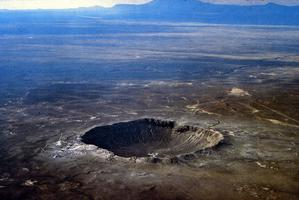
A maioria dos meteoritos encontrados varia de alguns gramas a vários quilogramas de massa. O maior conhecido é o Hoba, que tem mais de 60 toneladas e fica na Namíbia. Alguns meteoritos podem ser grandes o suficiente para produzir uma cratera de impacto. Os meteoritos recebem o nome da área onde caíram.
Termos relacionados:
Ver este termo em outros idiomas
Status do termo e da definição: A definição original deste termo em inglês foi aprovada por um astrônomo(a) pesquisador(a) e um(a) professor(a) A tradução deste termo e de sua definição ainda aguarda aprovação
O Glossário Multilíngue da OAE é um projeto do Escritório da IAU de Astronomia para a Educação (OAE) em colaboração com o Escritório da IAU para Divulgação da Astronomia (OAO). Os termos e definições foram selecionados, escritos e revisados por meio de um esforço coletivo da OAE, dos Centros e Nós da OAE, dos Coordenadores Nacionais de Educação em Astronomia (NAECs) da OAE e de outros voluntários. Você pode encontrar uma lista completa dos créditos aqui. Todos os termos do glossário e suas definições são disponibilizados sob uma licença Creative Commons CC BY-4.0 e devem ser creditados à "IAU OAE".
Se você notar algum erro factual ou de tradução neste termo do glossário ou em sua definição, por favor entre em contato.
Em outros idiomas
- Árabe: النيزك
- Alemão: Meteoriten
- Inglês: Meteorite
- Espanhol: Meteorito
- Francês: Météorites
- Italiano: Meteorite
- Japonês: 隕石 (link externo)
- Nepalês: उल्कापिण्ड
- Chinês Simplificado: 陨石
- Chinês Tradicional: 隕石
Mídia relacionada

Iron Meteorite
Legenda: This iron meteorite was originally found in Harriman, Tennessee, USA and is now held in the collection of the Smithsonian Natural History Museum, Washington DC, USA. The total mass of the meteorite was about 30kg. Here we see the interior after the meteorite was cut into pieces.
Iron meteorites are largely composed of an iron-nickel. They also often have a crystalline structure which manifests here as a series of crossing shiny straight lines known as a Widmanstätten pattern. This is thought to have formed as the meteoroid (the object that would eventually fall through the Earth's atmosphere as a meteor and land on the ground as a meteorite) cooled very slowly in the vacuum of space in the early solar system. This led to the growth of this crystalline structure.
Crédito: Chuck Sutherland
link do crédito
License: PD Domínio Público ícones
Atividades relacionadas
Meteoroids, Meteors and Meteorites
astroEDU educational activity (links to astroEDU website) Description: Unveiling the mystery of "shooting stars": meteors, meteorites and meteroids
License: CC-BY-4.0 Creative Commons Attribution 4.0 International (CC BY 4.0) ícones
Tags:
Geology
Faixas etárias:
6-8
, 8-10
, 10-12
, 12-14
Nível de ensino:
Ensino fundamental
, Básico
Áreas de aprendizagem:
Aula interativa
Custos:
Baixo custo
Duração:
1 hour 30 mins
Tamanho do grupo:
Grupo
Habilidades:
Analisar e interpretar dados
, Fazer perguntas
, Comunicar informações
, Engajar-se em argumentação com base em evidências