Termo do glossário: Meteoroide
Descrição: Um meteoroide é um fragmento de um asteroide ou cometa, com um tamanho que varia de alguns milímetros a várias dezenas de metros. Os meteoroides podem cair em direção a qualquer objeto celeste, com ou sem atmosfera, a uma velocidade muito alta. Se o corpo celeste tiver atmosfera, o meteoroide é desacelerado por colisões com as moléculas atmosféricas. Observamos os meteoroides na atmosfera da Terra como meteoros. Se o meteoroide não for completamente destruído na atmosfera (ou se o corpo celeste não tiver atmosfera), ele atinge a superfície desse corpo e é então chamado de meteorito.
Termos relacionados:
Ver este termo em outros idiomas
Status do termo e da definição: A definição original deste termo em inglês foi aprovada por um astrônomo(a) pesquisador(a) e um(a) professor(a) A tradução deste termo e de sua definição ainda aguarda aprovação
O Glossário Multilíngue da OAE é um projeto do Escritório da IAU de Astronomia para a Educação (OAE) em colaboração com o Escritório da IAU para Divulgação da Astronomia (OAO). Os termos e definições foram selecionados, escritos e revisados por meio de um esforço coletivo da OAE, dos Centros e Nós da OAE, dos Coordenadores Nacionais de Educação em Astronomia (NAECs) da OAE e de outros voluntários. Você pode encontrar uma lista completa dos créditos aqui. Todos os termos do glossário e suas definições são disponibilizados sob uma licença Creative Commons CC BY-4.0 e devem ser creditados à "IAU OAE".
Se você notar algum erro factual ou de tradução neste termo do glossário ou em sua definição, por favor entre em contato.
Em outros idiomas
- Árabe: نيزك
- Alemão: Meteoroid
- Inglês: Meteoroid
- Espanhol: Meteoroide
- Francês: Météoroïde
- Italiano: Meteoroide
- Japonês: 流星物質 (link externo)
- Coreano: 유성체
- Chinês Simplificado: 流星体
- Chinês Tradicional: 流星體
Mídia relacionada
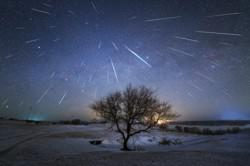
Geminid Meteor Shower from China, by Dai Jianfeng, China
Legenda: First place in the 2021 IAU OAE Astrophotography Contest, category Meteor showers.
A meteor shower occurs when the Earth in its orbit around the Sun, passes through a debris trail left previously by a comet on its approach around the Sun. As the Earth enters this debris (small sand grain sized), they enter the atmosphere at high speeds and on parallel trajectories, burning completely leaving beautiful tracks (streaks) in the sky. These streaks can appear and disappear in the blink of an eye, or last much longer. On rare occasions the debris originates from asteroids, as in the case of the Geminid meteor shower, shown in this image, picturing many streaks of debris captured in the sky of China in 2017. Due to relative motions and perspective, the shower appears to come from one single point, known as the radiant point, beautifully pictured in this image. This is similar to driving in a car on a rainy day without any wind, looking out the front window it seems that the rain is coming directly towards the window, when in fact the rain is falling vertically downwards.
Crédito: Dai Jianfeng/IAU OAE
License: CC-BY-4.0 Creative Commons Attribution 4.0 International (CC BY 4.0) ícones
Atividades relacionadas
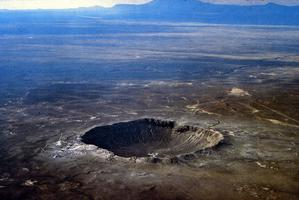
Meteoroids, Meteors and Meteorites
astroEDU educational activity (links to astroEDU website) Description: Unveiling the mystery of "shooting stars": meteors, meteorites and meteroids
License: CC-BY-4.0 Creative Commons Attribution 4.0 International (CC BY 4.0) ícones
Tags:
Geology
Faixas etárias:
6-8
, 8-10
, 10-12
, 12-14
Nível de ensino:
Ensino fundamental
, Básico
Áreas de aprendizagem:
Aula interativa
Custos:
Baixo custo
Duração:
1 hour 30 mins
Tamanho do grupo:
Grupo
Habilidades:
Analisar e interpretar dados
, Fazer perguntas
, Comunicar informações
, Engajar-se em argumentação com base em evidências