词条 太阳
描述: 太阳是距离地球最近的恒星。对于天文学家来说,它是一颗 "G2V "型恒星。这意味着太阳是一颗主序星,典型温度("有效温度")为 5800 开尔文(K)。主序星是稳定的,其内核氢聚变释放的能量可以平衡引力产生的向内力。人眼看到的太阳是白色的,因为它发出大量可见光谱的光。当太阳位于天空较低的位置时,大气消光的增加会使太阳呈现黄色或橙色,因此太阳通常被描述为黄色。恒星的亮度从比太阳亮 1000 多倍到比太阳暗 1000 多倍不等,但更亮的恒星相对较少;太阳比银河系中的大多数恒星(可能约 85%)更亮(也更重)。
对于天文学家来说,太阳之所以有趣,是因为它距离我们很近,这意味着太阳表面可以被更细致地分辨出来,从而可以对太阳的结构和现象进行研究。例如,对与太阳磁场有关的太阳活动的详细研究可以包括:太阳黑子(较冷的区域)、耀斑(短暂的闪光),甚至日冕物质抛射(从太阳抛出的带电粒子)。物理学家还从太阳内核探测到被称为中微子的基本粒子;这是核聚变过程的直接证据。氦元素首次在太阳光谱中被探测到,因此被命名为 "氦",它来自希腊神话中的太阳神赫利俄斯(Helios)。
相关词条
用其他语言查看该词条
词条和定义状态: 该术语的英文原始定义已通过天文研究人员和教师的审核 该术语及其定义的译文仍待审核
OAE多语言词汇表是由国际天文学联合会(IAU) 天文教育办公室(OAE) 和 国际天文学联合会(IAU) 天文推广办公室(OAO)合作的项目。. 术语和定义由 OAE中心, OAE 国家天文教育协调员(NAECs) 以及其他志愿者共同选择、撰写和审阅。您可以在 找到完整的致谢列表。所有词汇表术语及其定义均根据 Creative Commons CC BY-4.0许可证发布 且版权归属于 “IAU OAE”。
如果您发现此词汇术语或定义中的事实或翻译错误, 请向 发邮件 联系.
相关媒体
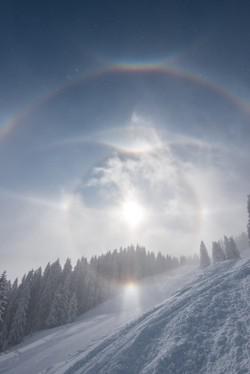
冬季光环,作者为德国的托马斯·吉格尔
图注: 2021年国际天文学联合会(IAU)OAE天文摄影比赛日晕与月晕类别第二名。
这幅照片拍摄于奥地利著名滑雪胜地蒂罗尔州的约赫贝格,展示了与冰晕有关的多种特征。由于太阳远亮于月球,日晕比月晕更为常见。在冰晶表面和不同类型的冰晶内部,太阳光受到外部和内部反射,导致了日晕现象的发生。角半径为22°的日晕环绕着太阳,边缘处能观测到两个明亮的斑点,位列太阳相同高度处的左右两侧,观测到边缘处的两个亮点,称为“幻日”。水平的白色光带称为幻日环,以相同的高度角穿过太阳和幻日,其英文为 parhelic circle,以古希腊太阳神赫利俄斯(Helios)命名。在22°日晕的顶部和底部,还可以看到一条上切弧、一条上凹帕里弧和一条下切弧。在照片顶端,可以看到一个倒置的彩虹状光弧,称为环天顶弧,它与明亮的上侧弧相切,这两者都较少被观测到。
来源: Thomas Gigl/IAU OAE
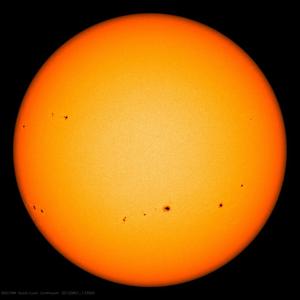
太阳黑子
图注: 在这张图片中,太阳在2012年7月至8月的近九天里布满了成群的太阳黑子。这张图片中看到的太阳黑子是太阳耀斑和日冕物质抛射(CME)的源头。特别是,在这张图片中,太阳正接近其周期(太阳周期)中的太阳活动最大值,我们可以看到许多黑子沿着太阳赤道形成。这些太阳黑子和活动出现在太阳的南半球,在此之前,大部分活动都发生在北半球。
来源: NASA/SDO/HMI
来源链接
License: PD 公共领域 图标
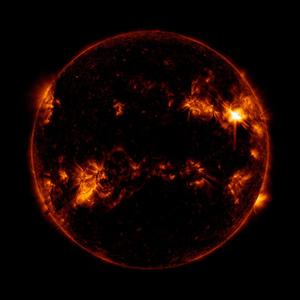
太阳耀斑
图注: 这张图片显示的是太阳动态天文台(SDO)在 2022 年 3 月观测到的中级太阳耀斑。SDO 持续追踪太阳活动,展示了太阳上有活动发生的区域。太阳耀斑是太阳表面的短暂变亮现象,这次耀斑属于 M 级,这意味着它的大小只有最强烈耀斑(即 X 级耀斑)的十分之一。用肉眼我们几乎无法看到太阳耀斑,这张图片是在SDO捕捉的极紫外线光下拍摄的,被着色为红色。耀斑出现在太阳盘面的上部。
来源: NASA/SDO
来源链接
License: PD 公共领域 图标

H-alpha image of the Sun's chromosphere
图注: This false-color image was captured with a 10-cm telescope at the Big Bear Solar Observatory (BBSO) in the United States in July 2002. It depicts the full disk of the Sun using the H-alpha emission line of hydrogen. When observed in this spectral line, the Sun's chromosphere appears particularly prominent due to hydrogen atoms emitting light at the specific wavelength. This emission produces a distinctive red color, making features such as spicules (jets of plasma that look hair-like) and plage (bright patches in the chromosphere) highly visible. Several small solar prominences can be seen protruding from the edge of the solar disk. When prominences (also known as filaments) cross the face of the disk they appear as dark threads caused by the cooler material in the prominence absorbing light. The chromosphere is also visible in the violet part of the solar spectrum due to ionized calcium showing emissions in these wavelengths.
来源: Big Bear Solar Observatory (BBSO)/New Jersey Institut of Technology (NJIT)
来源链接
License: PD 公共领域 图标

Close-up view of a sunspot
图注: This image of a sunspot was taken by the Daniel K Inouye Solar Telescope (DKIST), operated by the U.S. National Science Foundation. It was taken only in light with a wavelength of 530 nanometers, within the greenish-yellow part of the visible spectrum.
The picture reveals the detail of the spot's structure and the Sun’s photosphere. The dark central region, known as the umbra, is surrounded by a lighter area called the penumbra with radially elongated features stretching towards the umbra. Note that the umbra and penumbra here are not the same as the umbra and penumbra that occur during an eclipse.
The sunspot measures approximately 5000 kilometres in diameter, roughly equivalent to the east-west span of China. While the umbra appears black, it is actually hot and bright. It only appears dark because it is a few thousand kelvin cooler than the surrounding solar photosphere. Surrounding the sunspot, granulation patterns of plasma are visible on the photospheric surface of the Sun.
来源: NSO/NSF/AURA
来源链接
相关图表
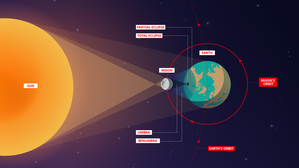
Total Solar Eclipse
图注: This not to scale diagram shows what happens during a total solar eclipse. The Moon orbits the Earth, but its orbit is slightly tilted with respect to the Earth’s orbit around the Sun. During the new moon lunar phase, the Moon lies between the Earth and the Sun, but due to the Moon’s tilted orbit around the Earth, the Moon normally lies above or below the Sun at this point. However twice a year the Moon’s orbit lines up in such a way that the Moon can lie in a direct line between the Earth and Sun. During each of these periods (each of which last roughly a month) solar (and lunar) eclipses can occur. The Moon is about 400 times smaller than the Sun, but is 400 times closer to the Earth than the Sun. Hence the Sun and Moon have approximately the same angular size when viewed from the Earth. This means that it is possible for the Moon to completely cover the Sun when viewed from Earth. This is known as a total solar eclipse.
Here we see a schematic of such and eclipse. The Moon casts a shadow on the Earth known as the umbra. This is a roughly circular shadow a few hundred kilometres across although its shape can be severely distorted when the eclipse is at the edge of the illuminated part of the Earth. Any region within the umbra will see the Moon completely cover the Sun and thus will experience a total solar eclipse. Outside of the umbra there are regions where the Moon will cover part of the Sun. This partial shadow is known as the penumbra. Regions in the penumbra will experience a partial solar eclipse.
An eclipse is a dynamic event with the Moon moving in its orbit and the Earth rotating. Hence the umbra and penumbra move across the Earth’s surface together. The path the umbra takes across the Earth is known as the path of totality. Let’s consider one particular region that lies in the path of totality: except in rare cases where an eclipse begins at sunrise, a region that experiences totality will first see the Moon cover part of the Sun and gradually move across Sun until it is totally covered. From outside the Earth this would appear as the penumbra moving over this particular region followed by the umbra moving over this region. Once the Moon moves so that it no longer completely covers the Sun, totality ends and the umbra moves away from this particular region. The Moon will continue to uncover the Sun until (unless the Sun sets before the end of the eclipse) the Sun is completely uncovered. From outside the Earth this would appear as the umbra moving away from our particular region and the edge of the penumbra approaching and eventually passing over the region.
Outside of the path or totality there is a much broader region that will lie in the penumbra but will be missed by the umbra. Such regions will not experience a total solar eclipse during this event, only a partial solar eclipse.
来源: Aneta Margraf/IAU OAE
相关活动
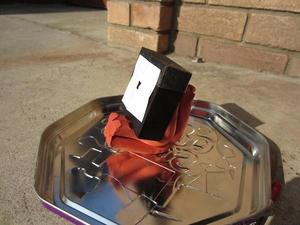
Measure the Solar Diameter
astroEDU educational activity (links to astroEDU website) Description: Hands-on activity to measure the Sun by using household materials.
License: CC-BY-4.0 知识共享许可协议 署名 4.0 国际 (CC BY 4.0) 图标
标签:
Hands-on
, Scales
, Observing
, Measurement
年龄段:
12-14
, 14-16
, 16-19
, 19+
受教育等级:
初中
学习领域:
结构化探究式学习
费用:
低成本
组别大小:
小组
技能:
传达信息
, 构建解释
, 使用数学和计算思维
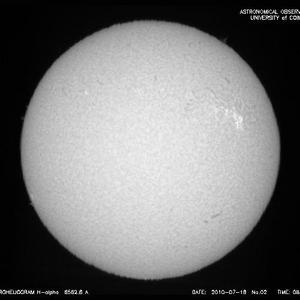
Counting Sunspots
astroEDU educational activity (links to astroEDU website) Description: Counting the Sunspots using real solar images and data.
License: CC-BY-4.0 知识共享许可协议 署名 4.0 国际 (CC BY 4.0) 图标
标签:
Hands-on
, Sunspots
, Data analysis
年龄段:
16-19
学习领域:
以观察为主
费用:
低成本
时间跨度:
1 小时
组别大小:
小组
技能:
分析和解读数据
, 构建解释
, 使用数学和计算思维
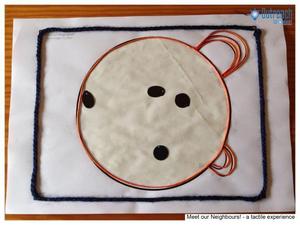
Meet Our Neighbours: Sun
astroEDU educational activity (links to astroEDU website) Description: Explore the tactile version of our star; the Sun with household materials.
License: CC-BY-4.0 知识共享许可协议 署名 4.0 国际 (CC BY 4.0) 图标
标签:
Hands-on
, Model
, Sunspots
, Visually Impaired
, Tactile
年龄段:
6-8
, 8-10
, 10-12
受教育等级:
初中
, Primary
, 中学
学习领域:
互动讲座
, 建模
费用:
低成本
时间跨度:
1 小时
组别大小:
小组
技能:
分析和解读数据
, 开发和使用模型
Build a Safe Sun Viewer
astroEDU educational activity (links to astroEDU website) Description: Build a safe Sun viewer using cheap household items and learn why it is dangerous to look directly at the Sun, even briefly.
License: CC-BY-4.0 知识共享许可协议 署名 4.0 国际 (CC BY 4.0) 图标
标签:
Hands-on
, Safety
年龄段:
6-8
, 8-10
, 10-12
受教育等级:
Primary
, 中学
学习领域:
建模
, 以观察为主
费用:
低成本
组别大小:
小组
技能:
规划并开展调查
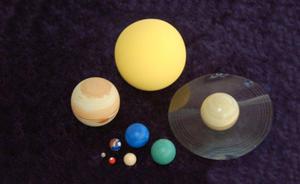
Solar System Model
astroEDU educational activity (links to astroEDU website) Description: Make a model of the Solar System planets using household materials.
License: CC-BY-4.0 知识共享许可协议 署名 4.0 国际 (CC BY 4.0) 图标
标签:
Hands-on
, Model
, Planets
年龄段:
4-6
, 6-8
, 8-10
受教育等级:
学前
, Primary
学习领域:
建模
费用:
低成本
时间跨度:
30 分钟
组别大小:
小组
技能:
分析和解读数据
, 提出问题
, 传达信息
, 开发和使用模型