Glossar-Begriff: Nacht
Beschreibung: Die Nacht ist eine Periode der Dunkelheit, wenn die Sonne unter dem Horizont steht. Die Nacht dauert von Sonnenuntergang bis Sonnenaufgang. Fast überall auf der Erde hat jeder 24-Stunden-Tag eine Nacht. Nördlich des nördlichen Polarkreises und südlich des südlichen Polarkreises gibt es jedoch um die Wintersonnenwende Zeiten der Dunkelheit, in denen eine Polarnacht monatelang andauern kann. In diesen Gebieten gibt es um die Zeit der Sommersonnenwende keine Nacht.
Die Zeit, in der die Sonne knapp unter dem Horizont steht, nennt man Dämmerung. Während der Dämmerung erhellt die Sonne noch einen Teil des Himmels. Die Dämmerung wird in drei gleich lange Zeiträume unterteilt: bürgerliche Dämmerung, nautische Dämmerung und astronomische Dämmerung. Während der bürgerlichen Dämmerung - wenn die Sonne null bis sechs Grad unter dem Horizont steht - ist der Himmel relativ hell, sodass eine künstliche Beleuchtung, wie z. B. eine Straßenbeleuchtung, oft nicht nötig ist. Bei der nautischen Dämmerung - wenn die Sonne sechs bis zwölf Grad unter dem Horizont steht - sind helle Sterne zu sehen. Der Himmel ist hell genug, um den Horizont auch in einer mondlosen Nacht zu erkennen. Dies ermöglicht es Seeleuten, sich mithilfe der Himmelsnavigation zu orientieren. Astronomische Dämmerung ist, wenn die Sonne zwölf bis achtzehn Grad unter dem Horizont steht.
Ähnliche Begriffe:
Dieser Begriff in anderen Sprachen
Begriffs- und Definitionsstatus Die Originaldefinition dieses Begriffes auf Englisch wurden von einem forschenden Astronom und einer Lehrkraft bestätigt Die Übersetzung dieses Begriffs und seiner Definition warten auf Prüfung und Bestätigung
The OAE Multilingual Glossary is a project of the IAU Office of Astronomy for Education (OAE) in collaboration with the IAU Office of Astronomy Outreach (OAO). The terms and definitions were chosen, written and reviewed by a collective effort from the OAE, the OAE Centers and Nodes, the OAE National Astronomy Education Coordinators (NAECs) and other volunteers. You can find a full list of credits here. All glossary terms and their definitions are released under a Creative Commons CC BY-4.0 license and should be credited to "IAU OAE".
Wenn dir ein inhaltlicher oder Übersetzungsfehler in diesem Glossarbegriff oder dieser Definition auffallen, bitte kontaktiere uns.
Ähnliche Medien

Blick von der ISS auf das nächtliche Japan
Unterschrift: Diese Nachtaufnahme der Erde wurde 2015 während der Expedition 44 vom Astronauten Scott Kelly von der Internationalen Raumstation (ISS) aus aufgenommen. Sie zeigt Japan bei Einbruch der Dunkelheit, wobei helle Stadtlichter die städtischen Zentren, Hauptverkehrsstraßen und dicht besiedelten Regionen nachzeichnen. Der nächtliche Blick aus dem Orbit verdeutlicht, wie menschliche Aktivitäten als Lichterteppiche auf der Erdoberfläche sichtbar werden, wobei sich ein starker Kontrast zwischen hell erleuchteten Gebiete und der umgebenden Dunkelheit ländlicher Regionen und offener Gewässer abzeichnet.
Fotos wie dieses verdeutlichen, wie die „Nacht“ aus dem Weltraum erscheint – nicht nur als Abwesenheit von Sonnenlicht, sondern auch als eine Zeit, in der künstliches Licht die Rhythmen des menschlichen Lebens rund um den Globus offenbart. Aus einer Höhe von Hunderten von Kilometern über dem Planeten erscheint die Nachtseite der Erde wie ein Gewebe aus leuchtenden Ballungsräumen und dunklen Flächen, das Einblicke in die Bevölkerungsverteilung, die Infrastruktur und die Tatsache gewährt, dass Städte noch lange nach Sonnenuntergang aktiv bleiben. Die niedrige Umlaufbahn der ISS ermöglicht es den Astronauten, diese detaillierten Ansichten der Erde nach Einbruch der Dunkelheit festzuhalten, und hilft uns so, sowohl die natürlichen als auch die vom Menschen geprägten Aspekte der Nacht auf unserem Planeten besser zu verstehen.
Bild: NASA
Quellenlink
License: PD Gemeinfrei Symbole
Ähnliche Aktivitäten
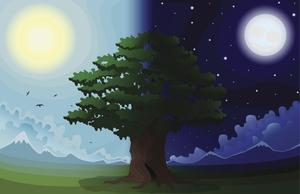
Why Do We Have Day and Night?
astroEDU educational activity (links to astroEDU website) Description: Explore day and night of Earth.
License: CC-BY-4.0 Creative Commons Namensnennung 4.0 International (CC BY 4.0) Symbole
Schlagworte
Tilt
Altersgruppen:
6-8
, 8-10
, 10-12
Bildungsniveau:
Primary
, Secundaria
Lernbereiche:
Modelling
, Simulation focussed
, Structured-inquiry learning
Kosten:
Low Cost
Dauer:
1 hour 30 mins
Gruppengröße:
Group
Fähigkeiten:
Asking questions
, Communicating information
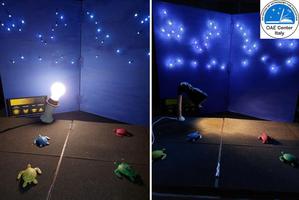
Let there be light… but not too much!
astroEDU educational activity (links to astroEDU website) Description: Build a model to learn what light pollution is and what its effects are.
License: CC-BY-4.0 Creative Commons Namensnennung 4.0 International (CC BY 4.0) Symbole
Schlagworte
Pollution
, sky observation
, lighting source
Altersgruppen:
6-8
, 8-10
, 10-12
Bildungsniveau:
Middle School
, Primary
Lernbereiche:
Discussion Groups
, Modelling
, Observation based
, Project-based learning
Kosten:
Medium Cost
Dauer:
2 hours
Gruppengröße:
Group
Fähigkeiten:
Asking questions
, Developing and using models
, Engaging in argument from evidence