Termo do glossário: Planeta terrestre
Descrição: Um planeta terrestre é aquele composto principalmente de materiais como rocha e ferro. Os planetas terrestres não têm a atmosfera inchada de hidrogênio e hélio encontrada nos planetas gasosos gigantes, tendo, em vez disso, atmosferas muito menores ou, até mesmo, nenhuma atmosfera. Os planetas terrestres geralmente têm massas menores do que os planetas gigantes e são menores em tamanho.
No Sistema Solar, os planetas terrestres são Mercúrio, Vênus, Terra e Marte.
Um dos principais focos da astronomia de exoplanetas tem sido a busca por planetas terrestres de tamanho e composição semelhantes aos da Terra que se encontram na zona habitável de suas estrelas.
Termos relacionados:
- Atmosfera
- Terra
- Exoplaneta
- Planeta gigante
- Zona habitável
- Marte
- Mercúrio
- Planeta
- Sistema solar
- Vênus
Ver este termo em outros idiomas
Status do termo e da definição: A definição original deste termo em inglês foi aprovada por um astrônomo(a) pesquisador(a) e um(a) professor(a) A tradução deste termo e de sua definição ainda aguarda aprovação
O Glossário Multilíngue da OAE é um projeto do Escritório da IAU de Astronomia para a Educação (OAE) em colaboração com o Escritório da IAU para Divulgação da Astronomia (OAO). Os termos e definições foram selecionados, escritos e revisados por meio de um esforço coletivo da OAE, dos Centros e Nós da OAE, dos Coordenadores Nacionais de Educação em Astronomia (NAECs) da OAE e de outros voluntários. Você pode encontrar uma lista completa dos créditos aqui. Todos os termos do glossário e suas definições são disponibilizados sob uma licença Creative Commons CC BY-4.0 e devem ser creditados à "IAU OAE".
Se você notar algum erro factual ou de tradução neste termo do glossário ou em sua definição, por favor entre em contato.
Em outros idiomas
- Árabe: كوكب أرضي
- Bengali: শিলাময় গ্রহ
- Alemão: Gesteinsplanet
- Inglês: Terrestrial Planet
- Espanhol: Planeta terrestre
- Francês: Planète tellurique
- Italiano: Pianeta terrestre
- Japonês: 地球型惑星 (link externo)
- Chinês Simplificado: 类地行星
- Chinês Tradicional: 類地行星
Mídia relacionada
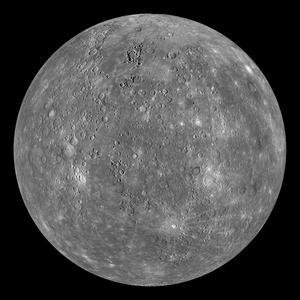
Mercúrio
Legenda: Esta imagem é uma composição de um mosaico de fotos da superfície do planeta Mercúrio obtidas pela sonda espacial MESSENGER (Mercury Surface, Space Environment, Geochemistry and Ranging). A MESSENGER foi lançada pela NASA em 2004 e explorou Mercúrio de 2011 a 2015.
Crédito: NASA/Laboratório de Física Aplicada da Universidade Johns Hopkins/Instituição Carnegie de Washington
link do crédito
License: PD Domínio Público ícones
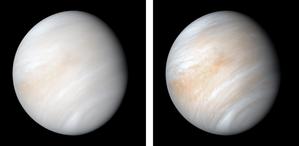
Vênus em luz visível
Legenda: Esta foto, tirada pela sonda Mariner 10 da NASA, mostra como o planeta Vênus aparece a olho nu. Vênus está envolto em uma espessa atmosfera de nuvens, dominada por dióxido de carbono, que nunca revela sua superfície quente.
Crédito: NASA/JPL-Caltech
link do crédito
License: PD Domínio Público ícones
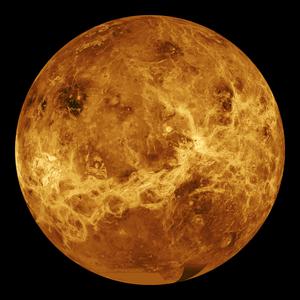
Superfície de Vênus
Legenda: Esta imagem é uma representação computadorizada da superfície do planeta Vênus. Como a luz visível não consegue penetrar nas espessas nuvens da atmosfera de Vênus, a imagem foi obtida com ondas de rádio. A sonda espacial Megallan da NASA, lançada em 1989, mapeou a superfície de Vênus entre 1990 e 1994.
Crédito: NASA/JPL
link do crédito
License: PD Domínio Público ícones
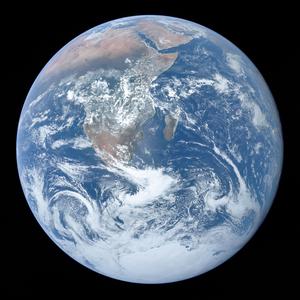
A Terra vista da Apollo 17
Legenda: Imagem completa da Terra registrada em 7 de dezembro de 1972 pela tripulação da nave espacial Apollo 17 a caminho da Lua, a uma distância de cerca de 29.000 quilômetros (18.000 milhas). Ela mostra a África, a Antártida e a Península Arábica.
Crédito: NASA/Tripulação da Apollo 17/Arquivo do Projeto Apollo
License: PD Domínio Público ícones
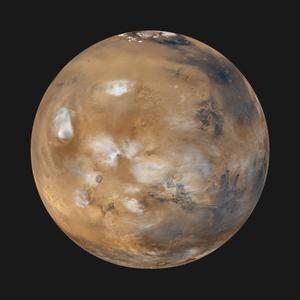
Marte
Legenda: Esta imagem do planeta Marte, capturada pela sonda Mars Global Surveyor Orbiter da NASA em 1999, mostra sua superfície árida. A imagem destaca as regiões geológicas mais espetaculares de Marte. Além do profundo Valles (vale) Marineris, vemos quatro vulcões. Enquanto três deles formam a cordilheira Tharsis, o Monte Olympus é o maior vulcão já descoberto no Sistema Solar. Nuvens de gelo cobrem partes da superfície marciana.
Crédito: NASA/JPL/MSSS
link do crédito
License: PD Domínio Público ícones