词条 粒子
描述: 物质的微小成分可称为粒子。在经典物理学中,粒子在空间中运动,在每个给定时刻,粒子都有一个确定的位置。在量子物理学中,粒子的特性有所不同。粒子并不总是有一个确定的位置,在某些方面,粒子的行为类似于波。
粒子物理学研究物质的最小成分,即所谓的基本粒子。对于天文学来说,最重要的物质粒子是电子以及构成质子和中子等强子的夸克、上夸克和下夸克。原子物质由质子和中子组成原子核,周围环绕着电子。
电磁辐射作为主要的天文信使,由称为光子的量子化粒子组成。在较低的光子能量下,这些量子化粒子的波特性最为重要。例如,射电天文学家不是用单独的粒子来描述他们接收到的电磁辐射,而是用波长或频率来描述电磁波。在电磁频谱的另一端,对于最高能量的光子来说,粒子特性是最重要的。使用 X 射线或伽马射线进行观测的高能天文学家通常使用粒子探测器进行观测,并用粒子能量来描述他们接收到的辐射的特性。
相关词条
用其他语言查看该词条
词条和定义状态: 该术语的英文原始定义已通过天文研究人员和教师的审核 该术语及其定义的译文仍待审核
OAE多语言词汇表是由国际天文学联合会(IAU) 天文教育办公室(OAE) 和 国际天文学联合会(IAU) 天文推广办公室(OAO)合作的项目。. 术语和定义由 OAE中心, OAE 国家天文教育协调员(NAECs) 以及其他志愿者共同选择、撰写和审阅。您可以在 找到完整的致谢列表。所有词汇表术语及其定义均根据 Creative Commons CC BY-4.0许可证发布 且版权归属于 “IAU OAE”。
如果您发现此词汇术语或定义中的事实或翻译错误, 请向 发邮件 联系.
相关活动
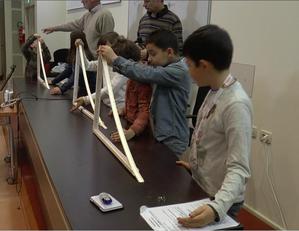
Let's Break the Particles
astroEDU educational activity (links to astroEDU website) Description: Learn how energy can be transformed into various forms.
License: CC-BY-4.0 知识共享许可协议 署名 4.0 国际 (CC BY 4.0) 图标
标签:
Hands-on
, Potential energy
, Binding energy
, Particle accelerator
年龄段:
8-10
, 10-12
, 12-14
受教育等级:
初中
, Primary
学习领域:
结构化探究式学习
, 传统科学实验
费用:
中等成本
时间跨度:
1 小时 30 分钟
组别大小:
小组
技能:
分析和解读数据
, 提出问题
, 规划并开展调查