Termo do glossário: Partícula
Descrição: Um pequeno constituinte da matéria pode ser chamado de partícula. Na física clássica, as partículas se movem pelo espaço e, em cada instante, possuem uma posição bem definida. Na física quântica, as propriedades das partículas são diferentes. As partículas nem sempre têm uma localização definida e, em certos aspectos, se comportam de maneira semelhante às ondas.
A física de partículas é o estudo dos menores constituintes da matéria, as chamadas partículas elementares. Para a astronomia, as partículas de matéria mais importantes são o elétron, bem como os quarks — o quark up e o quark down —, que compõem as partículas compostas próton e nêutron. A matéria atômica consiste em prótons e nêutrons que formam o núcleo atômico, rodeado por elétrons.
A radiação eletromagnética, como principal mensageira astronômica, consiste em partículas quânticas chamadas fótons. Em energias mais baixas dos fótons, as propriedades ondulatórias dessas partículas quânticas são as mais importantes. Os radioastrônomos, por exemplo, descrevem a radiação eletromagnética que recebem não em termos de partículas separadas, mas como ondas eletromagnéticas, caracterizadas pelo comprimento de onda ou pela frequência. Na extremidade oposta do espectro eletromagnético, para os fótons de maior energia, as propriedades das partículas são as mais importantes. Os astrônomos de alta energia que realizam observações usando raios X ou raios gama normalmente utilizam detectores de partículas e descrevem as propriedades da radiação que recebem em termos de energias das partículas.
Termos relacionados:
Ver este termo em outros idiomas
Status do termo e da definição: A definição original deste termo em inglês foi aprovada por um astrônomo(a) pesquisador(a) e um(a) professor(a) A tradução deste termo e de sua definição ainda aguarda aprovação
O Glossário Multilíngue da OAE é um projeto do Escritório da IAU de Astronomia para a Educação (OAE) em colaboração com o Escritório da IAU para Divulgação da Astronomia (OAO). Os termos e definições foram selecionados, escritos e revisados por meio de um esforço coletivo da OAE, dos Centros e Nós da OAE, dos Coordenadores Nacionais de Educação em Astronomia (NAECs) da OAE e de outros voluntários. Você pode encontrar uma lista completa dos créditos aqui. Todos os termos do glossário e suas definições são disponibilizados sob uma licença Creative Commons CC BY-4.0 e devem ser creditados à "IAU OAE".
Se você notar algum erro factual ou de tradução neste termo do glossário ou em sua definição, por favor entre em contato.
Atividades relacionadas
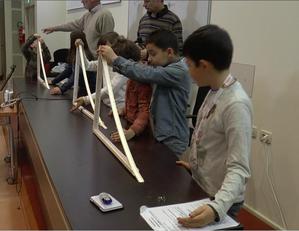
Let's Break the Particles
astroEDU educational activity (links to astroEDU website) Description: Learn how energy can be transformed into various forms.
License: CC-BY-4.0 Creative Commons Attribution 4.0 International (CC BY 4.0) ícones
Tags:
Hands-on
, Potential energy
, Binding energy
, Particle accelerator
Faixas etárias:
8-10
, 10-12
, 12-14
Nível de ensino:
Ensino fundamental
, Básico
Áreas de aprendizagem:
Aprendizagem por investigação estruturada
, Experimento científico tradicional
Custos:
Custo médio
Duração:
1 hour 30 mins
Tamanho do grupo:
Grupo
Habilidades:
Analisar e interpretar dados
, Fazer perguntas
, Planejar e realizar pesquisas