Término del glosario: Observación
Descripción: Las observaciones astronómicas consisten en recoger y/o medir la radiación electromagnética, las partículas o las ondas gravitacionales que nos llegan desde un objeto astronómico. En el pasado, los seres humanos observaban con sus ojos y, desde principios del siglo XVII, a través de telescopios. Hoy en día también se puede recurrir a una gran variedad de cámaras, espectrómetros y otros instrumentos. La información que se recopila, como una imagen sin procesar obtenida de una cámara, se conoce como datos (observacionales).
Estos datos contienen información sobre el objeto y el medio intermedio (por ejemplo, el medio interestelar o intergaláctico), pero siguen dependiendo de las características específicas del instrumento; por ejemplo, si una parte de la cámara es más sensible que otra. Los datos también dependen de los contaminantes; por ejemplo, al recoger la luz de un objeto astronómico, normalmente también recogemos la luz de primer plano dispersada en la atmósfera terrestre. La eliminación, en la medida de lo posible, de las partes específicas del instrumento y de los contaminantes se denomina reducción de datos. Los productos finales típicos de las observaciones son imágenes, espectros y series temporales (observaciones repetidas del mismo objeto u objetos; por ejemplo, datos de púlsares o estrellas variables). Estos pueden utilizarse para medir diversas magnitudes, como el ángulo entre dos objetos, el momento en que se observó un evento o la magnitud aparente de un objeto.
Las observaciones se diferencian de los experimentos que se llevan a cabo en muchos laboratorios científicos en que el observador no puede interactuar con los propios objetos astronómicos de la misma manera que lo hace un químico al mezclar dos sustancias químicas. En algunos contextos, las observaciones pueden complementarse en ocasiones con experimentos sobre los propios objetos, como el estudio de meteoritos, o mediante el envío de sondas espaciales a objetos del Sistema Solar.
Términos relacionados:
- Magnitud Aparente
- Radiación electromagnética
- Observatorio
- Partícula
- Espectro
- Ondas gravitacionales
- Estrella variable
Ver este término en otros idiomas
Estado del término y la definición: La definición original de este término en inglés ha sido aprobada por unastrónomo o astrónoma investigadora y un docente La traducción de este término y su definición aún están pendientes de aprobación
El Glosario multilingüe de la OAE es un proyecto de la Oficina de Astronomía para la Educación de la UAI (OAE) en colaboración con la Oficina de Divulgación de Astronomía de la UAI (OAO). Los términos y definiciones fueron seleccionados, redactados y revisados gracias al esfuerzo colectivo de la OAE, los Centros y Nodos de la OAE, los Coordinadores Nacionales de Educación Astronómica (NAECs) y otros voluntarios. Puedes encontrar una lista completa de créditos aquí. Todos los términos del glosario y sus definiciones se publican bajo la licencia Creative Commons CC BY-4.0 y deben atribuirse a la "IAU OAE".
Si detectas algún error de contenido o de traducción en este término del glosario o en ladefinición, ponte en contacto con nosotros.
En otros idiomas
- Árabe: الرصد الفلكي
- Alemán: Beobachtung
- Inglés: Observation
- Francés: Observation
- Italiano: Osservazione
- Coreano: 관측
- Portugués de Brasil: Observação
- Chino simplificado: 观测
- Chino tradicional: 觀測
Contenidos relacionados
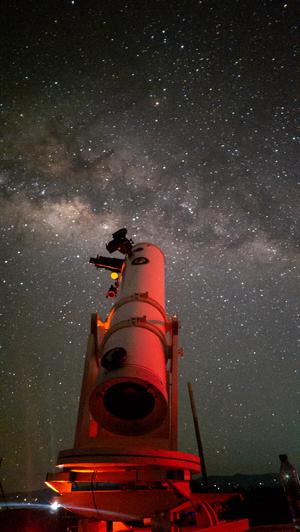
Learning Nights
Pie de foto: Honorable mention in the 2023 IAU OAE Astrophotography Contest, category of Still images taken exclusively with smartphones/mobile devices.
Beneath the sprawling expanse of the night sky over Colombia's Tatacoa Desert, a telescope finds its alignment with the majestic galactic core, while a smartphone captures this cosmic encounter. This snapshot, taken on 9 June 2023 during an astronomy camp, epitomises the accessible beauty of celestial marvels. It showcases the mesmerising grandeur of the night sky, inviting both the casual stargazer and the passionate astronomer alike. The splendour of the Milky Way, elegantly captured through a mobile device, seamlessly bridges the gap between sophisticated equipment and the pure, profound joy of observing the stars.
Crédito: Juan Pablo Botero Londoño/IAU OAE (CC BY 4.0)
License: CC-BY-4.0 Creative Commons Reconocimiento 4.0 Internacional (CC BY 4.0) íconos
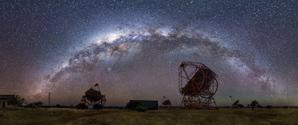
Milky Way Over H.E.S.S Observatory
Pie de foto: Honorable mention in the 2023 IAU OAE Astrophotography Contest, category of Still images taken exclusively with smartphones/mobile devices.
The darkness of the skies at H.E.S.S Observatory reveal the seemingly innumerable stars that make up the Milky Way galaxy, making it challenging to discern the constellations as seen taken with a smartphone from Namibia in June 2023. The stars Alpha and Beta Centauri are visible bottom left of the image just about the tower. The orange-hued star visible just above and to the right of the left H.E.S.S telescope is Antares, a red-giant star that is part of the constellation Scorpius.
Crédito: Jianfeng Dai/IAU OAE (CC BY 4.0)
License: CC-BY-4.0 Creative Commons Reconocimiento 4.0 Internacional (CC BY 4.0) íconos
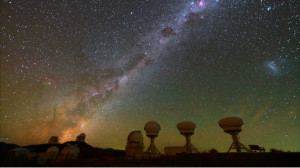
Southern Sky Over La Silla
Pie de foto: First place winner in the 2023 IAU OAE Astrophotography Contest, category of Time-lapses of rotation of Big Dipper or Southern Cross.
This video shows the Milky Way’s sprawling brilliance across the celestial expanse. Among the stars’ grand theatre, the Southern Cross constellation claims its place in the scene, distinguished by its distinctive cross shape as seen in the top of this video and slightly to the right just over the Milky Way, slowly disappearing as the video progresses. This celestial marker, a prominent feature in the southern hemisphere, holds cultural and navigational significance, having served as a navigational guidepost for centuries. Accompanying the Milky Way’s grandeur are the two Magellanic clouds, celestial companions seen dancing in the distant sky. The Carina Nebula adds its ethereal glow to the cosmic panorama, painting a radiant hue against the darkness. In the midst of this celestial ballet, a gentle green hue envelops the atmosphere, a phenomenon known as airglow, adding a touch of subtle luminescence to the night sky. The terrestrial also makes an appearance, with planes flying overhead and vehicles driving between observatory buildings. This time-lapse, taken from the La Silla Observatory in Chile, is a window to the captivating dance of stars, offering a glimpse into the awe-inspiring beauty of our galaxy and the celestial landmarks that grace the southern sky.
Crédito: José Rodrigues/IAU OAE (CC BY 4.0)
License: CC-BY-4.0 Creative Commons Reconocimiento 4.0 Internacional (CC BY 4.0) íconos
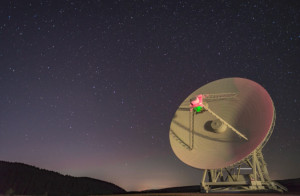
The Big Dipper with the Sardinia Radio Telescope SRT
Pie de foto: Honorable mention in the 2023 IAU OAE Astrophotography Contest, category of Time-lapses of rotation of Big Dipper or Southern Cross.
This time-lapse captures the movement of the stars alongside the majestic 64-metre Sardinia Radio Telescope (SRT) from the National Institute of Astrophysics (INAF), with special attention to the renowned Big Dipper against the backdrop of the celestial sphere. The camera pans as the famous asterism sinks in the sky while planes fly past and the radio telescope rotates. The harmonious interplay between the stellar pathways and the colossal dish of the radio telescope creates a mesmerising visual ode to the cosmic ballet taken in September 2019.
Crédito: Antonio Finazzi/IAU OAE (CC BY 4.0)
License: CC-BY-4.0 Creative Commons Reconocimiento 4.0 Internacional (CC BY 4.0) íconos
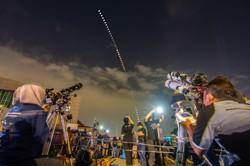
The Eclipse Between Us, by Muhammad Rayhan, Indonesia
Pie de foto: Second place in the 2021 IAU OAE Astrophotography Contest, category Total lunar eclipse.
Total lunar eclipses belong to the rather spectacular celestial events and can be observed easily with and without a telescope. Here we see the stages of the total lunar eclipse of 31.1.2018 photographed in Indonesia: starting with the entry of the full moon disk into Earth's round umbra, the totality as Blood Moon, and the beginning of the Moon's exit from Earth's umbra until moonset.
Crédito: Muhammad Rayhan/IAU OAE
License: CC-BY-4.0 Creative Commons Reconocimiento 4.0 Internacional (CC BY 4.0) íconos
Actividades relacionadas
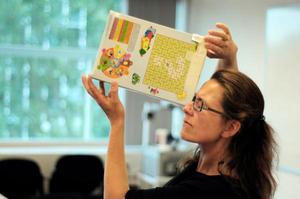
Build a Safe Sun Viewer
astroEDU educational activity (links to astroEDU website) Description: Build a safe Sun viewer using cheap household items and learn why it is dangerous to look directly at the Sun, even briefly.
License: CC-BY-4.0 Creative Commons Reconocimiento 4.0 Internacional (CC BY 4.0) íconos
Etiquetas:
Hands-on
, Safety
Rango de edades:
6-8
, 8-10
, 10-12
Nivel educativo:
Primaria
, Secondary
Áreas de aprendizaje:
Modelización
, Basado en la observación
Costos:
Bajo coste
Tamaño del grupo:
Grupo
Competencias:
Planificar y llevar a cabo investigaciones
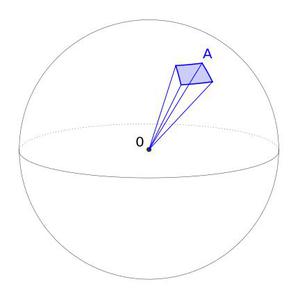
Street Lights as Standard Candles
astroEDU educational activity (links to astroEDU website) Description: Understand astronomical distances using street lights
License: CC-BY-4.0 Creative Commons Reconocimiento 4.0 Internacional (CC BY 4.0) íconos
Etiquetas:
Hands-on
, Distances
, Distance measurements
, Inverse square law
Rango de edades:
14-16
, 16-19
, 19+
Nivel educativo:
Educación no forma
, Secondary
, Universitario
Áreas de aprendizaje:
Modelización
, Centrado en la simulación
, Basado en la tecnología
Costos:
Bajo coste
Duración:
3 horas
Tamaño del grupo:
Grupo
Competencias:
Analizar e interpretar datos
, Elaborar explicaciones
, Desarrollar y utilizar modelos
, Planificar y llevar a cabo investigaciones
, Utilizar las matemáticas y el pensamiento computacional
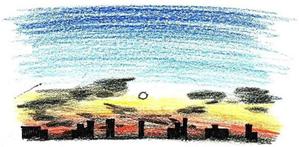
Evening Sky Watching for Students
astroEDU educational activity (links to astroEDU website) Description: Let's observe the evening sky with the naked eye
License: CC-BY-4.0 Creative Commons Reconocimiento 4.0 Internacional (CC BY 4.0) íconos
Etiquetas:
Art
, Observation of sky
, Sky watching
, Motion of star
Rango de edades:
4-6
, 6-8
Nivel educativo:
Educación infantil
, Primaria
Áreas de aprendizaje:
Grupos de discusión
, Basado en la observación
, Aprendizaje basado en la investigación estructurada
Costos:
Gratis
Duración:
30 minutos
Tamaño del grupo:
Grupo
Competencias:
Plantear preguntas
, Comunicar información