Glossary term: 전지구온난화
Description: 전지구온난화는 수증기, 이산화탄소, 메탄 등의 온실가스에 의해 지구 대기가 가열되는 현상입니다. 이는 온실효과의 증가로 더 많은 양의 적외선이 대기에 갇히게 되면서 이로 인해 지구의 평균 기온이 상승하기 때문입니다. 온실가스의 원천은 자연 발생적인 경우도 있지만 지구상에서는 이에 더해 인간의 산업 활동에 의해 생성되기도 합니다. 전지구온난화는 지역적 기상 패턴의 단중기적 변화, 서식지 파괴, 해수면 상승 등 장기적으로 지구에 상당한 영향을 미칠 것입니다.
Related Terms:
See this term in other languages
Term and definition status: The original definition of this term in English have been approved by a research astronomer and a teacher The translation of this term and its definition is still awaiting approval
The OAE Multilingual Glossary is a project of the IAU Office of Astronomy for Education (OAE) in collaboration with the IAU Office of Astronomy Outreach (OAO). The terms and definitions were chosen, written and reviewed by a collective effort from the OAE, the OAE Centers and Nodes, the OAE National Astronomy Education Coordinators (NAECs) and other volunteers. You can find a full list of credits here. All glossary terms and their definitions are released under a Creative Commons CC BY-4.0 license and should be credited to "IAU OAE".
If you notice a factual or translation error in this glossary term or definition then please get in touch.
In Other Languages
- 아랍어: الإحتباس الحرارى
- 독일어: Globale Erwärmung
- 영어: Global Warming
- 스페인어: Calentamiento global
- 프랑스어: Réchauffement climatique
- 이탈리아어: Riscaldamento globale
- 일본어: 地球温暖化 (external link)
- 브라질 포르투갈어: Aquecimento global
- 중국어 간체: 全球气候变暖
- 중국어 번체: 全球氣候變暖
Related Media

Global Temperature Trends: Past 50 Years
Caption: This map visualizes the changes in surface air temperature across the globe over the past half-century. Through meticulous analysis of annual averages, the map highlights the most significant trends in temperature change, particularly emphasizing shifts in northern latitudes and over land masses.
Credit: NASA’s Scientific Visualization Studio, Key and Title by Eric Fisk
credit link
License: CC-BY-4.0 Creative Commons 저작자표시 4.0 국제 (CC BY 4.0) icons
Related Activities
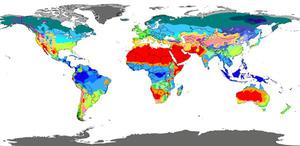
Continental Climate and Oceanic Climate
astroEDU educational activity (links to astroEDU website) Description: Find out why, in the summer it is cooler by the sea than on the land!
License: CC-BY-4.0 Creative Commons 저작자표시 4.0 국제 (CC BY 4.0) icons
Tags:
Climate change
, Climate
, Ocean
Age Ranges:
6-8
, 8-10
Education Level:
Primary
Areas of Learning:
Modelling
, Structured-inquiry learning
, Traditional Science Experiment
Costs:
Medium Cost
Duration:
45 mins
Group Size:
Group
Skills:
Analysing and interpreting data
, Asking questions
, Constructing explanations
, Engaging in argument from evidence
, Planning and carrying out investigations
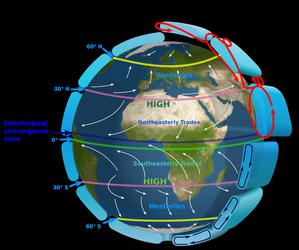
The Intertropical Convergence Zone
astroEDU educational activity (links to astroEDU website) Description: The air circulation system: how are winds created?
License: CC-BY-4.0 Creative Commons 저작자표시 4.0 국제 (CC BY 4.0) icons
Tags:
Climate
, Updraft
, Convection
, Winds
Age Ranges:
12-14
, 14-16
Education Level:
Middle School
Areas of Learning:
Discussion Groups
, Modelling
, Structured-inquiry learning
Costs:
Medium Cost
Duration:
1 hour
Group Size:
Group
Skills:
Communicating information
, Constructing explanations
, Developing and using models
, Engaging in argument from evidence
, Planning and carrying out investigations
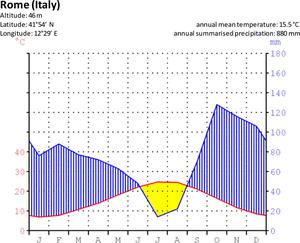
The Climate in Numbers and Graphs
astroEDU educational activity (links to astroEDU website) Description: Learn about climate from data and graphs
License: CC-BY-4.0 Creative Commons 저작자표시 4.0 국제 (CC BY 4.0) icons
Tags:
Climate
, Average
, Climate zone
, Weather
Age Ranges:
14-16
, 16-19
Education Level:
Secondary
Areas of Learning:
Structured-inquiry learning
Costs:
Low Cost
Duration:
2 hours
Group Size:
Group
Skills:
Analysing and interpreting data
, Asking questions
, Communicating information
, Constructing explanations
, Developing and using models
, Engaging in argument from evidence
, Using mathematics and computational thinking
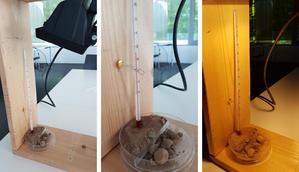
Oceans As A Heat Reservoir
astroEDU educational activity (links to astroEDU website) Description: Why do oceans play an important role in mitigating global warming?
License: CC-BY-4.0 Creative Commons 저작자표시 4.0 국제 (CC BY 4.0) icons
Tags:
Life
, Climate change
, Oceans
, heat
Age Ranges:
12-14
, 14-16
, 16-19
Education Level:
Middle School
Areas of Learning:
Modelling
, Structured-inquiry learning
, Traditional Science Experiment
Costs:
Medium Cost
Duration:
1 hour 30 mins
Group Size:
Group
Skills:
Analysing and interpreting data
, Constructing explanations
, Developing and using models
, Engaging in argument from evidence
, Planning and carrying out investigations
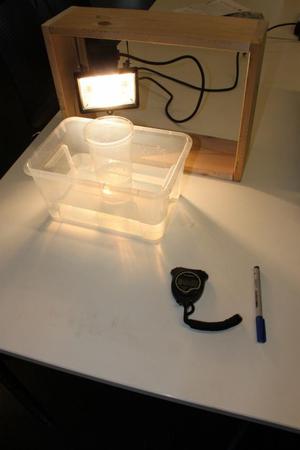
The Big Meltdown
astroEDU educational activity (links to astroEDU website) Description: Learn what would happen on Earth if all the ice melted!
License: CC-BY-4.0 Creative Commons 저작자표시 4.0 국제 (CC BY 4.0) icons
Tags:
Life
, Climate change
, Remote sensing
, Oceans
, Water
, Antarctic
, Arctic
, Ice
, Archimedes
Age Ranges:
8-10
, 10-12
, 12-14
Education Level:
Middle School
, Primary
, Secondary
Areas of Learning:
Discussion Groups
, Modelling
, Structured-inquiry learning
, Traditional Science Experiment
Costs:
Medium Cost
Duration:
45 mins
Group Size:
Group
Skills:
Analysing and interpreting data
, Asking questions
, Communicating information
, Constructing explanations
, Developing and using models
, Engaging in argument from evidence
, Planning and carrying out investigations