بلغات أخرى
- الألمانيّة: Kometenkern
- الإنجليزيّة: Comet Nucleus
- الإسبانيّة: Núcleo del cometa
- الفرنسيّة: Noyau de la comète
- الإيطاليّة: Nucleo della cometa
- الكوريّة: 혜성핵
- البرتغاليّة البرازيليّة: Núcleo cometário
- الصينيّة المبسطة: 彗核
- الصينيّة التقليدية: 彗核
وسائط ذات صلة

المذنب 67 بي/تشوريوموف جيراسيمنكو
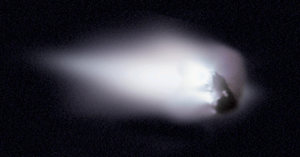
An Encounter With Halley's Comet
الشرح: This image shows the solid core, or nucleus, of Halley’s Comet, captured in 1986 by the European Space Agency spacecraft Giotto during its flyby of the comet in the inner Solar System. The nucleus appears irregular and potato-shaped, measuring roughly 15 kilometers (about 9 miles) across, and is composed of a mixture of ice, dust, and rock. Unlike the glowing fuzzy cloud (coma) and long tail that make comets visible from Earth, the nucleus itself is dark and difficult to see until a spacecraft passes close enough to take detailed images.
Halley’s Comet is one of the best-known comets because it returns to the inner Solar System approximately every 76 years, allowing generations of astronomers to observe it repeatedly. The material that is released from the nucleus as the comet warms near the Sun forms a glowing coma and long tails of gas and dust, and over many returns leaves trails of debris that produce meteor showers on Earth, such as the Eta Aquarids in May and the Orionids in October.
المصدر: NASA/ESA/Giotto Project
رابط المصدر
License: PD الملكية العامة أيقونات








