Término del glosario: Meteorito
Descripción: Un meteorito es un cuerpo cósmico sólido que cae a la superficie de la Tierra o de otro cuerpo celeste tras atravesar la atmósfera de dicho cuerpo. Un objeto solo se describe como meteorito después de haber atravesado la atmósfera de la Tierra u otro cuerpo celeste. Mientras se encuentra en el espacio interplanetario y mientras atraviesa la atmósfera, se conoce como meteoroide. La onda de choque que el meteoroide provoca en la atmósfera emite luz y puede observarse como un meteoro.
Los meteoritos suelen estar compuestos de roca, roca ferrosa o hierro, siendo la roca el tipo más común cuando nos fijamos en los meteoritos relacionados con el avistamiento de un meteoro. Sin embargo, los meteoritos rocosos suelen parecerse a las rocas terrestres, por lo que pueden pasarse por alto, y los meteoritos ferrosos son el tipo más común de meteorito que se encuentra en tierra. La mayoría de los meteoritos se encuentran en la Antártida o en los desiertos, ya que es allí donde resultan más fáciles de detectar.
La mayoría de los meteoritos encontrados tienen una masa que oscila entre unos pocos gramos y varios kilogramos, y su tamaño se sitúa aproximadamente entre 30 micrómetros y 1 metro, aunque se han encontrado meteoritos de más de un metro. El más grande conocido es el de Hoba, que pesa más de 60 toneladas y se encuentra en Namibia. Algunos meteoritos pueden ser lo suficientemente grandes como para producir un cráter de impacto. Los meteoritos reciben el nombre de la zona en la que cayeron.
Términos relacionados:
Ver este término en otros idiomas
Estado del término y la definición: La definición original de este término en inglés ha sido aprobada por unastrónomo o astrónoma investigadora y un docente La traducción de este término y su definición aún están pendientes de aprobación
El Glosario multilingüe de la OAE es un proyecto de la Oficina de Astronomía para la Educación de la UAI (OAE) en colaboración con la Oficina de Divulgación de Astronomía de la UAI (OAO). Los términos y definiciones fueron seleccionados, redactados y revisados gracias al esfuerzo colectivo de la OAE, los Centros y Nodos de la OAE, los Coordinadores Nacionales de Educación Astronómica (NAECs) y otros voluntarios. Puedes encontrar una lista completa de créditos aquí. Todos los términos del glosario y sus definiciones se publican bajo la licencia Creative Commons CC BY-4.0 y deben atribuirse a la "IAU OAE".
Si detectas algún error de contenido o de traducción en este término del glosario o en ladefinición, ponte en contacto con nosotros.
En otros idiomas
- Árabe: النيزك
- Alemán: Meteoriten
- Inglés: Meteorite
- Francés: Météorites
- Italiano: Meteorite
- Japonés: 隕石 (enlace externo)
- Nepalí: उल्कापिण्ड
- Portugués de Brasil: Meteoritos
- Chino simplificado: 陨石
- Chino tradicional: 隕石
Contenidos relacionados

Iron Meteorite
Pie de foto: This iron meteorite was originally found in Harriman, Tennessee, USA and is now held in the collection of the Smithsonian Natural History Museum, Washington DC, USA. The total mass of the meteorite was about 30kg. Here we see the interior after the meteorite was cut into pieces.
Iron meteorites are largely composed of an iron-nickel. They also often have a crystalline structure which manifests here as a series of crossing shiny straight lines known as a Widmanstätten pattern. This is thought to have formed as the meteoroid (the object that would eventually fall through the Earth's atmosphere as a meteor and land on the ground as a meteorite) cooled very slowly in the vacuum of space in the early solar system. This led to the growth of this crystalline structure.
Crédito: Chuck Sutherland
enlace de crédito
License: PD Dominio público íconos
Actividades relacionadas
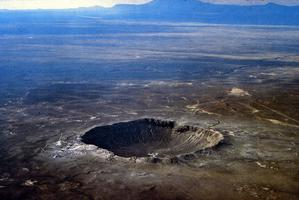
Meteoroids, Meteors and Meteorites
astroEDU educational activity (links to astroEDU website) Description: Unveiling the mystery of "shooting stars": meteors, meteorites and meteroids
License: CC-BY-4.0 Creative Commons Reconocimiento 4.0 Internacional (CC BY 4.0) íconos
Etiquetas:
Geology
Rango de edades:
6-8
, 8-10
, 10-12
, 12-14
Nivel educativo:
Educación secundaria
, Primaria
Áreas de aprendizaje:
Clase interactiva
Costos:
Bajo coste
Duración:
1 hora y 30 minutos
Tamaño del grupo:
Grupo
Competencias:
Analizar e interpretar datos
, Plantear preguntas
, Comunicar información
, Participar en debates basados en pruebas