Término del glosario: Estrella fugaz
Descripción: Una estrella fugaz (o meteoro) es un fragmento de un asteroide o un cometa, o un trozo de basura espacial, que entra en la atmósfera de la Tierra o de otro cuerpo celeste y se inflama debido al calor generado por la fricción con la atmósfera. Este calor generado por la fricción es similar a la forma en que nos calentamos las manos frotándolas entre sí cuando tenemos frío. Las estrellas fugaces suelen ser de tamaño muy pequeño, desde unos pocos milímetros hasta unos pocos centímetros. Los astrónomos las denominan «meteoros». Su dirección, la época del año en que las observamos y su color nos permiten saber más sobre su origen y de qué están compuestas.
Los meteoros más brillantes se denominan bolas de fuego y a menudo pueden verse en el cielo, a veces incluso durante el día. En ocasiones, observadores han llegado a informar que han oído sonidos mientras se quemaban y atravesaban la atmósfera. Las estrellas fugaces también provocan la ionización de la atmósfera, lo que, en el caso de la Tierra, puede observarse con un radar.
En la Tierra, las estrellas fugaces son visibles durante todo el año, pero, de vez en cuando, se producen muchas de ellas en un breve lapso de tiempo, como por ejemplo en una misma noche. Muchas de estas lluvias de meteoros se repiten siguiendo patrones anuales predecibles y se les han dado nombres basados en la constelación de la que parecen proceder (o irradiar). Entre las lluvias de meteoros más famosas se encuentran las Perseidas y las Leónidas.
Términos relacionados:
Ver este término en otros idiomas
Estado del término y la definición: La definición original de este término en inglés ha sido aprobada por unastrónomo o astrónoma investigadora y un docente La traducción de este término y su definición aún están pendientes de aprobación
El Glosario multilingüe de la OAE es un proyecto de la Oficina de Astronomía para la Educación de la UAI (OAE) en colaboración con la Oficina de Divulgación de Astronomía de la UAI (OAO). Los términos y definiciones fueron seleccionados, redactados y revisados gracias al esfuerzo colectivo de la OAE, los Centros y Nodos de la OAE, los Coordinadores Nacionales de Educación Astronómica (NAECs) y otros voluntarios. Puedes encontrar una lista completa de créditos aquí. Todos los términos del glosario y sus definiciones se publican bajo la licencia Creative Commons CC BY-4.0 y deben atribuirse a la "IAU OAE".
Si detectas algún error de contenido o de traducción en este término del glosario o en ladefinición, ponte en contacto con nosotros.
En otros idiomas
- Árabe: الشهاب
- Alemán: Sternschnuppe
- Inglés: Shooting Star
- Francés: Étoile filante
- Italiano: Stella cadente
- Japonés: 流星 (enlace externo)
- Portugués de Brasil: Estrela cadente
- Chino simplificado: 流星
- Chino tradicional: 流星
Contenidos relacionados
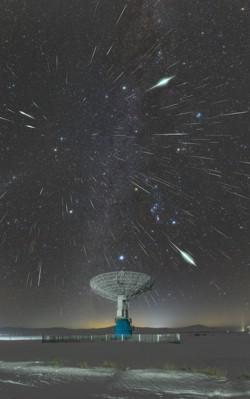
Lluvia de meteoros de las Geminínidas, de Hao Yin, China
Pie de foto: Tercer puesto en el Concurso de Astrofotografía de la IAU OAE 2021, categoría «Lluvias de meteoros».
A medida que la Tierra orbita alrededor del Sol, puede cruzar la trayectoria de los restos dejados por un cometa o, con menor frecuencia, por un asteroide. Estos restos entran en la atmósfera a gran velocidad, produciendo hermosas estelas al quemarse en el cielo debido a la fricción con la atmósfera. La imagen captura la lluvia de meteoritos de las Gemínidas, llamada así porque el punto radiante se encuentra en el cielo, en la constelación de Géminis. Las partículas que componen la lluvia de meteoros viajan a una velocidad similar y en trayectorias paralelas, lo que provoca un efecto de perspectiva como si la estela se irradiara desde un único punto del cielo, conocido como punto radiante. Esta imagen, tomada en diciembre de 2020 en China, muestra claramente esta perspectiva. Se trata de una lluvia muy prolífica, hasta tal punto que en sus últimas apariciones se han podido observar más de cien meteoritos por hora. Esta lluvia de meteoritos es una de las pocas que no está asociada a un cometa, sino a un asteroide —el 3200 Faetón—, que podría ser un cometa que perdió todo su material volátil. Esta imagen muestra la gran cantidad de meteoros que se pueden observar en esta lluvia, que tiene lugar siempre en diciembre de cada año. La imagen también muestra una de las constelaciones más destacadas del cielo nocturno, Orión, fácilmente reconocible por las tres estrellas en diagonal que forman el Cinturón de Orión, y la estrella de color rojo anaranjado Betelgeuse. Justo encima de la antena hay un punto brillante: se trata de Sirio, la estrella más brillante del cielo nocturno y parte de la constelación de Canis Major. La mancha difusa de color azulado situada aproximadamente a las 2 en punto es el cúmulo estelar de las Pléyades.
Crédito: Hao Yin/IAU OAE
License: CC-BY-4.0 Creative Commons Reconocimiento 4.0 Internacional (CC BY 4.0) íconos
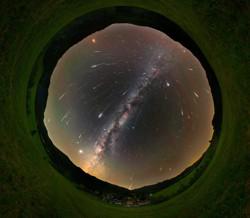
Perseids 2020 over Dark Sky Park Poloniny, by Tomáš Slovinský, Slovakia
Pie de foto: Second place in the 2021 IAU OAE Astrophotography Contest, category Meteor showers.
A meteor shower occurs when the debris originated from comets or, on rare occasions, from asteroids enter the Earth’s atmosphere at high speed, leaving behind beautiful tracks in the sky due to friction with the atmosphere. This all-sky image taken in Slovakia in 2020 shows the Perseid meteor shower in a vivid way so one can really see the Perseids appearing all over the sky. This meteor shower is named so because the radiant point (the point on the sky where the meteors misleadingly seem to originate from) of the Perseid meteor shower is located in the constellation Perseus. This is a very prolific meteor shower, and a very popular phenomenon that can be observed from mid-July until mid-August, when the peak of activity happens. This is associated with the comet 109P/Swift–Tuttle, as Earth's orbit around the Sun crosses the debris left behind by this comet. This kind of image is very useful for full dome projections in planetariums, beautifully showing the Milky Way, our home Galaxy.
Crédito: Tomáš Slovinský/IAU OAE
License: CC-BY-4.0 Creative Commons Reconocimiento 4.0 Internacional (CC BY 4.0) íconos
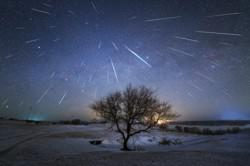
Geminid Meteor Shower from China, by Dai Jianfeng, China
Pie de foto: First place in the 2021 IAU OAE Astrophotography Contest, category Meteor showers.
A meteor shower occurs when the Earth in its orbit around the Sun, passes through a debris trail left previously by a comet on its approach around the Sun. As the Earth enters this debris (small sand grain sized), they enter the atmosphere at high speeds and on parallel trajectories, burning completely leaving beautiful tracks (streaks) in the sky. These streaks can appear and disappear in the blink of an eye, or last much longer. On rare occasions the debris originates from asteroids, as in the case of the Geminid meteor shower, shown in this image, picturing many streaks of debris captured in the sky of China in 2017. Due to relative motions and perspective, the shower appears to come from one single point, known as the radiant point, beautifully pictured in this image. This is similar to driving in a car on a rainy day without any wind, looking out the front window it seems that the rain is coming directly towards the window, when in fact the rain is falling vertically downwards.
Crédito: Dai Jianfeng/IAU OAE
License: CC-BY-4.0 Creative Commons Reconocimiento 4.0 Internacional (CC BY 4.0) íconos
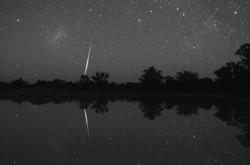
Between Two Skies
Pie de foto: Honourable mention in the 2022 IAU OAE Astrophotography Contest, category Still images of celestial patterns.
Taken from Narrabri, Australia, in April 2014, this photograph shows a meteor next to the Large Magellanic Cloud and the reflection of all this in the water.
The Magellanic Clouds are named after the Portuguese explorer Ferdinand Magellan, who made the first maps of the southern part of South America in the early 16th century but did not survive his expedition voyage. His shipmates called the two nebulae after him, and it was only in the 20th century that astronomy research discovered that they are in fact dwarf galaxies accompanying our own.
In the 18th century, the French mathematician J-N. Lacaille, who lived in South Africa for some years in order to draw maps of the sky and the land, invented some new constellations. He measured the positions of some faint stars and listed them in his star catalogue, but did not try to overlay beautiful drawings of real-world objects on the star patterns, so he could name them however he wanted. He was based in the trade station that is now the city of Cape Town and, from this bay, Table Mountain is visible. Lacaille learned from the navigators that they used the clouds around this mountain to predict whether or not the wind would blow in the correct direction and allow for sailing. Normally, there is a huge white cloud at the top of Table Mountain, so Lacaille considered the larger one of the two dwarf galaxies not a “Magellanic Cloud”, but the cloud at Table Mountain. Consequently, he invented the constellation “Mensa”, Table Mountain, in the small area of faint stars directly attached to this dwarf galaxy.
Crédito: Fabrizio Melandri/IAU OAE
License: CC-BY-4.0 Creative Commons Reconocimiento 4.0 Internacional (CC BY 4.0) íconos
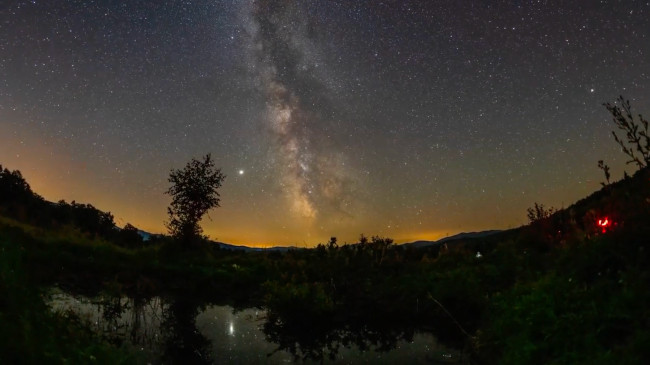
Flowing Night Sky
Pie de foto: Honourable mention in the 2022 IAU OAE Astrophotography Contest, category Time lapses of celestial patterns.
This time-lapse was shot from Slovakia in August 2020. By fixing the relative movement of the sky to Earth's rotation in some of the frames, we can experience a different perspective as a viewer.
The Milky Way, our home galaxy, is visible throughout the whole video. The bright objects near the Milky Way are Jupiter and Saturn, close together, Jupiter being the brighter one.
This video also shows the interaction of amateur astronomers observing the Perseids meteor shower with their telescopes pointed towards the sky. An unfortunate aspect of the art of astronomical observing, clouds can suddenly cover the whole sky. The fog occurs mostly because of the higher humidity after the rain.
Most of the light trails in the sky are made by satellites, but some of them, appearing just very briefly and not very noticeably, are meteors, as the video was shot around the peak of Perseids meteor shower.
Crédito: Robert Barsa/IAU OAE
License: CC-BY-4.0 Creative Commons Reconocimiento 4.0 Internacional (CC BY 4.0) íconos
Actividades relacionadas
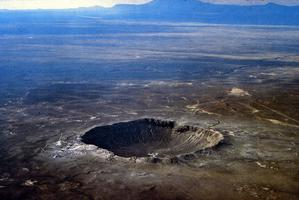
Meteoroids, Meteors and Meteorites
astroEDU educational activity (links to astroEDU website) Description: Unveiling the mystery of "shooting stars": meteors, meteorites and meteroids
License: CC-BY-4.0 Creative Commons Reconocimiento 4.0 Internacional (CC BY 4.0) íconos
Etiquetas:
Geology
Rango de edades:
6-8
, 8-10
, 10-12
, 12-14
Nivel educativo:
Educación secundaria
, Primaria
Áreas de aprendizaje:
Clase interactiva
Costos:
Bajo coste
Duración:
1 hora y 30 minutos
Tamaño del grupo:
Grupo
Competencias:
Analizar e interpretar datos
, Plantear preguntas
, Comunicar información
, Participar en debates basados en pruebas
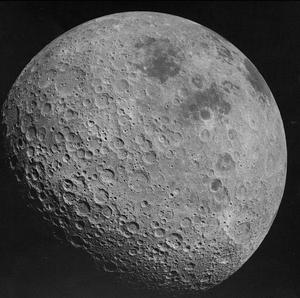
Impact Craters
astroEDU educational activity (links to astroEDU website) Description: A literal Earth-Shattering experiment
License: CC-BY-4.0 Creative Commons Reconocimiento 4.0 Internacional (CC BY 4.0) íconos
Etiquetas:
History
, Impact
, Experiment
Rango de edades:
10-12
, 12-14
, 14-16
Nivel educativo:
Educación secundaria
, Primaria
, Secondary
Áreas de aprendizaje:
Aprendizaje por descubrimiento guiado
, Modelización
, Experimento científico tradicional
Costos:
Bajo coste
Duración:
1 hora
Tamaño del grupo:
Grupo
Competencias:
Analizar e interpretar datos
, Plantear preguntas
, Elaborar explicaciones
, Participar en debates basados en pruebas
, Utilizar las matemáticas y el pensamiento computacional