This session will explore recent developments and findings in astronomy education research, examining methodologies, assessment techniques, and the impact of various educational interventions on learners and educators.
Schedule
-
Results of an Experiment Using Refutation Video to Teach Seasons
We present the results of an 2x2 factorial design experiment conducted with 182 undergraduate students comparing 4 treatments to teach the seasons: an explanatory text and video, and a refutation text and video. Both videos have the same length, present similar geocentric and allocentric perspectives and use the explanatory and refutation texts as voice-over. Pretest results were similar for the 4 treatment groups. Results of a mixed-design ANOVA show a robust learning effect between the pre- and post-test with a clear advantage for refutation, and a more modest but significant effect of the video format. These results suggest that refutation plays a more decisive role than the presentation medium (i.e., video vs. text) in fostering conceptual learning, but video format helps as well.

Pierre Chastenay (Université du Québec à Montréal)
For more information about this talk click here
-
Experiential Workshop in Astronomy for in-service primary teachers to ready science teaching.
Monday Sept. 28, 2026
UTC: 12:19 p.m. - 12:19 p.m. America/New_York: 8:19 a.m.- 8:19 a.m.An ongoing action research on a workshop in astronomy for in-service primary teachers in Hong Kong, providing an experiential learning opportunity to connect astronomy phenomena in the new science curriculum with observation activities. The astronomy section is considered one of the most difficult parts with abstract concepts, especially for teachers who mostly lack a science education background. By the usage of various tools for day and night observations and planetarium, participants make logical connections to astronomy beyond the textbook. With the experiential learning cycle, both teaching and learning can benefit from observation activities to improve the workshop continuously, to understand and fulfil the needs of primary school teaching in the new standard of science education.

Chin Kwan. Bart. TSANG (Ho Koon Nature Education cum Astronomical Centre)
For more information about this talk click here
-
Sun-Earth-Moon Astronomy for Primary Education: Results of a Teacher Traning Program
Monday Sept. 28, 2026
UTC: 12:20 p.m. - 12:20 p.m. America/New_York: 8:20 a.m.- 8:20 a.m.This talk presents the results of an astronomy teacher training program (TTP) for primary education in Chile. The TTP focused on Sun-Earth-Moon topics and was implemented in two modalities: an intensive in-person summer school and an extensive 5-month hybrid course. Participants took content knowledge and attitudes pre- and post-tests. Some assignments and a final focus group were also analyzed. The results show an increase in astronomy content and attitudes scores in both modalities, but with a greater impact on content knowledge in the intensive case and on attitudes in the extensive one. Differences are also observed depending on the astronomy topic or the attitudinal dimension analyzed. The implications of these results and teachers' perceptions after their participation are discussed.

Lara Rodrigues (Universidad Metropolitana de Ciencias de la Educación (UMCE))
For more information about this talk click here
-
Exploring the complexity of astrophysics research with a film-based intervention in higher education
Monday Sept. 28, 2026
UTC: 12:21 p.m. - 12:21 p.m. America/New_York: 8:21 a.m.- 8:21 a.m.This contribution presents an astronomy education research project investigating how cinematic narratives can support students’ understanding of research. Building on a qualitative analysis of the documentary "The Edge of All We Know" (2020), undergraduate astronomy students undertaking an internship conducted semi-structured interviews with astrophysics researchers and lecturers. Through thematic analysis of the interviews, the project explores the extent to which the film reflects the realities of scientific practice, particularly its epistemic, social and emotional dimensions, often overlooked in university curricula. Results highlight the value of film-based interventions in connecting students with the research community, and promoting an understanding of science as a human endeavour.
Leonardo De Deo (University of Bologna / INAF-OAS)
For more information about this talk click here
-
Using Simulations and Log Data to Examine Student Exploratory Learning Processes of Lunar Phases and
Monday Sept. 28, 2026
UTC: 12:22 p.m. - 12:22 p.m. America/New_York: 8:22 a.m.- 8:22 a.m.We present analytic approaches for examining students’ learning processes related to sun–Earth–moon phenomena. 6th-grade students conducted investigations in Inq-ITS, an NGSS-aligned simulation environment that generates real-time assessments of inquiry competencies from students’ interaction data Fine-grained logfile data were used to examine whether the order of activities influenced inquiry processes in subsequent investigations. Analyses revealed progressions in hypothesis- and data-collection practices, including control-of-variables strategy, and increasingly sophisticated mental models. These findings demonstrate how simulation-based environments and logfile analyses can provide insights into how students learn complex astronomical phenomena beyond traditional concept inventories.

Mariel O'Brien (Rutgers University)
For more information about this talk click here
-
Exoplanet Transits: Low-Cost Arduino Kit for Signal Processing in Class
Monday Sept. 28, 2026
UTC: 12:22 p.m. - 12:22 p.m. America/New_York: 8:22 a.m.- 8:22 a.m.This study evaluates an Arduino-based kit designed to teach the detection of exoplanet transits through signal processing. The kit replicates the entire process: acquisition via a photodiode of an LED ‘star’ occulted by a motorised ‘planet’, followed by FFT analysis using tools identical to those used, for example, in the diagnosis of electrical machinery. Conducted with pupils at a youth centre in Oran, Algeria, this two-hour workshop was evaluated using pre- and post-training tests. The results show that the majority of pupils correctly identified the orbital period from noisy data following the activity. All resources are open source. This work supports the IAU-OAE 2026 objective of ensuring reliable access to science.
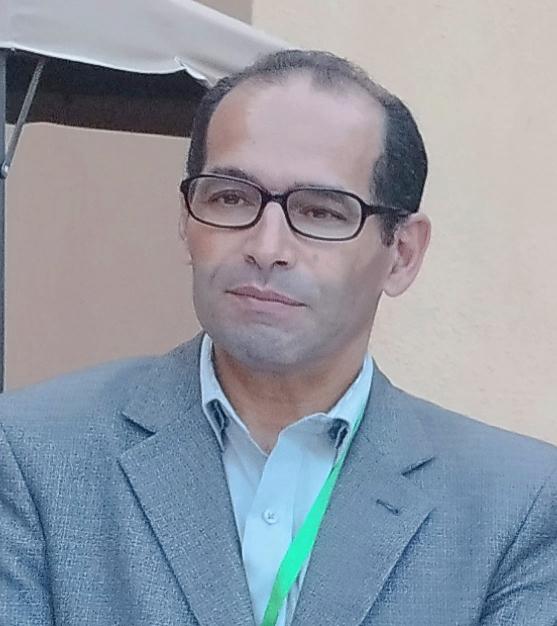
Kheireddine DEHAR (PhD student at the Mohamed Boudiaf University of Science and Technology (USTO-MB) in Oran, Algeria. Chair of the ‘El-Qamar Astronomical Observatory’ Astronomy Association, Oran.)
For more information about this talk click here
-
How do astronomers wrap their minds around black holes? A metaphor analysis of university textbooks
Monday Sept. 28, 2026
UTC: 12:23 p.m. - 12:23 p.m. America/New_York: 8:23 a.m.- 8:23 a.m.How do astronomers talk about black holes, and what does their language reveal about their thinking? This study applies conceptual metaphor theory and image schema analysis to black hole language in five canonical general relativity textbooks. The analysis sheds light on an implicit metaphorical foundation grounded in a few key image schemas that cut across all five texts. In contrast, explicit pedagogical metaphors vary substantially between authors but often fail to correct or displace the implicit mappings. The findings suggest that the metaphorical structure of expert language in general relativity is constitutive of the subject matter, with direct implications for how black hole physics is taught and learned.

Kersting Magdalena (OAE, MPIA)
For more information about this talk click here
-
Teaching Astronomy Across Languages: Spatial Words, Gestures, and Misconceptions
Monday Sept. 28, 2026
UTC: 12:23 p.m. - 12:23 p.m. America/New_York: 8:23 a.m.- 8:23 a.m.Everyday words such as “up,” “down,” “rise,” and “fall” can quietly turn the sky into a flat, Earth-bound scene for primary/secondary students learning astronomy. This review examines how spatial language shapes explanations of gravity, horizons, Earth’s shape, seasons and sky motion with comparative examples from Persian, Spanish, Japanese and French. I organise the review around four teaching layers: spatial words, educator gestures, visual models and the observer’s frame of reference. Reviewed with 5 centers and 20 astronomy educators from different countries, the presentation offers practical recommendations for planetariums, educational observatories and schools: audit recurring spatial phrases, align gestures with models and adapt explanations across linguistic and cultural contexts.
Saeed Jafari (UNESCO's International Decades of Indigenous Languages (IDIL 2022-2032))
For more information about this talk click here
-
Einstein-First: Early introduction of Einsteinian science in schools
Monday Sept. 28, 2026
UTC: 12:23 p.m. - 12:23 p.m. America/New_York: 8:23 a.m.- 8:23 a.m.A learning progression based entirely on models, toys and activities allows children from ages 7 to 15 to obtain intuitive understanding of topics including photons, atoms, binding energy, the quantum nature of physical reality and logarithmic thinking, which allows introduction of big bang cosmology and climate science by the final year of compulsory science in Australia. Our goal: population-wide basic scientific literacy, enabling everyone to share the great scientific revelations as well as the scientific process in which scepticism and collaboration uncovered the great creation story of the universe, including unsolved mysteries. To support this curriculum we developed micro-credential courses for primary and secondary school teachers based on activities used in the classroom.
David Blair (University of Western Australia)
For more information about this talk click here
-
BNCC Astronomy in Textbooks: Alignment, Omissions & Misconceptions in Early Grades
Monday Sept. 28, 2026
UTC: 12:24 p.m. - 12:24 p.m. America/New_York: 8:24 a.m.- 8:24 a.m.Since the BNCC mandated Astronomy in early Brazilian Elementary education, textbook inaccuracies and teacher unpreparedness remain challenges (Lima Jr et al., 2017; Bartelmebs et al., 2024). This study qualitatively analyzed Science textbooks from Rio de Janeiro municipalities to assess their alignment with BNCC guidelines. Through documentary and content analysis (Sobreira & Ribeiro, 2025), we identified omissions, inconsistencies, and conceptual misconceptions. The expected result is a systematized catalog of frequent errors and a critical evaluation of textbook-curriculum alignment. Ultimately, this work aims to improve Astronomy teaching quality and encourage the editorial review of unsatisfactory materials.
Laura Araújo (Universidade Federal do Rio de Janeiro)
For more information about this talk click here
-
A comparative study of factors motivating Astronomy and Physics university students
The underrepresentation of female students in university physics courses is a long-studied issue in many countries. Public data from the US, UK and NL indicate that when physics and astronomy are both offered at a university, astronomy tends to enrol up to 50% more female students. Many previous studies show strong gendered motivation differences for physics students, yet comparable studies for astronomy students are sparse. To explore this enrolment trend, we conducted a pilot comparative study exploring how and why astronomy and physics students at a large Dutch university chose their study programs. Identifying and understanding motivational factors, and if/how these may differ per study program, gender, and other variables of interest can help inform future efforts to improve equity.
Cormac Larkin (Maastricht University & European Southern Observatory Garching)
For more information about this talk click here
Posters
-
AI-Powered Astronomy Simulations for Scientific Literacy
Einat Ben Eliyahu (Institute for Applied Research on Artificial Intelligence in Education)
This study examines how AI supports Grade 7 teachers in designing space- and astronomy-based STEM simulations. Using a design-based research approach, teachers develop, test, and refine AI-supported tasks on topics such as gravity, planetary motion, eclipses, and satellites. The study explores how these simulations promote scientific reasoning, problem-solving, epistemic understanding, and PISA-oriented literacy, while also developing innovative AI-based teaching practices.
-
Analysis of teaching decisions when using textbooks to plan astronomy sequences
Fernando Ariel Karaseur
We study astronomy lesson planning by pre-service primary teachers using textbook chapters authored by the first author. Firstly, we analyze the initial impressions of students in their only astronomy education course. Secondly, we contrast these with the planning decisions behind four teaching sequences developed for their teaching practicum (ages 8–11). In both settings, the first author was the instructor. Results are based on teacher evaluations and classroom implementation records. This analysis is projected to support a future design-based research process within a doctoral thesis in science education.
-
Astronomical Literacy: a constellation of signifiers for Astronomy Education
Gleici Kelly de Lima (Coordinator Polo Astronomical of the Videira, holding a doctorate in Science Education (UNESP/Bauru).)
This qualitative theoretical study developed a proposal for scientific literacy in non-formal educational settings, grounded in the intersection of psychoanalytic theory and astronomy education. It aimed to formulate propositions for children's scientific literacy. The study produced the "Astronomical Literacy Constellation," a symbolic design composed of five stars: word, space, play, experience, and reverie. These stars are connected by imaginary lines representing the transference relationship—the relationship with the other within the educational process. Through this created constellation, astronomical literacy can bridge the realms of subjectivity and the field of astronomy education.
-
Astronomy in Nepal's National Science Curriculum: A Preliminary Scope Analysis
Rajat Thapa (Rato Bangala School, Patan, Nepal)
Nepal's CDC science curriculum spans Grades 1–12, yet astronomy's place within it remains unexamined. This presentation proposes a systematic mapping of astronomy-related content across all grade levels using official CDC textbooks, specification grids, and NEB assessment documents. The analysis will identify what astronomical topics are prescribed, at which grades, with what depth, and how they are weighted in summative assessment. The goal is to establish a clear picture of astronomy's curricular scope in a low-resource-Global South context and to open a discussion on what structural conditions would need to change for astronomy education in Nepal to move from nominal inclusion to meaningful learning.
-
Lenses to Cosmic Consciousness: 3 Years of Experiential Astronomy Education Model in Tamil Nadu
suresh kumar Nagarasan (Hosur Astronomy Club & Tamilnadu Astronomy and Science Society (TASS))
This abstract evaluates a 3-year pedagogical framework by the Hosur Astronomy Club & TASS for grades 9–12 in urban and rural Government Model Schools in Krishnagiri, Tamil Nadu. Moving beyond basic stargazing, our experiential curriculum teaches optical mechanics via hands-on tool manipulation (Foldscopes, Spectroscopes, Gyroscopes), transitioning to a student-led mini-laboratory with tracking kits. This model, paired with facility visits and asteroid search campaigns, triggered documented cognitive shifts. We observed heightened inquiry skills, active scientific journal engagement, and community unification via inter-faith night-sky events. Astronomy proved an ideal bridge between physics, social equity, and philosophical curiosity.
-
Promoting Inclusive Astronomy Education in Eastern Indonesia through the 8th NASE Workshop
Nindhita Pratiwi (Institut Teknologi Sumatera)
The 8th Network for Astronomy School Education (NASE) Workshop was conducted in Kupang, East Nusa Tenggara, Indonesia, on 21–23 April 2026 to strengthen astronomy education and science literacy among teachers and future educators. Organized through a collaboration between Comdev Equity ITB, Institut Teknologi Sumatera, Universitas Nusa Cendana, and the International Astronomical Union, the program combined lectures, hands-on workshops, astronomical observations, and field-based learning. Twenty participants gained practical experience using low-cost educational tools and inquiry-based teaching approaches. The workshop demonstrated the potential of astronomy as an accessible and engaging medium for improving science education in underserved regions.
-
Science communication through storytelling about the total lunar eclipse of 1504
Samantha Gonçalves (Universidade Federal de Minas Gerais)
This research investigates storytelling sessions (ST) about the 1504 lunar eclipse at a science communication event and the production of personal meanings, grounded in historical-dialectical materialism. The study analyzes how ST can challenge the ideological views present in science outreach, highlighting the contradictions of the colonial episode and promoting human emancipation. The analysis, based on historical-cultural psychology, reveals the production of heterogeneous meanings from a text by BBC News Brazil. The work concludes that science communication can act both in the reproduction and in the challenging of dominant ideologies.
-
Teaching Astronomy from a Socio-Historical Perspective
Elizandra Daneize dos Santos (UNESP)
The approach to Astronomy is essential in the Early Years of Elementary School, as it is present in everyday life, perceived by the curious eyes of children who observe the sky and the stars visible during the day and night. The objective is to understand how Science teachers plan, teach, and reflect on Astronomy, based on the assumptions of Historical-Critical Pedagogy. This study presents a mixed-methods approach, combining qualitative and quantitative methods to obtain a more in-depth analysis of the subject. The results indicate that the systematization of astronomical content, mediated by conscious and theoretically grounded pedagogical practices, favors overcoming spontaneous conceptions and contributes to the process of appropriating scientific knowledge.
-
Teaching Black Hole Imaging with Qualitative Modelling: Design and Pilot Results
Tessa Hoogma
This talk presents a lesson in which students construct a qualitative model in DynaLearn to learn about black holes. The model explains how astronomers create images of black holes and is based on a norm model developed with domain experts. Students construct the model through a sequence of executable sub-models, receiving automated feedback by comparison with the norm model. The lesson addresses three interconnected aspects of black hole imaging: properties of the black hole, the accretion disc, and the telescope. Complexity gradually increases as students progress from simple causal relationships to analysing ambiguous simulation outcomes. A pilot study showed gains in systems thinking and domain knowledge, while highlighting challenges in articulating causal relationships.
-
Tracing Astronomy Learning Pathways in the Ecuadorian Curriculum
Joselyn Arias (Universidad Técnica de Cotopaxi, Pujilí, Ecuador)
This study presents a methodological framework to analyze the presence of Astronomy in the Ecuadorian educational curriculum. The analysis was based on a systematic review organized by educational levels, academic blocks, and learning skills related to Astronomy. A curriculum matrix was developed to classify information according to level, subject, thematic block, and astronomical content. The results show that Astronomy topics are present from Basic General Education to the Unified General Baccalaureate. Early levels include indirect approaches linked to natural phenomena, while higher levels incorporate direct scientific concepts. The framework supports the evaluation of Astronomy integration in school curricula and future educational studies.
-
Tracking Primary Astronomy Competencies and Representation Variance via Multi-Modal CSCL
Masoom Jethwa (Vikram A Sarabhai Community Science Center)
This study investigates how primary students (N=100, Grades 3–5) navigate astronomy concepts using the multi-modal "superstructures.io" platform. Organized under a post-hoc representation interpretive framework, we track performance variation across verbal, relational, explanatory, and spatial tasks. Results show selective moderate associations between argumentative discourse and structural physical justifications. However, guided coordinate-based map navigation operates independently from logical-linguistic tasks , warning educators not to treat fluid map reading as proof of deep physical mastery. Real-time telemetry indexes task friction to automate targeted classroom scaffolding.