Loading...

مصطلح في المعجم: المرآة

الوصف: المرآة هي أداة بصرية تعكس الضوء من سطحها. المرايا المحدبة تُفرّق حزم الضوء، بينما المرايا المقعّرة تُركّز الحزم الضوئية. يمكن تشكيل المرايا المقعّرة بحيث تجمع الحزم الضوئية المتوازية في نقطة واحدة. معظم التلسكوبات الحديثة تستخدم مرايا مقعّرة كبيرة كمنطقة تجميع رئيسية للضوء.

الجزء الأساسي في معظم المرايا المستخدمة في التلسكوبات الفلكية مصنوع من الزجاج. أحياناً تُستخدم مواد أخرى مثل السيراميك أو المعادن. يتم صقل سطح المرآة وتشكيله بدقة، وإذا لم تكن المادة عاكسة بطبيعتها، تُغطى بطبقة معدنية رقيقة. الألمنيوم هو المادة الأكثر استخداماً لهذه الطبقة، بينما يمكن استخدام الذهب أو الفضة كبدائل.

بالنسبة للتلسكوبات التي يزيد قطر مرآتها عن نحو 6 أمتار، يصبح صبّ ودعم مثل هذه المرايا الزجاجية الضخمة أمراً صعباً. لذلك، تستخدم بعض أكبر التلسكوبات في العالم اليوم العديد من المرايا الصغيرة المرتبة معاً لتجميع الضوء وكأنها مرآة واحدة ضخمة.

مصطلحات ذات صلة:


اطّلع على هذا المصطلح بلغات أخرى

حالة المصطلح والتعريف: تمت الموافقة على التعريف الأصلي لهذا المصطلح باللغة الإنجليزية من قبل فلكي باحث ومعلم
ترجمة هذا المصطلح وتعريفه ما تزال بانتظار الموافقة

يُعد معجم OAE متعدد اللغات مشروعا تابعا لـ مكتب الاتحاد الفلكي الدولي لتعليم الفلك (OAE) بالتعاون مع مكتب الاتحاد الفلكي الدولي للتواصل الفلكي (OAO). تم اختيار وكتابة ومراجعة المصطلحات والتعاريف ضمن جهد جماعي من قبل OAE ومراكز وعُقد OAE، والمنسقين الوطنيين لتعليم الفلك (NAECs)، بالإضافة إلى متطوعين آخرين. يمكنك العثور على قائمة كاملة بالاعتمادات هنا. جميع المصطلحات والتعاريف الخاصة بالمعجم متاحة بموجب ترخيص Creative Commons CC BY-4.0 ويجب نسبها إلى "IAU OAE".

If you notice a factual or translation error in this glossary term or definition then please get in touch.

بلغات أخرى

وسائط ذات صلة


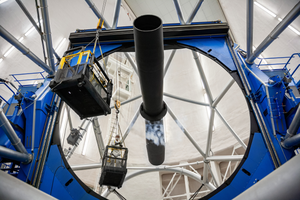
Large curved primary mirror and metal telescope structure at Gemini South. A worker is inspecting the mirror.

Gemini South's primary mirror and telescope structure

الشرح: This is the primary mirror and supporting structure of a large optical telescope at the Gemini South Observatory in Chile. The primary mirror is the largest and most important mirror in a reflecting telescope: its gently curved surface gathers light from faint stars, galaxies, and nebulae and reflects that light to a focal point. At this focal point light is either fed directly in to an instrument to record spectra and images or redirected to such an instrument by a series of further mirrors. The sturdy metal framework around the primary mirros keeps the mirror precisely aligned and protected while the telescope moves to track objects across the sky. In telescopes that use mirrors instead of lenses, such as this one, the mirror is what collects and focuses the light from distant celestial objects. Larger mirrors can capture more light, allowing astronomers to see fainter and more distant objects. A larger primary mirror can also take sharper images of the sky, but this is often negated by the blurring effect of the Earth's atmopshere. A primary mirror must be perfectly smooth to tolerances of fractions of a wavelength of light so that it produces sharp, clear images. We can think of the primary mirror as the “eye” of the telescope that looks out into space, with its shape and support enabling powerful astronomical observations.
المصدر: International Gemini Observatory/NOIRLab/NSF/AURA/M. Paredes رابط المصدر

License: CC-BY-4.0 المشاع الإبداعي نَسب المُصنَّف 4.0 دولي (CC BY 4.0) أيقونات