词条 阿波罗
描述: 在天文学中,“阿波罗”有两种含义。第一个是指阿波罗计划,这一计划将人类首次送上了月球。这些任务大多由土星五号火箭提供动力。总共发射了14次带编号的任务(阿波罗4至17号),其中11次是载人任务,9次前往月球,6次成功登月,另有3次绕月飞行。
另外,“阿波罗”还指一组近地小行星,因小行星(1862)阿波罗而得名。这组小行星的特点是半长轴大于地日距离(即1个天文单位),近日点距离小于1个天文单位。这意味着在轨道运行过程中,阿波罗小行星从地球轨道内侧运行到外侧,尽管它们很少接近地球本身。
相关词条
用其他语言查看该词条
词条和定义状态: 该术语的英文原始定义已通过天文研究人员和教师的审核 该术语及其定义的译文仍待审核
OAE多语言词汇表是由国际天文学联合会(IAU) 天文教育办公室(OAE) 和 国际天文学联合会(IAU) 天文推广办公室(OAO)合作的项目。. 术语和定义由 OAE中心, OAE 国家天文教育协调员(NAECs) 以及其他志愿者共同选择、撰写和审阅。您可以在 找到完整的致谢列表。所有词汇表术语及其定义均根据 Creative Commons CC BY-4.0许可证发布 且版权归属于 “IAU OAE”。
如果您发现此词汇术语或定义中的事实或翻译错误, 请向 发邮件 联系.
相关媒体
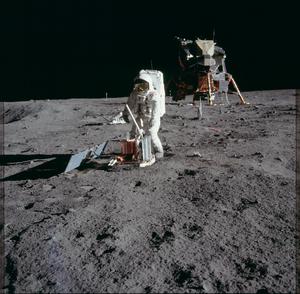
阿波罗 11 号任务的月面活动
图注: 美国国家航空航天局宇航员埃德温·巴兹·奥尔德林在月球上进行舱外活动(EVA)时,在阿波罗11号 "鹰 "月球着陆器前安装地震仪。尼尔·阿姆斯特朗在1969年人类首次登月任务中拍摄了这张照片。
来源: 美国国家航空航天局/阿波罗项目档案
来源链接
License: PD 公共领域 图标

Lift-off of Apollo 11 on a Saturn V rocket
图注: The Apollo 11 Saturn V Space vehicle lifts off with Astronauts Neil A. Armstrong, Michael Collins and Edwin E. Aldrin, Jr., at 9:32 a.m. local time on July 16, 1969, from Launch Complex 39A at NASA's Kennedy Space Center, for the first Moon landing.
来源: NASA
来源链接
License: PD 公共领域 图标