وسائط ذات صلة
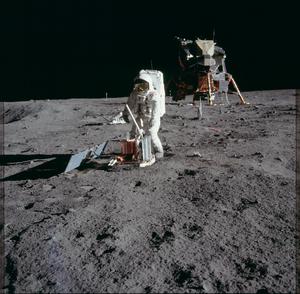
نشاط أبولو 11 القمري
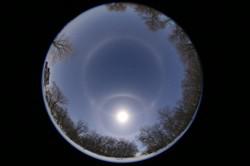
سيلين تلتقي بالقمر، بقلم شيلا ويوشار، كندا
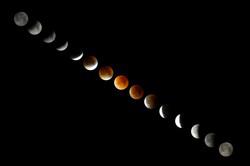
Red Moon, by Daniel Henrion, France
الشرح: Third place in the 2021 IAU OAE Astrophotography Contest, category Total lunar eclipse.
Time-lapse images of a total supermoon lunar eclipse that took place on 28 September 2015. The photos show the Moon during the time it moved through the Earth´s umbra: Earth´s umbra touched the Moon´s outer limb at 1.07 a.m. UTC (upper left corner) and left the Moon´s surface at 4.27 a.m. UTC (lower right corner).
المصدر: Daniel Henrion/IAU OAE
License: CC-BY-4.0 المشاع الإبداعي نَسب المُصنَّف 4.0 دولي (CC BY 4.0) أيقونات
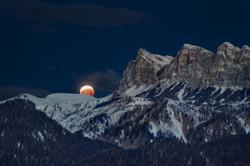
The eclipsed Moon sets near the Rochetta di Prendera, Dolomiti Unesco, by Alessandra Masi, Italy
الشرح: First place in the 2021 IAU OAE Astrophotography Contest, category Total lunar eclipse.
A lunar eclipse occurs when the full moon moves into the Earth`s shadow. This is the case when the Sun, Earth and Moon are exactly or very closely aligned. The reddish light reflected from the lunar surface is caused by sunlight that has been refracted on its way through Earth´s atmosphere in the direction of the Moon. It appears reddish because of the Rayleigh scattering of bluer light. The round shape of the Earth's shadow visible on the lunar surface was a proof for Aristotle that the Earth must be a sphere. This photo shows the eclipsed Moon that sets near the Rochetta di Prendera, Dolomiti Unesco, Italy, on 21 January 2019.
المصدر: Alessandra Masi/IAU OAE
License: CC-BY-4.0 المشاع الإبداعي نَسب المُصنَّف 4.0 دولي (CC BY 4.0) أيقونات
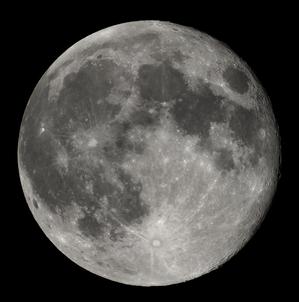
Full moon
الشرح: The image shows the nearly full Moon observed with a small telescope and a DSLR camera.
المصدر: Luc Viatour
رابط المصدر
License: CC-BY-SA-3.0 المشاع الإبداعي نَسب المُصنَّف - الترخيص بالمثل 3.0 غير موطَّنة أيقونات
الرسوم التوضيحية المرتبطة
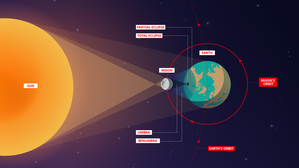
Total Solar Eclipse
الشرح: This not to scale diagram shows what happens during a total solar eclipse. The Moon orbits the Earth, but its orbit is slightly tilted with respect to the Earth’s orbit around the Sun. During the new moon lunar phase, the Moon lies between the Earth and the Sun, but due to the Moon’s tilted orbit around the Earth, the Moon normally lies above or below the Sun at this point. However twice a year the Moon’s orbit lines up in such a way that the Moon can lie in a direct line between the Earth and Sun. During each of these periods (each of which last roughly a month) solar (and lunar) eclipses can occur. The Moon is about 400 times smaller than the Sun, but is 400 times closer to the Earth than the Sun. Hence the Sun and Moon have approximately the same angular size when viewed from the Earth. This means that it is possible for the Moon to completely cover the Sun when viewed from Earth. This is known as a total solar eclipse.
Here we see a schematic of such and eclipse. The Moon casts a shadow on the Earth known as the umbra. This is a roughly circular shadow a few hundred kilometres across although its shape can be severely distorted when the eclipse is at the edge of the illuminated part of the Earth. Any region within the umbra will see the Moon completely cover the Sun and thus will experience a total solar eclipse. Outside of the umbra there are regions where the Moon will cover part of the Sun. This partial shadow is known as the penumbra. Regions in the penumbra will experience a partial solar eclipse.
An eclipse is a dynamic event with the Moon moving in its orbit and the Earth rotating. Hence the umbra and penumbra move across the Earth’s surface together. The path the umbra takes across the Earth is known as the path of totality. Let’s consider one particular region that lies in the path of totality: except in rare cases where an eclipse begins at sunrise, a region that experiences totality will first see the Moon cover part of the Sun and gradually move across Sun until it is totally covered. From outside the Earth this would appear as the penumbra moving over this particular region followed by the umbra moving over this region. Once the Moon moves so that it no longer completely covers the Sun, totality ends and the umbra moves away from this particular region. The Moon will continue to uncover the Sun until (unless the Sun sets before the end of the eclipse) the Sun is completely uncovered. From outside the Earth this would appear as the umbra moving away from our particular region and the edge of the penumbra approaching and eventually passing over the region.
Outside of the path or totality there is a much broader region that will lie in the penumbra but will be missed by the umbra. Such regions will not experience a total solar eclipse during this event, only a partial solar eclipse.
المصدر: Aneta Margraf/IAU OAE
License: CC-BY-4.0 المشاع الإبداعي نَسب المُصنَّف 4.0 دولي (CC BY 4.0) أيقونات
الأنشطة المرتبطة
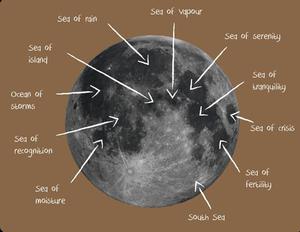
Lunar Landscape
astroEDU educational activity (links to astroEDU website) Description: Create craters and explore the lunar landscape with this hands-on activity.
License: CC-BY-4.0 المشاع الإبداعي نَسب المُصنَّف 4.0 دولي (CC BY 4.0) أيقونات
وسوم:
Hands-on
, Model
, Lunar landscape
, Craters
الفئات العمرية:
4-6
, 6-8
, 8-10
المرحلة التعليمية:
المرحلة الابتدائية
مجالات التعلم:
النمذجة
التكاليف:
تكلفة متوسطة
حجم المجموعة:
جماعي
المهارات:
طرح الأسئلة
, توصيل المعلومات
, تطوير النماذج واستخدامها
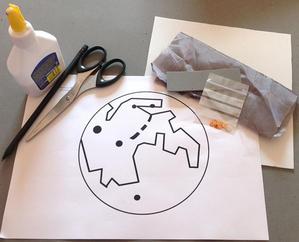
Meet Our Neighbours: Moon
astroEDU educational activity (links to astroEDU website) Description: Explore the tactile version of our moon with household materials.
License: CC-BY-4.0 المشاع الإبداعي نَسب المُصنَّف 4.0 دولي (CC BY 4.0) أيقونات
وسوم:
Hands-on
, Model
, Visually Impaired
, Tactile
الفئات العمرية:
6-8
, 8-10
, 10-12
المرحلة التعليمية:
المرحلة المتوسطة
, المرحلة الابتدائية
, المرحلة الثانوية
مجالات التعلم:
محاضرة تفاعلية
, النمذجة
التكاليف:
تكلفة منخفضة
حجم المجموعة:
جماعي
المهارات:
تحليل البيانات وتفسيرها
, طرح الأسئلة
, توصيل المعلومات
, تطوير النماذج واستخدامها
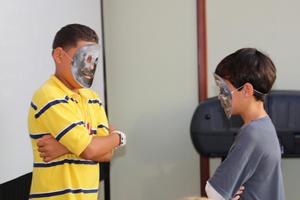
Lunar Day
astroEDU educational activity (links to astroEDU website) Description: Through a fun-learning activity, understand why moon always keeps the same face towards Earth.
License: CC-BY-4.0 المشاع الإبداعي نَسب المُصنَّف 4.0 دولي (CC BY 4.0) أيقونات
وسوم:
Lunar day
الفئات العمرية:
4-6
, 6-8
المرحلة التعليمية:
المرحلة الابتدائية
, المرحلة الثانوية
مجالات التعلم:
النمذجة
, يركز على المحاكاة
التكاليف:
مجاني
المدة:
30 دقيقة
حجم المجموعة:
جماعي
المهارات:
تحليل البيانات وتفسيرها
, طرح الأسئلة
, توصيل المعلومات
, صياغة التفسيرات
, تطوير النماذج واستخدامها
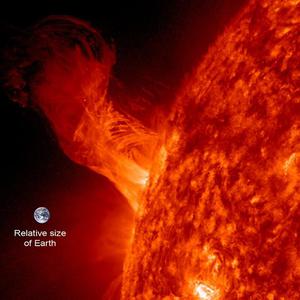
Sun, Earth and Moon Model
astroEDU educational activity (links to astroEDU website) Description: Build an Earth-Moon-Sun mobile to learn about how they orbit.
License: CC-BY-4.0 المشاع الإبداعي نَسب المُصنَّف 4.0 دولي (CC BY 4.0) أيقونات
وسوم:
Hands-on
, Model
الفئات العمرية:
8-10
المرحلة التعليمية:
المرحلة الابتدائية
مجالات التعلم:
تعلم قائم على الألعاب
, النمذجة
, تعلم منظم قائم على الاستقصاء
التكاليف:
تكلفة متوسطة
المدة:
ساعة ونصف
حجم المجموعة:
جماعي
المهارات:
طرح الأسئلة
, توصيل المعلومات
, تطوير النماذج واستخدامها
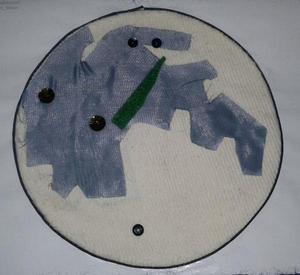
Children's Planetary Maps: The Moon
astroEDU educational activity (links to astroEDU website) Description: An up close look at our own satellite
License: CC-BY-4.0 المشاع الإبداعي نَسب المُصنَّف 4.0 دولي (CC BY 4.0) أيقونات
وسوم:
Maps
, Planetary cartography
, Spatial thinking
الفئات العمرية:
6-8
, 8-10
, 10-12
, 12-14
المرحلة التعليمية:
المرحلة المتوسطة
, المرحلة الابتدائية
, المرحلة الثانوية
مجالات التعلم:
تعلم منظم قائم على الاستقصاء
التكاليف:
تكلفة منخفضة
المدة:
ساعتان
حجم المجموعة:
جماعي
المهارات:
تحليل البيانات وتفسيرها
, طرح الأسئلة
, توصيل المعلومات
, صياغة التفسيرات
, تطوير النماذج واستخدامها
, بناء حجج استنادًا إلى الأدلة
, تخطيط وتنفيذ التحقيقات