This session will focus on the many innovative ways astronomy is being taught, with practical tips on how to implement them.
Schedule
-
Using Observatory Data to Teach Astronomy: An Inquiry-Based Cosmic Ray Activity
This work presents an inquiry-based activity designed to promote astronomy education through the use of authentic data from the Pierre Auger Observatory. Developed for online teacher training courses, the workshop engages participants in analyzing detector coordinates, arrival times, and energy measurements to reconstruct cosmic ray trajectories and identify their probable regions of origin in the sky. GeoGebra and Google Sheets support data visualization and interpretation, making contemporary astrophysical research accessible in educational settings. The experience demonstrates the educational potential of using real observatory data to foster scientific inquiry, astronomy learning, data literacy, and engagement with modern science through freely available digital tools.
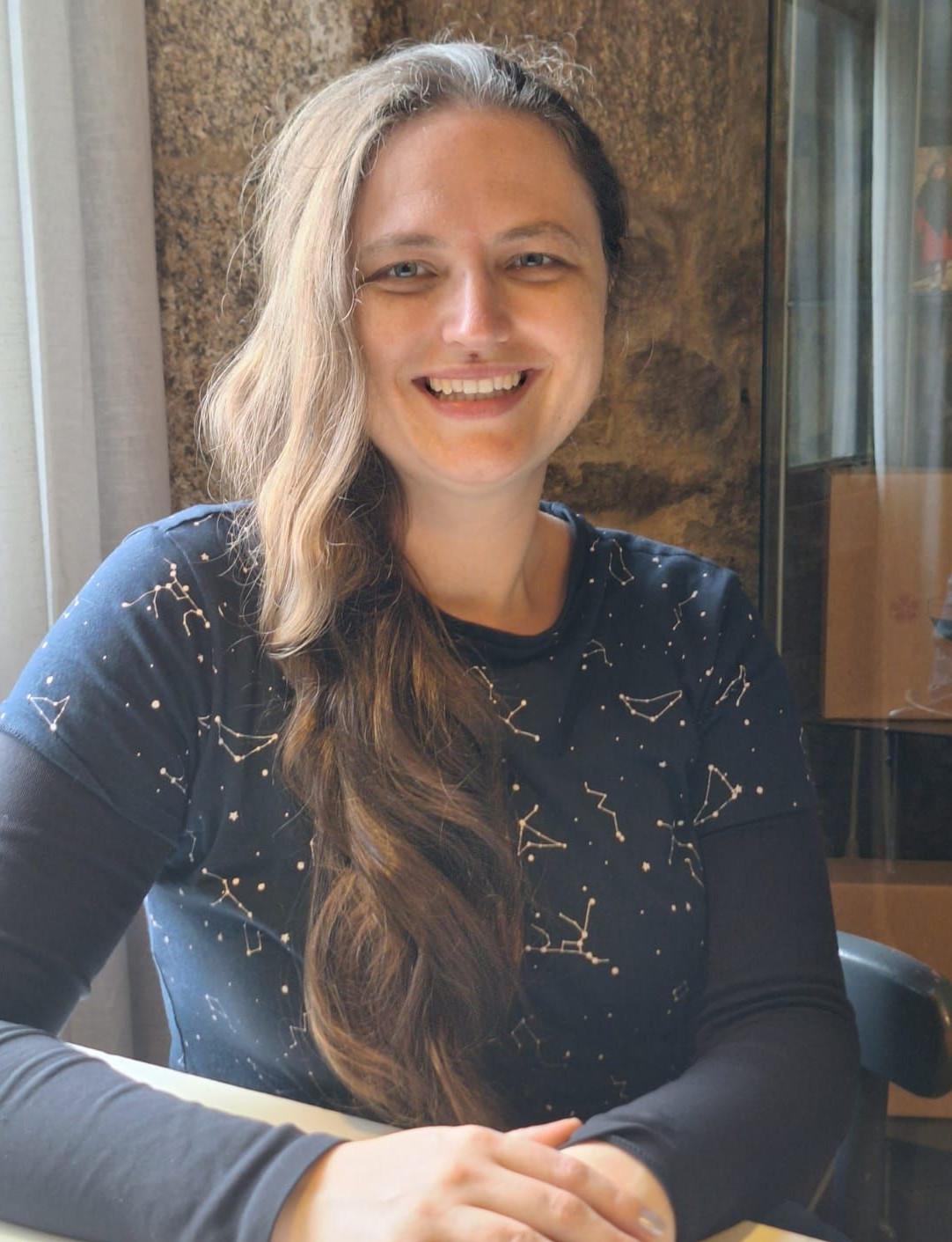
Ana Cecília Soja (Fluminense Federal Institute)
For more information about this talk click here
-
An Educational RPG: Space Exploration and Colonization of a New Star System
This outreach work presents an interactive activity in the format of Role Playing Game, with different levels of mechanization, and information. The main narrative places the players on a mission to colonize a new star system. Following the problem-solving methodology, with STEAM approach and Design Thinking principles. Players are confronted with dilemmas from multiple areas of knowledge, like Astronomy, for analysis of stellar data; Biology, for effects of microgravity; Astrochemistry, Engineering, Programming and Aeronautics. The game has two types of application: a complete version and dynamic version, with concise content adaptable to different educational levels. It fosters scientific literacy in astronomical concepts, critical thinking, and the awakening of scientific vocations.

Danilo Santos de Figueredo (Universidade Federal do Rio de Janeiro)
For more information about this talk click here
-
Assessing Astronomy Learning Beyond Quizzes: A Competency-Based Framework for Informal Education
Assessment remains a significant challenge in astronomy education, particularly in extracurricular and outreach settings where engagement is often prioritized over evidence of learning. At the Vikram A. Sarabhai Community Science Centre (VASCSC), the School Science Forum (SSF) astronomy programme has developed assessment approaches for approximately 1,000 students annually. Using concept maps, visual reasoning tasks, structured observations, reflective prompts, and competency-based worksheets, the framework assesses conceptual understanding, scientific inquiry, communication, and observational skills. This presentation shares the design principles and lessons learned for meaningful assessment in non-formal astronomy education.

Mitul Verma (Vikram A Sarabhai Community Science Center)
For more information about this talk click here
-
Moon, Eclipse and Us: Teaching and Learning with Wonder and Curiosity
Having studied with Jean Piaget and Bärbel Inhelder, Eleanor Duckworth applied to education, their findings that learning happens through interactive experiences with materials. Her method, “Critical Exploration in the Classroom”, brings learners into direct relation with the Moon, asking “What do you notice?” Through personal observation, learners experience surprise, confusion, and evolve robust awareness of the Moon’s habits. In 2023-4, as a diverse group –teachers, students, children- practiced this method by observing the Moon, its partial eclipse of the sun ignited their curiosity for the upcoming total eclipse. Their stories of collaboration, observing, outreach, creativity document powerful personal learning reflecting on nature and ourselves.
Elizabeth Cavicchi (Edgerton Center MIT)
For more information about this talk click here
-
Dark Sky Guardian: A Paper-Based Gamified Educational Toolkit Connecting Astronomy Education with
The "Dark Sky Guardian" is a new thematic expansion pack within the SDG Hero gamified education ecosystem — a joint initiative by Boke Foundation and Shanghai Astronomy Museum. Our goal: connect astronomy and dark sky protection to Sustainable Development Goals through paper-based gameplay designed for global youth (ages 9-16). Core mechanics include asymmetric role-playing, a shifting Bortle Scale map from Class 1 dark sky to Class 9 urban light, bidirectional impact cards, and so on, exploring how humans affect the stars and how stars inspire human culture and science. The educational philosophy follows "teach a paradigm, not just facts" — helping youth understand Earth as a vulnerable "island in the universe" through accessible, low-cost tools deployable anywhere in the world.
Kuang Yinan
For more information about this talk click here
-
Astronomy as a Teaching Tool for Interdisciplinary and Sustained Learning
Astronomy education is often delivered through short-term outreach activities that spark curiosity but do not always lead to sustained learning. This presentation proposes a teaching method that uses astronomy as a gateway to interdisciplinary learning through structured tools and approaches. It integrates astronomy with physics, mathematics, environmental science, social studies, and technology using inquiry-based and hands-on strategies. The approach emphasizes iterative, interactive learning supported by mentorship to extend engagement beyond single sessions. The framework’s development and implementation is supported by the IAU OAD. The presentation will demonstrate these methods & tools, and their role in improving sustained engagement in astronomy education.
Sheikh Samia Akter Sami (Founder & Director, EcoAstroBD)
For more information about this talk click here
-
OAE-Egypt plan for Astronomy Education During the 2027 Total Solar Eclipse.
The Astronomy Education Center in Egypt is developing an astronomy education program in preparation for the total solar eclipse on August 2, 2027, a significant historical event that will be clearly visible in Egypt and the Arab region. We OAE-Egypt planning an introductory training courses for teachers throughout the year, starting in August 2026 till the Solar Eclipse event Aug. 2027. These training workshops will cover various topics, including the mechanism of the phenomenon, a simplified explanation of the movement of the Earth, Moon, and Sun, and how perfect alignment occurs. They will also cover the different types and phases of eclipses, along with a focus on safe observation methods and tools to avoid the dangers of looking directly at the Sun.
Somaya Saad (Astronomy Deptt. National Research Institute of Astronomy and Geophysics)
For more information about this talk click here
-
Browser-based FITS image analysis tools for learning
Authentic astronomy learning grows when students collect and analyze their own data using on-site or remote telescopes. As telescope access expands, so does the need for browser-based FITS analysis tools. This session demonstrates tools from the Skynet and Las Cumbres Observatory global networks. Skynet’s Afterglow Access supports image stacking, color processing, astrometry, and photometry, while Astromancer extends these data into light curves, periodograms, folded light curves, and HR diagrams enhanced with survey data. LCO’s Explore and Data Lab portals offer student-friendly access to images from a global network of twelve 0.35-meter education telescopes. Together, these tools help students do astronomy with their own images, building ownership, confidence, and science identity.
Freed Rachel (Las Cumbres Observatory)
For more information about this talk click here
-
Exploring the Structure of Our Galaxy Using Early 20th-Century Methods
In this talk, I will present a learning exercise proposed to a group of talented high school students to learn basic astrophysics through data analysis and published in 2024 in the European Journal of Physics. Using relatively simple assumptions originally proposed by Harlow Shapley, and a dataset of coordinates of galactic globular clusters, the students had to calculate the distance from the Solar System to the Galactic center and to estimate the size of the Milky Way. I will present the exercise, discuss the motivation and its design, and highlight some of the creative approaches the students employed. I will also show how the activity was adapted using the ISLE method - Investigative Science Learning Environment) and share feedback from the teacher training where it was presented.
Dunja Fabjan (University of Ljubljana)
For more information about this talk click here
-
From Gnomon to Spectroscope: Astronomy Inquiry Adapted to the National Curriculum
Astronomy can advance national science-curriculum goals because it connects directly to classroom courses while starting from observable phenomena and low-cost tools. Drawing on CosmoAmautas activities and advice from local education authorities in Peru, we present a method for mapping astronomy lessons onto course competencies. The sequence combines two inquiry activities: using a school gnomon to investigate the Sun’s apparent motion, and building a simple spectroscope to compare light sources and introduce stellar classification. Students ask questions, analyze evidence, improve instruments and procedures, and communicate conclusions. The session offers a transferable framework for embedding astronomy into physics, mathematics, technology and science courses as STEM-rich inquiry cycles.
Erika Torre Ramirez (CosmoAmautas)
For more information about this talk click here
-
AstroJourneys
AstroJourneys is an Erasmus+ project bringing together teachers, astronomy educators, researchers, observatories and science centres from five European countries. The project supports educators in designing inclusive and interdisciplinary “learning journeys” based on the Big Ideas in Astronomy, local curricula, UDL principles and collaboration with scientific and educational communities. This presentation will introduce the AstroJourneys methodology, including the 3D matrix connecting astronomy literacy, educational activities and curricula, as well as tools such as the Human Orrery, robotic telescopes and AI-assisted design. It will also present the first outcomes of the 2025–26 pilot implementations and perspectives for the second implementation cycle.
Emmanuel Rollinde (LDAR / CYU)
For more information about this talk click here
-
CosmoGuesser: An Inquiry-Based Puzzle Board Game for Astronomy Education
Repeated during Part B - repeated : UTC: 1 p.m. - 2:30 p.m. America/New_York: 8 a.m.- 9:30 a.m.
We present CosmoGuesser, an inquiry-based, game-based learning puzzle board game for secondary astronomy education, developed within the ASTRO-EDU Erasmus+ project. Its core mechanic links gameplay directly to astrophysical reasoning: players use real observational signatures from six Caldwell catalog sky zones to deduce object identity through tiered information cards and a "Hypothesis Marker" mechanic rewarding reasoning under uncertainty. The puzzle itself enacts inquiry: players form hypotheses, test them against evidence, and revise as new clues appear. We discuss this design framework and welcome feedback before prototyping begins.
Zahra Tavakoli Garmaseh (Istanbul Kultur University)
For more information about this talk click here
Posters
-
A hands-on activity to teach the retrograde motion of the outer planets of the Solar System
Newton Figueiredo (Federal University of Itajubá)
The retrograde motion of the outer planets plays an important role in the history of Astronomy. We present a successful hands-on approach to teach this subject to high school students. In a dark room we have used a sky simulator to project on a white board a series of 24 images of the celestial sphere about 15 days apart, showing Mars and the background stars. The date and time of each image was carefully chosen so that the position of stars was always the same. For each image, a different student used a marker to mark the position of Mars on the board. When lights were turned on the full trajectory could be seen on the board. The same procedure was repeated for Jupiter and Saturn, so that we could discuss the shape and size of each retrograde loop in the context of the heliocentric model.
-
Basic Astronomy concepts with Physical Models
Ravindra Godbole Mr
High school students explore basic concepts in astronomy as a part of their carriculum. These concepts are difficult to visualize without the proper use of physical models. I have designed and developed models to clarify key concepts related to Sun, Earth and Moon and other celestial bodies. I have been visiting schools to demonstrate the same and interact with students as well as teacher community. Models cover areas related to seasons, new moon and full moon, lunar month, phases of moon, eclipses. With the help of gears, these models can show 99 percent accuracy in terms of duration. Some areas related to Indian astronomy such as Adhik Maas, Sankranti, Tithi and Nakshatra are also covrered as a part of this exercise. I would like to share my experiences and future plans for the same.
-
Bridging Astronomy Education and Olympiad Training: An IAU-OAE Teacher Training Program in Romania
Catalina-Ana Miritescu (Institut de Fisica d'Altes Energies (IFAE))
The introduction of the new elective The Adventure of Exploring the Universe in Romanian schools has created a growing need for teacher training in astronomy. To address this challenge, a two-day IAU-OAE funded Teacher Training Program was organized in August 2025, bringing together 20 teachers from diverse STEM backgrounds across Romania. The program bridged classroom astronomy and Olympiad preparation through lectures, hands-on activities, and specially designed teaching resources covering topics from celestial coordinates to exoplanets and observational astronomy. We present the program design, pre- and post-course evaluations results, and lessons learned, highlighting how teacher development can support both curriculum implementation and advanced student engagement in astronomy.
-
Bringing the Cosmos into the Classroom: Innovative Tools for Teaching Astronomy
Exodus Chun-Long Sit (IAU NAEC & NOC China-Hong Kong)
This session presents the STEM+A@Astronomy interdisciplinary program, which uses hands-on, experiential approaches to cultivate students’ observational skills and creative problem-solving. Drawing on the book Exploring Astronomy A to Z: Hands-On STEAM Space Science, the presentation highlights how low-cost materials and everyday resources can be combined with design thinking and environmental education to create accessible and engaging learning experiences. Activities such as stargazing, astrophotography, and light pollution monitoring help students develop scientific inquiry skills while fostering awareness of sustainability. This approach positions astronomy as a bridge between science, art, and humanity, offering an innovative and practical model for primary science and STEAM education.
-
Development and Classroom Trial of Suzaku X-ray Data Materials for Measuring the Age of the Universe
Hideki Uchiyama (Shizuoka University), Shimano Masahiro (Rikkyo Niiza High School), Ueda Kento (Shizuoka University), Takeo Mochizuki (Shizuoka University)
We developed educational materials using Suzaku X-ray satellite data to verify the Hubble–Lemaître law and determine the Hubble time (the approximate age of the universe). Suzaku data are easily analyzed via UDON2, a web-based tool by ISAS/JAXA C-SODA. We selected 14 galaxy clusters and galaxies with distances known via non-redshift methods that exhibit strong highly ionized iron lines. Measuring central line energy from X-ray spectra using UDON2, we calculated recession velocity via the Doppler formula, yielding a Hubble time of ~13 billion years. These materials enable high school students to learn the Doppler effect, electromagnetic waves, photons, and atomic spectra. We report their practical application in a physics class focused on "The Beginning of the Universe."
-
Empowering East Nusa Tenggara Teachers Through Astronomy Education Training
Lucky Puspitarini (Institut Teknologi Bandung (ITB))
The education sector in East Nusa Tenggara (NTT) struggles with challenges in access, quality, and governance. To address this, the Community Development Equity ITB 2025 initiative empowers local educators to teach astronomy using accessible technologies. Supported by the Network for Astronomy School Education (NASE)—an IAU Working Group dedicated to enhancing astronomy education—this program emphasizes 'teaching teachers how to teach astronomy.' From April 21-23, 2026, the NASE workshop was successfully held at FKIP UNDANA. Twenty participants engaged in practical sessions covering stellar evolution, the solar system, and astrobiology.
-
Enhancing Astronomy Education Through AI-Assisted Sky Observation
Olivier Parisot (Luxembourg Institute of Science and Technology (LIST))
Astronomical observations with smart telescopes produce visually striking but difficult-to-interpret raw sky images without guidance. We present an AI-based object detection approach that identifies satellites, Deep Sky Objects (nebulae, galaxies, star clusters, etc.), and sunspots directly in these images and generates annotated visualizations. In guided educational stargazing sessions with young participants (aged 10–16), raw and AI-processed views are compared in real time, highlighting the importance of expert guidance to interpret what is seen and avoid misidentification. Beyond automation, AI processing acts as a pedagogical trigger, helping beginner observers formulate questions they would not have asked and fostering discussion around observation and data interpretation.
-
Examples of interdisciplinary teaching materials incorporating daily life and cultural contexts
Tomita Akihiko (Wakayama University)
While teacher training on astronomy content is the standard approach to addressing the challenges many teachers face in teaching astronomy, another approach is the development of “interdisciplinary teaching materials” that incorporate contexts related to daily life and culture, boldly span subject boundaries, and simultaneously ensure a level of science. This poster summarizes the teaching materials of this kind, which have been shared through the “Astronomy Day in Schools” project, categorizing them by content and outlining the types of schools and interdisciplinary approaches anticipated in future pilot lessons. With a focus on ensuring science in the classroom, examples of lesson plans will be presented as well.
-
From Heliocentric 3D to Geocentric 2D: A Perspective-Transform Visualization for Teaching Spatial Re
Wang Haiyan (Beijing University of Chinese Medicine)
This project addresses beginners’ difficulties in visualizing the geometric relationship between heliocentric and geocentric models. Using DE421 ephemeris data, a 3D solar system–centered model is constructed, showing true star distances and distributions. By rotating the perspective 90° to simulate Earth-based observation, a 2D projection map is generated. This tool allows seamless switching between heliocentric and geocentric views, illustrating how perspective affects star charts. It aids spatial reasoning, understanding planetary motion, and connecting 3D reality to 2D representation for introductory astronomy education.
-
From the Megaliths of Calçoene-BR to the JWT: A Didactic Proposal on Observing the Sky
Martinez Rafael (Federal University of Amapá)
The presence of Astronomy Teaching in Basic Education in Brazil is limited despite the importance of this area for the educational and scientific development of students. Considering this scenario, a didactic sequence proposal was developed. The sequence was developed in Observational Astronomy and based on David Ausubel's Theory of Meaningful Learning, seeking to promote the construction of knowledge in a contextualized, meaningful way, connected to the students' reality; considering the importance of valuing students' prior knowledge and the integration between science and reality. It was observed an improvement in comprehension and understanding of issues mainly related to megaliths and astronomical observation.
-
Interactive teaching tools: A strategy for deep and immersive learning in Asteroid sciences.
Adriana Victoria Araujo Salcedo (Observatorio Astronómico Gimnasio Campestre)
Nowadays, people are more aware of asteroids regarding planetary defense. Learning about what they are, what they are made of, and how they could represent a treat for the life of Earth is crucial in planetary Defense. Kids, adolescents, and even adults are curious about this topic, and for this, in the school, we implement and specials classes using interactive software for the understanding of asteroids and impact physics. Through NASA's eyes on asteroids and the Earth Impact Effects Program, people learn and understand characteristics such as: type of asteroids, distances from Earth, density, impact velocity, and even the possible damage that might occur in a possible impact event. The activities allow the students the self paging undestanding as well as a more immersive learning.
-
Slooh is a live-sky space exploration platform giving learners direct access to professional robotic
John Boisvert (Slooh)
Slooh is a live space exploration platform giving learners direct access to professional telescopes and satellite imagery. Its Quest framework structures this access into guided inquiry sequences—spanning topics across Earth science and astronomy—that scaffold observation, analysis, and reflection without prior knowledge. Quests align to major national science frameworks, including NGSS, support learners from primary through post-secondary, and are built with accessibility features, including captions. The Workspace system enables organized, multi-learner participation. This talk presents Slooh's Quest design principles, shares examples from our curriculum development, and offers guidance for educators seeking to incorporate authentic, real-time telescope observation into their teaching.
-
Starlight Bridges: Community Astrotourism as a Tool for STEM Education and Sustainable Development
Margarita Metaxa
Starlight Bridges, funded by the OAD and implemented in Karpenisi, Greece, explores community astrotourism as a tool for STEAM education, environmental awareness, and sustainable rural development. The project trains educators, women, and youth as “AstroGuides” through astronomy workshops, storytelling, and night-sky activities. By linking astronomy with local culture, mythology, ecology, and dark-sky protection, the project promotes informal STEAM learning and public engagement. Activities include school outreach, astronomy observations, the creation of a Starlight Path, and the Dark Sky Festival of Evrytania.
-
Teaching, learning, and organizing in an informal, urban astronomy movement
O'Shea Michael (National Coalition of Independent Scholars, #popscope)
This presentation theorizes the teaching, learning, and organizing of an informal, urban sidewalk astronomy movement called #popscope — in short, a “#popscope pedagogy.” #popscope is a volunteer-run urban astronomy group founded in 2014, that has hosted over 500 events and serving more than 26,000 guests, particularly underserved urban communities, by democratizing astronomy teaching and learning. Its pedagogy encompasses free-choice learning, joy, hybrid learning, and "affinity spaces”: informal, non-hierarchical learning environments outside traditional schooling. The article draws on the author's reflections and analysis of #popscope organizational material, while also addressing counterpoints: challenges to equitable outreach and risks of science misinformation in informal spaces.
-
The Celestial Sphere Project
Matipon Tangmatitham (National Astronomical Research Institute of Thailand)
Concept of the Celestial Sphere is arguably one of most difficult concepts in introductory astronomy. A physical, three-dimensional model is one of the more effective ways in helping the learning to visualize this concept. However, such model are often expensive and bulky. Here we propose a novel solution: a beachball. An algorithm is used to transform equirectangular vector graphic map into 6-gore cassini projections centered around 6 meridians. As a result, we now have a celestial sphere that only cost 10 USD and collapsible (with beach volleyball being a welcome side benefit!). The same algorithm can also be used to produce 12-gores version that can be printed on 3 sheets of A4 paper that can even be assembled without a single adhesive.
-
The educational quest "The Large Space Games"
Ekaterina Tikhomirova (State Autonomous Cultural Institution of Yaroslavl Region Cultural and educational center named after Valentina V.Tereshkova)
The educational quest "The Large Space Games" is dedicated to the space flight of the first female cosmonaut, Hero of the Soviet Union Valentina Tereshkova. The Games crews are schoolchildren aged 12 to 14. Crews register in advance having name, emblem, motto. The quest takes place at the Cultural and Educational Center n.a. V.V. Tereshkova (Yaroslavl, Russia) in the homeland of V.Tereshkova. Each crew follows an individual route, completing space and astronomy tasks. The tasks include testing knowledge of constellations in the planetarium, the biography of Valentina Tereshkova, the ability to assemble a telescope from lenses and tubes, the ability to explain terms using gestures, guessing for exhibits in the museum, searching for astronomical symbols on the facade of the Center building.
-
Unisphere at Five
Tomáš Gráf (Silesian University in Opava)
Five years after its launch, Unisphere, the digital planetarium of the Silesian University in Opava, has become a unique example of how immersive technologies can support both education and media production. As a teaching facility, science communication hub, and fulldome studio, it connects academic learning with creative practice. This presentation reviews five years of operation, building on the earlier report “Unisphere after Three Years of Operation.” It summarizes developments in technical management, interdisciplinary teaching, and public engagement, with particular focus on the Unisphere Production Studio, where students and educators create original fulldome productions showcased at national and international festivals.
-
Using Film Scenes to Teach Real Astronomy Concepts in Inclusive Classrooms
Ridima Sur (Space Generation Advisory Council (SGAC))
Films offer a powerful bridge between imagination and scientific understanding. This contribution demonstrates how carefully selected scenes from popular movies, such as Star Wars, Interstellar, The Martian, and Gravity, can be used to teach real astronomy concepts in middle and high school classrooms. Drawing on research in culturally relevant pedagogy and science education, the talk presents practical, low‑cost strategies for teachers to introduce topics like orbital motion, exoplanets, black holes, and space environments through narratives students already know and love. By connecting curriculum content to familiar stories, educators can increase engagement, support diverse learners, and make astronomy more inclusive, accessible, and inspiring.
-
Visualize planetary science for students
Ákos Kereszturi (Konkoly Observatory, CSFK, HUN-REN)
Range of surface landforms have been discovered recently by various space missions. Volcanoes, river channels, polar ice caps, dunes and fallen boulders are present on several planets and moons among others. Their comparative evaluation could fit into the education of geography and environmental topics for secondary school students. We developed several examples how properly collected and arranged images help to discover and understand origins and processes beyond the Earth, what also helps to show the general existence of the same physical lows across the Universe.